
- BGG rating
- 8.0
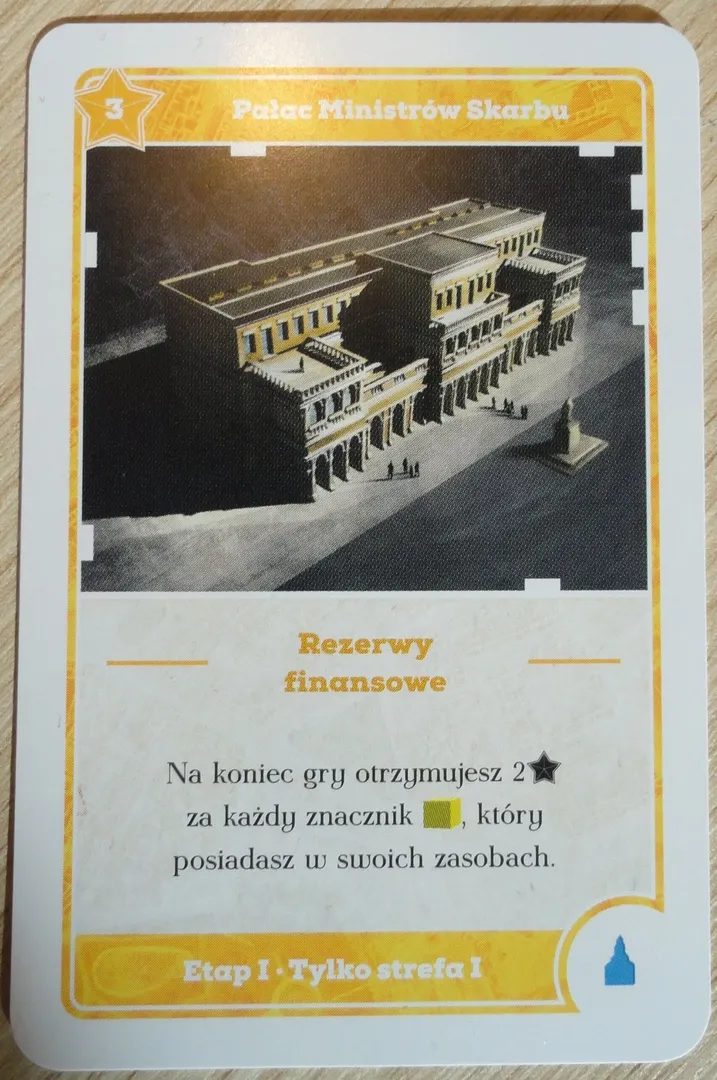
Odbudowa Warszawy 1945-1980: Pałac Ministrów Skarbu
- 2–5 players
- 60–120 min
- 2016
2016
Rules assistance for Warsaw Rising Up 1945-1980
Plain-language explanations of turns, card effects and disputed situations, with official source references and saved question history.
For 2 players
What would you like to know?
Answers come from the official rulebook, with the page to check.
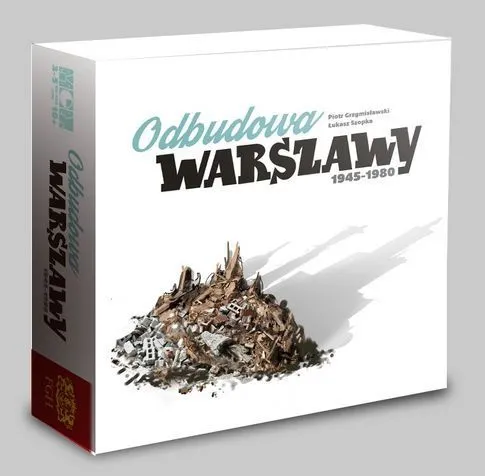
Warsaw Rising Up 1945-1980 is a board game released in 2016 for 2–5 players, 60–120 minutes per game, and ages 10 and up. It was designed by Łukasz Szopka and Piotr Grzymisławski and its main mechanics are Tile Placement, Open Drafting, and Worker Placement.




Warsaw Rising Up 1945-1980 is a board game for 3-5 players, where participants take the roles of Polish urban planners, architects, engineers and builders – members of design and building studios functioning within the Bureau for the Rebuilding of the Capital. They face the challenges of restoring Warsaw destroyed during World War 2, bringing back the city’s prestige and importance in the fields of administration, culture and industry. The goal of the game is to rebuild Warsaw after the war and develop the city. The players have to get concrete, use the materials acquired from the debris of the destroyed Capital and various social funds that were used in reality during the rebuilding of Warsaw. However, not only the reconstruction itself is important, but also the appropriate location of the objects on the city map and competent delegation of the members of one’s studio to work. One of the several tactical elements of the game is managing the project cards and workers. Using their extra abilities may be the key which will benefit one player and make the work much harder for another. But even for a moment they should not forget about acquiring building materials from prefabricated elements and building new panel blocks. The game covers the period of thirty-five years, so in subsequent stages many various tasks appear. They are related to political doctrines, tendencies in architecture as well as the general economical and developmental situation in Poland in the given period. But the most important feature of the game is that each time the players are able to rebuild Warsaw in a different way from this known from history. They decide whether the historical rebuilding plan will be realized and where – if at all – the Palace of Culture and Science will stand. The players also have an access to the plans that were never realized, both from the Six-Year Plan and later urban development concepts. The game includes a futuristic element, too – the players have plans of two subway lines at their disposal. Such plans actually existed in post-war Warsaw, but they were never realized due to economic problems. In this game it is possible.
Warsaw Rising Up 1945-1980 supports 2–5 players according to the catalogue. This range comes from the publisher’s listed player count, so the game can be set up for any group size within it. Some setups, rules and scoring details may still vary by player count, so check your edition’s rulebook for the exact configuration.
The listed playing time for Warsaw Rising Up 1945-1980 is 60–120 minutes. This is the publisher’s estimate for a full game. The actual duration depends on the group, the player count and familiarity with the rules: first sessions usually run longer, while experienced groups often finish faster. Setup and teaching time are not included in this estimate.
The catalogue lists Warsaw Rising Up 1945-1980 for ages 10 and up. This is the publisher’s recommendation and reflects reading demands, rule complexity and small components rather than theme alone. Younger players can often join with help from an adult, so check the age guidance on your edition and consider your group’s experience with board games.
Warsaw Rising Up 1945-1980 has a complexity rating of 2.4 out of 5 from BoardGameGeek players, which makes it a medium-light game. The rating reflects how much rules knowledge, planning and decision-making a typical game demands. Expect a longer first teach for heavier games, and use a preparation guide before game night.
Warsaw Rising Up 1945-1980 belongs to these categories: City Building and Educational. Its main mechanics are Tile Placement, Open Drafting, and Worker Placement. Categories describe the theme and setting of a game, while mechanics describe what players actually do on their turns. Each mechanic links to a catalogue hub with similar games, which helps when you want something comparable.
The credited designers of Warsaw Rising Up 1945-1980 are: Łukasz Szopka and Piotr Grzymisławski. These credits come from the published game data and name the people responsible for the game’s design, not its illustrators or publishers. Designer pages on MeepleRules collect other titles by the same designers, which helps when you enjoy a game and want to find similar ones.
The catalogue lists Warsaw Rising Up 1945-1980 as a base game. It can be played on its own with the components in the box and does not require any other title. Expansions, if any exist, add new content or rules on top of it and are listed separately in the catalogue with a link back to this base game.