
- Puesto en BGG
- BGG #1885
- Puntuación BGG
- 8,1
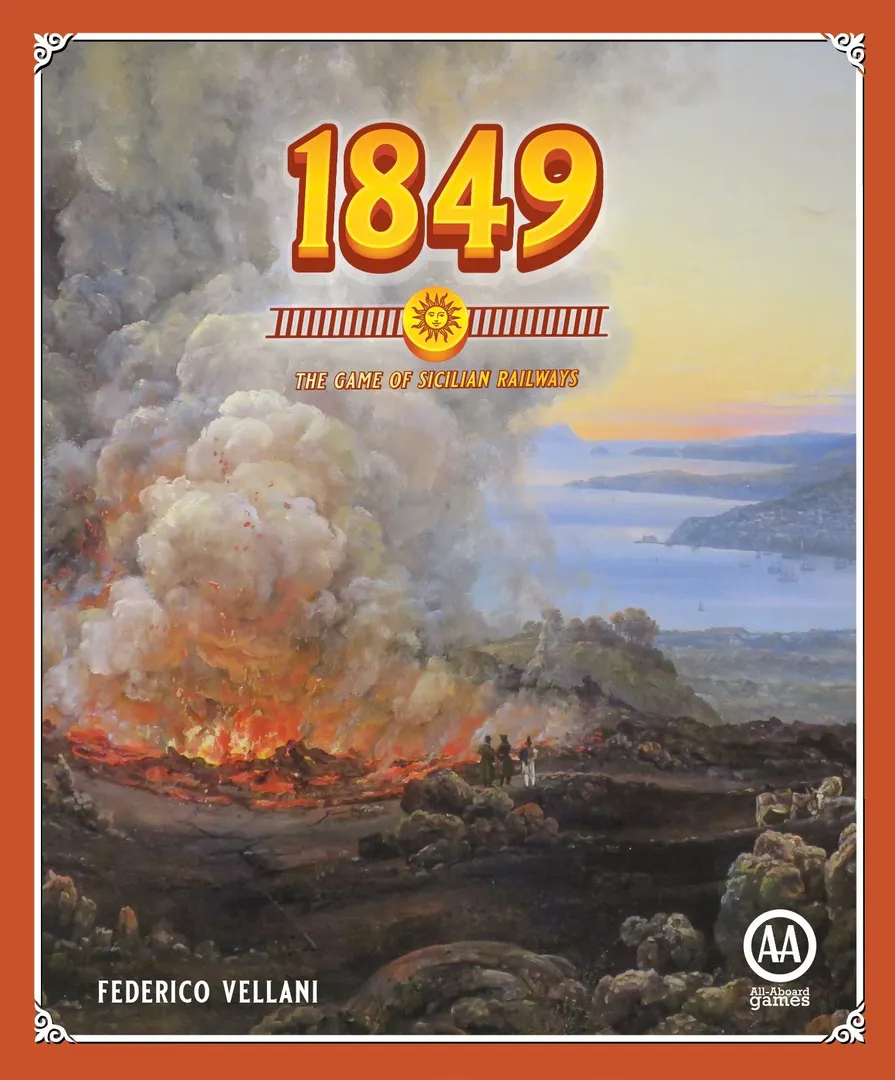
1849: The Game of Sicilian Railways
- 3–5 jugadores
- 180 min
- Complejidad 4,2/5
- 1998
1994
Ayuda con las reglas de 1841: Railways in Northern Italy
Explicaciones claras de turnos, efectos de cartas y situaciones dudosas, con referencias a fuentes oficiales e historial de preguntas guardado.
Para 2 jugadores
¿Qué quieres saber?
Las respuestas salen del reglamento oficial, con la página para comprobarlo.
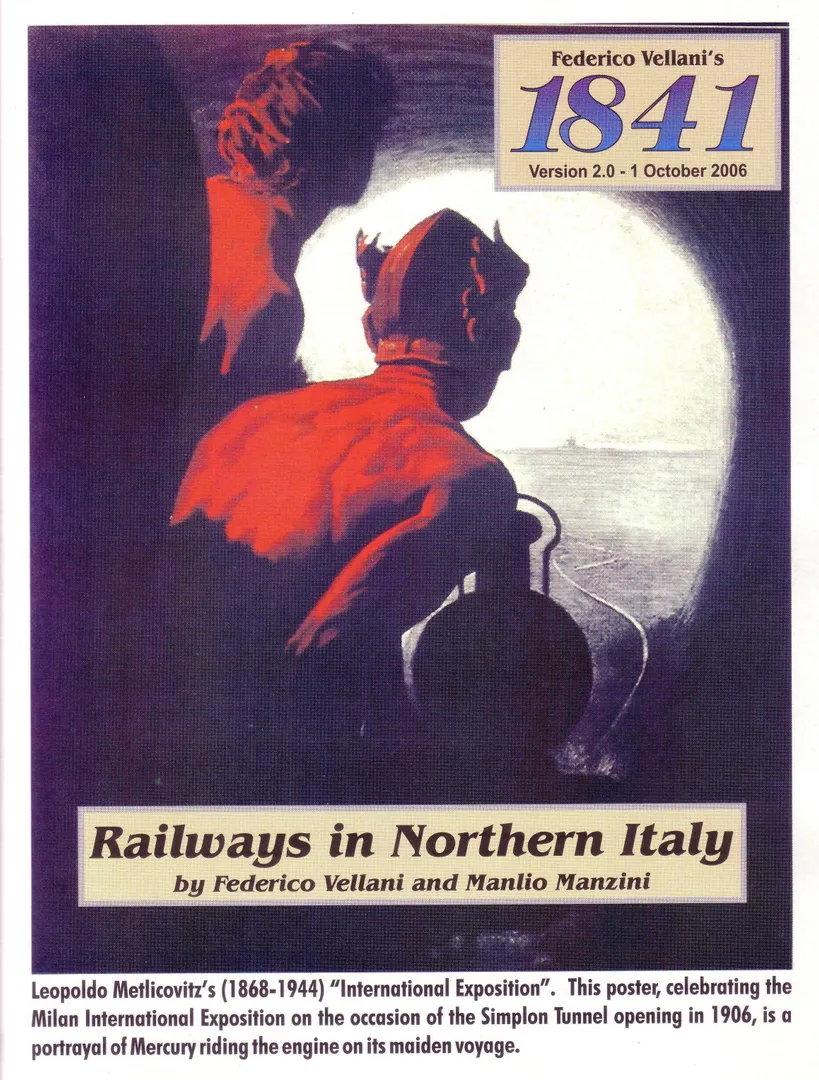
1841: Railways in Northern Italy es un juego de mesa publicado en 1994 para 2–8 jugadores, con partidas de 300 minutos y a partir de 14 años. Fue diseñado por Federico Vellani y Manlio Manzini y sus mecánicas principales son Tile Placement, Network and Route Building y Stock Holding.

En inglés
1841 is the apex (or nadir depending on your point of view) of 18xx stock-market manipulation. Set in Northern Italy during a period of rapid political change (borders for playable hexes change twice during the course of the game) the game is one of the most difficult even for experienced 18xx players. The greatest innovations center on the ability of companies to own shares in other public companies and the merging of companies. Train obsolescence is rapid and unforgiving, and it is quite possible for forced-purchase trains to be obsolete before they get a chance to run. Capitalization is on a per-share basis throughout the game and train prices are steep >1400 for an 8 train - the largest. There are 8 historical corporations and eight, named but ahistorical "generic" corporations. These are normally used simply as investment vehicles to maximize the amount of capital available to "successful" companies close to Milan. Northern Italy is mountainous, especially near the off-board Alpine areas and to the South of the map, making progress slow and expensive for the outlying historical companies. 1841 has a reputation as a very long game, but is not necessarily much longer than games, such as 1870, which have a very large bank. It can be completed in four hours. Chris Lawson's game kit is one version that is available and is of his usual high (for a game kit) quality. A large amount of time with scissors and craft knife to cut out the stock and tiles can be expected. Deep Thought Games now publishes 1841v2 which incorporates changes by Manlio Manzini to address some of the perceived shortcomings with the original which was designed by Federico Vellani with Manlio as a co-author. Description by Steve Thomas: 1841 is the 18xx game of choice for many players, though some hate it. Designed, and originally published as 1839 by Federico Vellani, it is set in northern Italy. The McGuffin here is that 1841 is the 18xx game which is least about actually building a railway and most about manipulating the stock market and managing the extremely fierce train obsolescence. Route development has its place, but unless the players can get the rest of the game about right they are doomed, and it is this which polarizes players' views of the game. When it first became available it whetted the slightly jaded palates of some players since the dividing line between success and abject failure is so narrow. 1841 achieves this by allowing companies to buy and sell shares in each other, and to merge with one another. These factors result in frequent and hard-to-predict changes to the order in which the companies operate. It's exciting and dynamic, and the only real downside, at least for "the financiers who've had enough of the engineers", to misquote the 1853 box art, is the length of the game. At typically seven hours it cannot sensibly be played in an evening. Even so, the game is usually well worth the investment of time, though it's certainly not for the novice.
Según el catálogo, 1841: Railways in Northern Italy admite de 2 a 8 jugadores. Este intervalo corresponde al número de jugadores indicado por la editorial, así que el juego puede prepararse para cualquier grupo dentro de ese margen. La preparación, algunas reglas y la puntuación pueden variar según el número de jugadores; consulta la configuración exacta en el reglamento de tu edición.
La duración indicada para 1841: Railways in Northern Italy es de 300 minutos, la estimación de la editorial para una partida completa. El tiempo real depende del grupo, del número de jugadores y del conocimiento de las reglas: las primeras partidas suelen alargarse y los grupos con experiencia terminan antes. La preparación y la explicación de las reglas no están incluidas.
El catálogo indica 1841: Railways in Northern Italy a partir de 14 años. Es la recomendación de la editorial y refleja la lectura necesaria, la complejidad de las reglas y las piezas pequeñas, no solo el tema. Los más pequeños a menudo pueden jugar con ayuda de un adulto: comprueba la edad recomendada en tu edición y la experiencia de tu grupo.
1841: Railways in Northern Italy tiene una puntuación de complejidad de 4,4 sobre 5 según los jugadores de BoardGameGeek, lo que lo convierte en un juego exigente. La puntuación refleja cuánto conocimiento de reglas, planificación y toma de decisiones exige una partida típica. Los juegos exigentes requieren una explicación inicial más larga, así que conviene usar una guía de preparación.
1841: Railways in Northern Italy pertenece a estas categorías: Economic, Trains y Transportation. Sus mecánicas principales son Tile Placement, Network and Route Building y Stock Holding. Las categorías describen el tema y la ambientación de un juego, mientras que las mecánicas describen lo que los jugadores hacen realmente en su turno. Cada mecánica lleva a una página del catálogo con juegos similares.
Los autores acreditados de 1841: Railways in Northern Italy son: Federico Vellani y Manlio Manzini. Estos créditos proceden de los datos publicados del juego y nombran a las personas responsables de su diseño, no a ilustradores ni editoriales. Las páginas de autor de MeepleRules reúnen otros títulos de los mismos autores, algo útil cuando un juego te gusta y buscas otros parecidos.
El catálogo clasifica 1841: Railways in Northern Italy como juego base. Se juega por sí solo con los componentes de la caja y no requiere ningún otro título. Las expansiones, si existen, añaden contenido o reglas nuevas y aparecen por separado en el catálogo con un enlace a este juego base.