

- Puesto en BGG
- BGG #5521
- Puntuación BGG
- 7,0
Backstories: Alone Under the Ice
- 1–6 jugadores
- 50–70 min
- Complejidad 1,2/5
- 2024
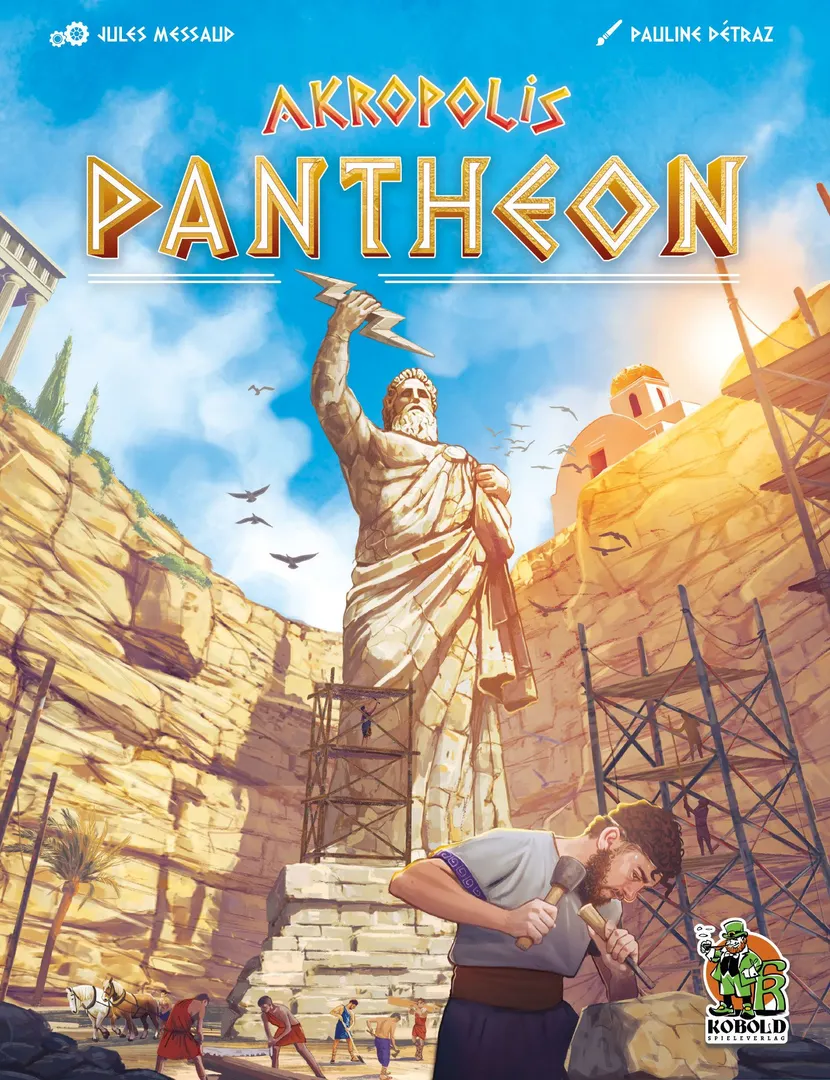
Ayuda con las reglas de Akropolis: Pantheon
Explicaciones claras de turnos, efectos de cartas y situaciones dudosas, con referencias a fuentes oficiales e historial de preguntas guardado.
¿Qué quieres saber?
Las respuestas salen del reglamento oficial, con la página para comprobarlo.
Akropolis: Pantheon es una expansión de Akropolis publicada en 2026 para 1–4 jugadores, con partidas de 25 minutos y a partir de 8 años. Fue diseñado por Jules Messaud y sus mecánicas principales son Cooperative Game.





En inglés
The time for rivalries is over! At the height of their glory, the once-opposing Cities now join forces to build a grand Capital together and honor the gods. Erect splendid Divine Altars dedicated to the protectors of the Capital, and let its aura shine throughout the ancient world. Game Overview The Architects’ goal is to work together to construct the Capital and achieve the highest possible score by using the best strategy. You must therefore join forces and play cooperatively. Setup Together, players choose one of the three available scenarios: Corinth, Sparta, or Athens, each offering an increasing level of difficulty. Each player receives a starting tile, while the remaining tiles form the heart of the Capital, placed in the center of the play area. Three Architectural Challenge tiles are revealed, along with their corresponding Divine Altars. Players also receive two Stone cubes and three City tiles, which they keep in hand like cards. Unlike the base game, there is no river. Turn Structure On their turn, each player may: Add a tile to their City in order to complete an Architectural Challenge and gain a Divine Altar. Contribute to the construction of the Capital by placing their tile in the center of the play area, allowing points to be scored at the end of the game. At the end of the turn, draw a tile to always have three in hand. Architectural Challenges & Divine Altars Each completed Challenge allows you to place a Divine Altar in the Capital. In this expansion, Squares function differently: for a Square to be counted at the end of the game, an Altar must have been built there in honor of Hestia, Hermes, Ares, Zeus, or Demeter, depending on the Square’s color. End of the Game The game ends when all City tiles have been played. Only the Squares in the Capital adorned with a Divine Altar are valid and scored. Personal Cities do not grant any points. The final score is compared to the chosen Scenario’s target score. Managing Stones, coordinating placements, and anticipating Challenges are essential to achieving collective victory. Akropolis Pantheon is a cooperative expansion for the game Akropolis. The base game is required to play.
Según el catálogo, Akropolis: Pantheon admite de 1 a 4 jugadores. Este intervalo corresponde al número de jugadores indicado por la editorial, así que el juego puede prepararse para cualquier grupo dentro de ese margen. La preparación, algunas reglas y la puntuación pueden variar según el número de jugadores; consulta la configuración exacta en el reglamento de tu edición.
La duración indicada para Akropolis: Pantheon es de 25 minutos, la estimación de la editorial para una partida completa. El tiempo real depende del grupo, del número de jugadores y del conocimiento de las reglas: las primeras partidas suelen alargarse y los grupos con experiencia terminan antes. La preparación y la explicación de las reglas no están incluidas.
El catálogo indica Akropolis: Pantheon a partir de 8 años. Es la recomendación de la editorial y refleja la lectura necesaria, la complejidad de las reglas y las piezas pequeñas, no solo el tema. Los más pequeños a menudo pueden jugar con ayuda de un adulto: comprueba la edad recomendada en tu edición y la experiencia de tu grupo.
Akropolis: Pantheon tiene una puntuación de complejidad de 2,3 sobre 5 según los jugadores de BoardGameGeek, lo que lo convierte en un juego algo ligero. La puntuación refleja cuánto conocimiento de reglas, planificación y toma de decisiones exige una partida típica. Los juegos exigentes requieren una explicación inicial más larga, así que conviene usar una guía de preparación.
Akropolis: Pantheon pertenece a estas categorías: Expansion for Base-game. Sus mecánicas principales son Cooperative Game. Las categorías describen el tema y la ambientación de un juego, mientras que las mecánicas describen lo que los jugadores hacen realmente en su turno. Cada mecánica lleva a una página del catálogo con juegos similares.
Los autores acreditados de Akropolis: Pantheon son: Jules Messaud. Estos créditos proceden de los datos publicados del juego y nombran a las personas responsables de su diseño, no a ilustradores ni editoriales. Las páginas de autor de MeepleRules reúnen otros títulos de los mismos autores, algo útil cuando un juego te gusta y buscas otros parecidos.
El catálogo clasifica Akropolis: Pantheon como expansión de Akropolis. Las expansiones añaden contenido, reglas o escenarios al juego base y normalmente no se pueden jugar solas, así que necesitas Akropolis para usarla. Comprueba que tu edición de Akropolis sea compatible, porque algunas expansiones se revisaron entre ediciones.