
- Puesto en BGG
- BGG #11.214
- Puntuación BGG
- 7,8
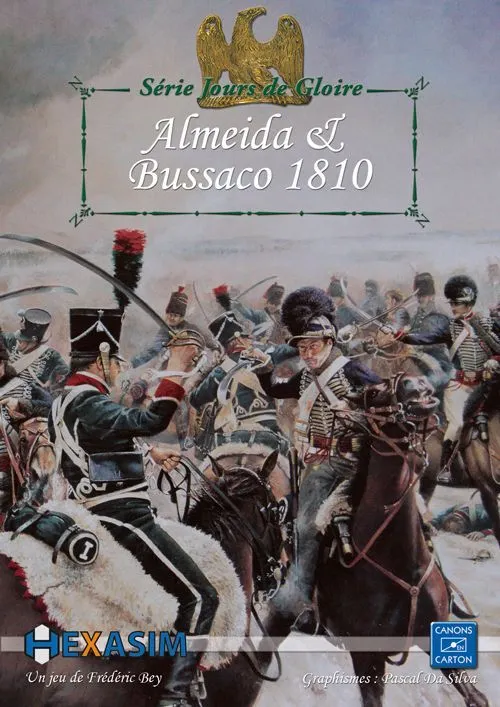
Almeida et Bussaco 1810
- 2 jugadores
- 120–240 min
- Complejidad 2,4/5
- 2010
2019
Ayuda con las reglas de Alexandre contre la Perse
Explicaciones claras de turnos, efectos de cartas y situaciones dudosas, con referencias a fuentes oficiales e historial de preguntas guardado.
Para 2 jugadores
¿Qué quieres saber?
Las respuestas salen del reglamento oficial, con la página para comprobarlo.
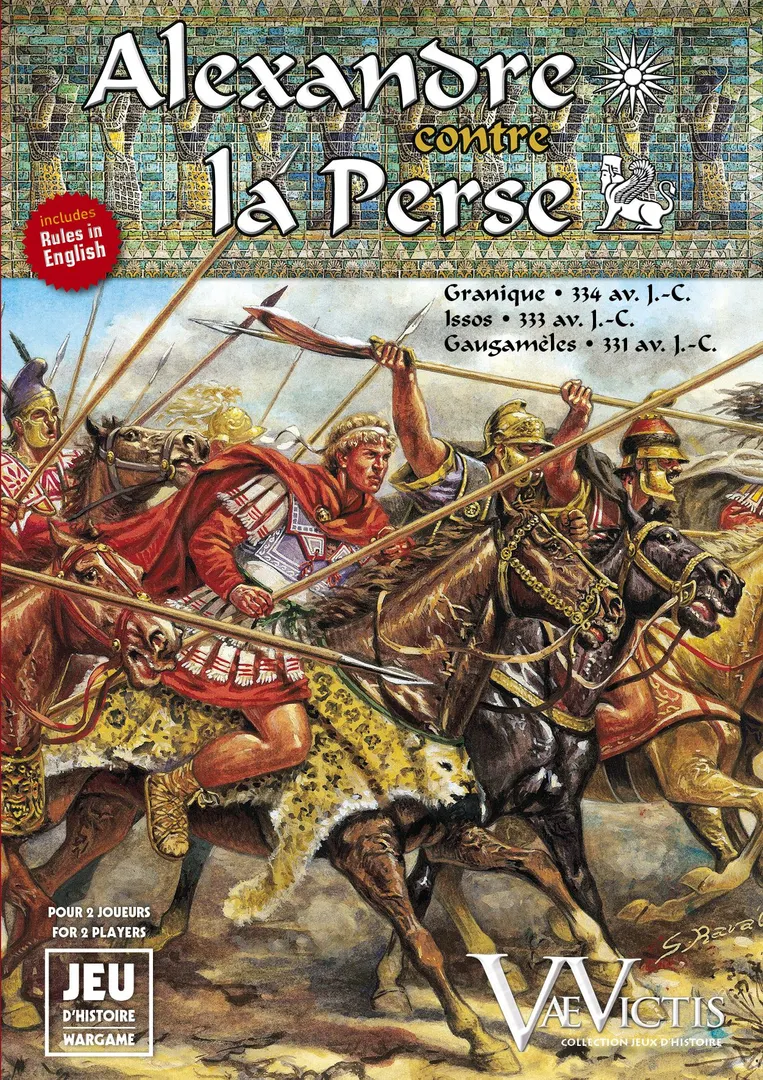
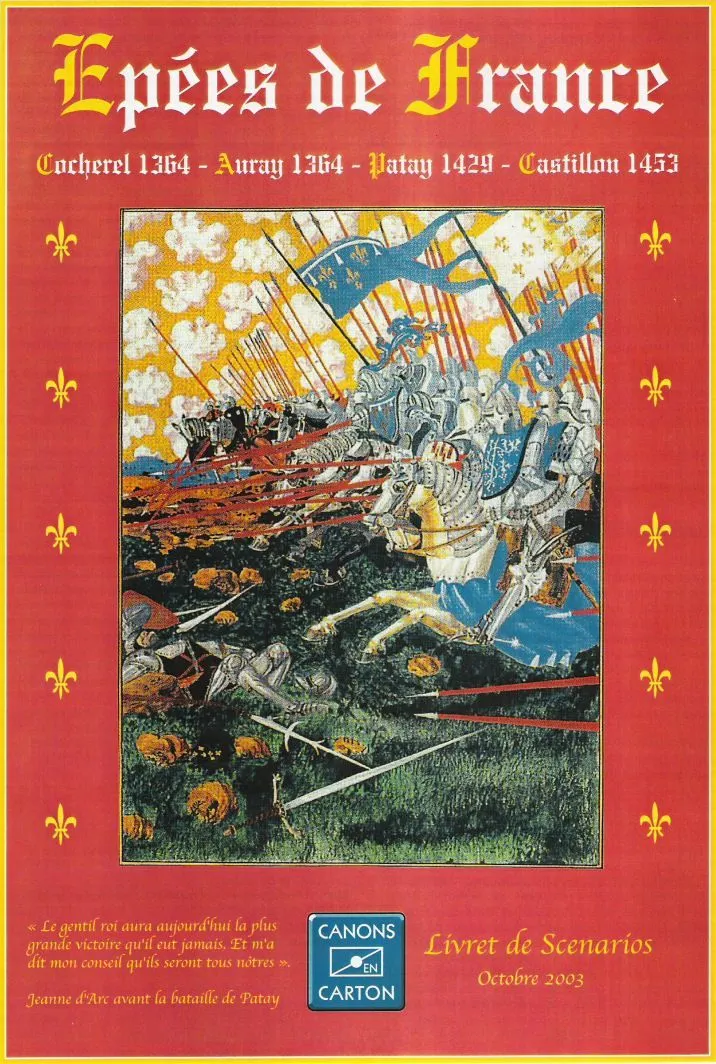
Alexandre contre la Perse es un juego de mesa publicado en 2019 para 2 jugadores, con partidas de 60 a 240 minutos y a partir de 12 años. Fue diseñado por Frédéric Bey y sus mecánicas principales son Dice Rolling, Variable Set-up y Grid Movement.







En inglés
"Alexandre contre la Perse" is a tactical level board wargame which presents the first three battles in the "Au Fil de l'Épée" Antiquity series. They bring onto the stage the greatest conqueror of Antiquity in the course of the mighty confrontations which enabled him to bring Persia to its knees. GRANICUS - In 334 BC, after crushing a revolt by the city of Thebes, the young King Alexander of Macedonia turned toward the east and set out on his conquest of Asia. He crossed the Hellespont with 35,000 men. On the banks of the Granicus River he came up against an army of 40,000 men commanded by Memnon, a Greek who was in the pay of Persia. Thanks to a vigorous attack by his Companion cavalry, Alexander succeeded in dispersing the enemy horsemen and crushing Memnon’s Greek mercenaries. This brilliant victory opened the door to Asia Minor. ISSOS - A year later on the coast of Syria the King of Kings, Darius III, determined to assemble a great army and intercept Alexander. The two armies met at Issos. While repelling an attack on his left by the Persian cavalry, Alexander and his right wing charged across the river under a rain of enemy arrows. By hurling himself into a breach on the Persian left flank, Alexander brought about its collapse and the flight of Darius. The Macedonian phalanx advanced inexorably in the center of the battlefield and completed Alexander’s victory, with the result that he could go on to invade Egypt unhindered. GAUGAMELA - The final clash between Alexander and Darius took place at Gaugamela in 331 B.C. The King of Kings had mobilized impressive forces from the eastern part of his empire. His army, unusually numerous, included elephants as well as war chariots. He compelled Alexander to fight in a vast plain where the 40,000 Macedonians risked being encircled. Once again the king of Macedonia opened the battle with a cavalry attack on his right. The phalanx meanwhile suffered severely from Persian attacks, especially on its left wing where Parmenion was in command. Alexander nevertheless forestalled the enemy by making Darius himself the target of the Companions’ charge. Once they had opened a breach, the Macedonian cavalrymen passed through it and struck the Persians from the rear, causing them to rout. This occurred in the nick of time, because Parmenion’s contingents were by then on the point of breaking. Darius fled in the direction of Arbela. Alexander caught up with him, but by then he was already dead, assassinated by a group of his generals. Alexandre contre la Perse puts the players either at the head of the Macedonian army, at whose core the cavalry and the phalangites played complementary roles, or in command of the Persian army, consisting of highly varied troops collected from all over the empire. The three battles were increasingly important chronologically, in terms of the numbers involved and their complexity. Will you, as Alexander, be able to bring down a multi-national army by means of only three battles? Will you, in the role of the King of Kings, succeed in foiling Alexander’s maneuvers and vanquishing the Macedonians? —description from the publisher
Según el catálogo, Alexandre contre la Perse admite 2 jugadores. Es el número de jugadores indicado por la editorial, así que el juego está diseñado exactamente para esa cantidad de participantes. Las variantes para otros tamaños de grupo, si existen, se describen en el reglamento de tu edición; consúltalo antes de preparar otra configuración.
La duración indicada para Alexandre contre la Perse es de 60 a 240 minutos, la estimación de la editorial para una partida completa. El tiempo real depende del grupo, del número de jugadores y del conocimiento de las reglas: las primeras partidas suelen alargarse y los grupos con experiencia terminan antes. La preparación y la explicación de las reglas no están incluidas.
El catálogo indica Alexandre contre la Perse a partir de 12 años. Es la recomendación de la editorial y refleja la lectura necesaria, la complejidad de las reglas y las piezas pequeñas, no solo el tema. Los más pequeños a menudo pueden jugar con ayuda de un adulto: comprueba la edad recomendada en tu edición y la experiencia de tu grupo.
Alexandre contre la Perse tiene una puntuación de complejidad de 2,8 sobre 5 según los jugadores de BoardGameGeek, lo que lo convierte en un juego algo ligero. La puntuación refleja cuánto conocimiento de reglas, planificación y toma de decisiones exige una partida típica. Los juegos exigentes requieren una explicación inicial más larga, así que conviene usar una guía de preparación.
Alexandre contre la Perse pertenece a estas categorías: Wargame y Ancient. Sus mecánicas principales son Dice Rolling, Variable Set-up y Grid Movement. Las categorías describen el tema y la ambientación de un juego, mientras que las mecánicas describen lo que los jugadores hacen realmente en su turno. Cada mecánica lleva a una página del catálogo con juegos similares.
Los autores acreditados de Alexandre contre la Perse son: Frédéric Bey. Estos créditos proceden de los datos publicados del juego y nombran a las personas responsables de su diseño, no a ilustradores ni editoriales. Las páginas de autor de MeepleRules reúnen otros títulos de los mismos autores, algo útil cuando un juego te gusta y buscas otros parecidos.
El catálogo clasifica Alexandre contre la Perse como juego base. Se juega por sí solo con los componentes de la caja y no requiere ningún otro título. Las expansiones, si existen, añaden contenido o reglas nuevas y aparecen por separado en el catálogo con un enlace a este juego base.