
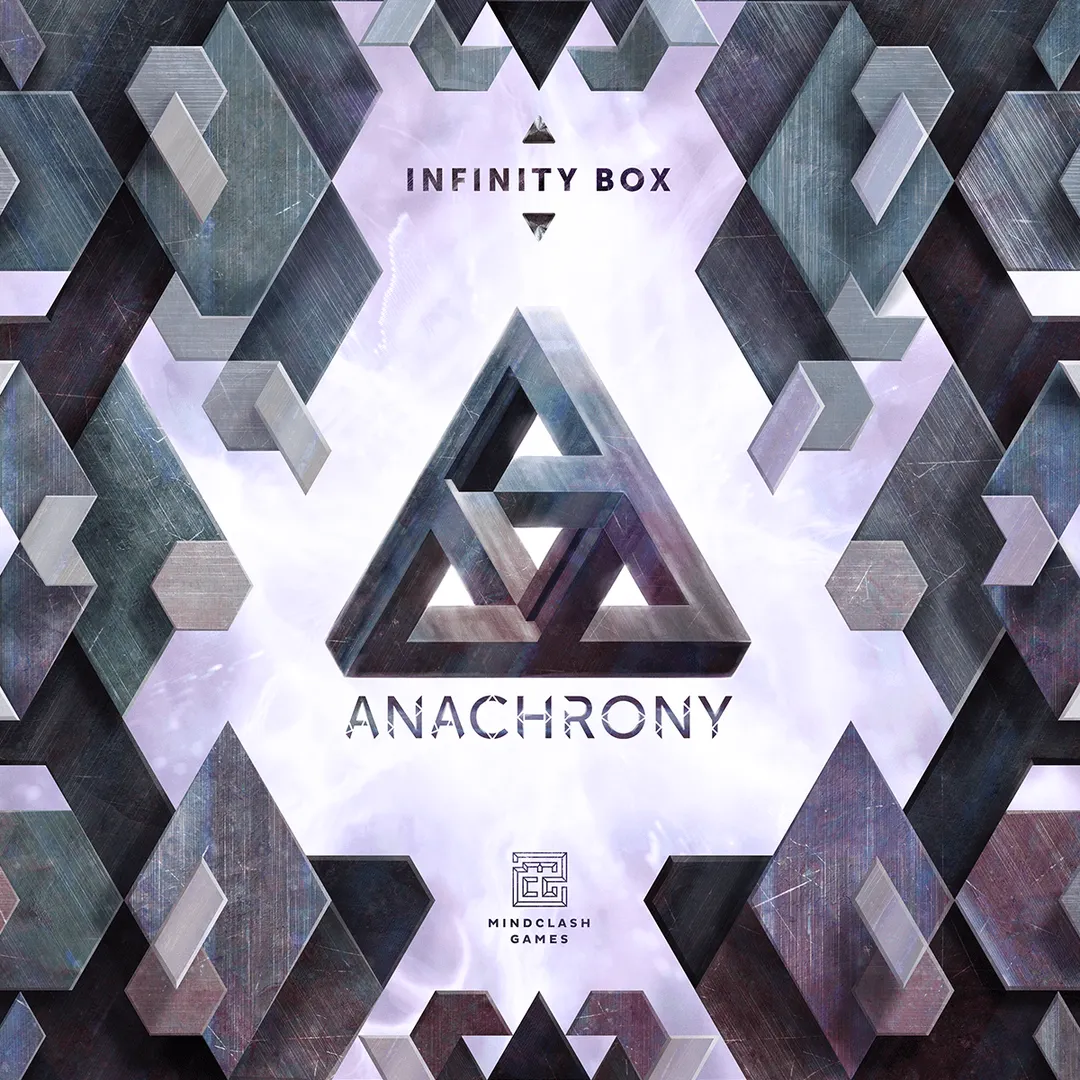
- Puntuación BGG
- 8,9
Anachrony: Infinity Box
- 1–4 jugadores
- 30–120 min
- Complejidad 4,0/5
- 2020

Ayuda con las reglas de Anachrony: Fracturas del Tiempo
Explicaciones claras de turnos, efectos de cartas y situaciones dudosas, con referencias a fuentes oficiales e historial de preguntas guardado.
¿Qué quieres saber?
Las respuestas salen del reglamento oficial, con la página para comprobarlo.
Anachrony: Fracturas del Tiempo es una expansión de Anachrony publicada en 2020 para 1–4 jugadores, con partidas de 90 a 150 minutos y a partir de 15 años. Fue diseñado por Viktor Péter, Richard Ámann y Dávid Turczi y sus mecánicas principales son Variable Player Powers, Set Collection y Worker Placement.








En inglés
Since the Paths' Time Rifts powered up for the first time on the Day of Reminiscence, masses of people across New Earth have been seeing visions of a fifth Time Rift hovering over the eerie Ground Zero of the impact, waiting to be discovered. These visions also invoked an increasing sense of empathy and fellowship between these people — a bond much stronger than their Path affiliation. A mass exodus from the Path capitals took place over the course of the first Era, and the first pioneers discovered that the Time Rift in their visions not only exists, but it holds the foundations of a new civilization, one that may eventually set all people of New Earth down a new path - the Path of Unity. Explorers from the Path of Unity soon discovered a secluded mountain valley where the enigmatic flora not only survived the impact, but it mutated and evolved by the asteroid’s toxic Neutronium dust. The resulting flower-like crystal formations synthesize a substance called Flux, which is collected and studied by the Harvesters, the valley’s mysterious inhabitants. The Harvesters are willing to share the secrets of the Flux technology with the Paths, but remain silent about its side effects, which only they are immune to... In the alternate storyline of Fractures of Time, Anachrony’s first major expansion, the four original Paths and the newly formed, sanguine Path of Unity have gained access to a powerful new technology called Flux. Flux Cores can be acquired in the Amethynia Valley, the expansion’s new main zone. By using the Flux Cores to power up their Fracture device, players may move (“Blink”) one of their already placed Exosuits to a new action space instead of placing a new one, or immediately retrieve some of their Workers or Free Action markers. This can result in never-before-seen action efficiency, but just like the Time Rifts, the Flux technology is a double-edged sword. Without a sufficiently advanced Fracture device, overusing it can cause Temporal Glitches; hectic negative effects such as shutting down the Exosuit bay slots, temporarily disabling buildings, or making players more prone to Anomalies. The Valley holds other secrets as well. The Operators’ advanced technology allows players to remove the Temporal Glitches, upgrade their classic Path tech with new quirks, and even enlist the Harvesters themselves as a powerful new class of Workers, who are immune to the Flux’s side effects. —description from the publisher
Según el catálogo, Anachrony: Fracturas del Tiempo admite de 1 a 4 jugadores. Este intervalo corresponde al número de jugadores indicado por la editorial, así que el juego puede prepararse para cualquier grupo dentro de ese margen. La preparación, algunas reglas y la puntuación pueden variar según el número de jugadores; consulta la configuración exacta en el reglamento de tu edición.
La duración indicada para Anachrony: Fracturas del Tiempo es de 90 a 150 minutos, la estimación de la editorial para una partida completa. El tiempo real depende del grupo, del número de jugadores y del conocimiento de las reglas: las primeras partidas suelen alargarse y los grupos con experiencia terminan antes. La preparación y la explicación de las reglas no están incluidas.
El catálogo indica Anachrony: Fracturas del Tiempo a partir de 15 años. Es la recomendación de la editorial y refleja la lectura necesaria, la complejidad de las reglas y las piezas pequeñas, no solo el tema. Los más pequeños a menudo pueden jugar con ayuda de un adulto: comprueba la edad recomendada en tu edición y la experiencia de tu grupo.
Anachrony: Fracturas del Tiempo tiene una puntuación de complejidad de 4,5 sobre 5 según los jugadores de BoardGameGeek, lo que lo convierte en un juego exigente. La puntuación refleja cuánto conocimiento de reglas, planificación y toma de decisiones exige una partida típica. Los juegos exigentes requieren una explicación inicial más larga, así que conviene usar una guía de preparación.
Anachrony: Fracturas del Tiempo pertenece a estas categorías: Economic, Science Fiction y Expansion for Base-game. Sus mecánicas principales son Variable Player Powers, Set Collection y Worker Placement. Las categorías describen el tema y la ambientación de un juego, mientras que las mecánicas describen lo que los jugadores hacen realmente en su turno. Cada mecánica lleva a una página del catálogo con juegos similares.
Los autores acreditados de Anachrony: Fracturas del Tiempo son: Viktor Péter, Richard Ámann y Dávid Turczi. Estos créditos proceden de los datos publicados del juego y nombran a las personas responsables de su diseño, no a ilustradores ni editoriales. Las páginas de autor de MeepleRules reúnen otros títulos de los mismos autores, algo útil cuando un juego te gusta y buscas otros parecidos.
El catálogo clasifica Anachrony: Fracturas del Tiempo como expansión de Anachrony. Las expansiones añaden contenido, reglas o escenarios al juego base y normalmente no se pueden jugar solas, así que necesitas Anachrony para usarla. Comprueba que tu edición de Anachrony sea compatible, porque algunas expansiones se revisaron entre ediciones.


