

- Puntuación BGG
- 7,1
Promenade: Curator Expansion
- 2–4 jugadores
- 45–60 min
- Complejidad 2,0/5
- 2019
2019
Ayuda con las reglas de Art Decko
Explicaciones claras de turnos, efectos de cartas y situaciones dudosas, con referencias a fuentes oficiales e historial de preguntas guardado.
Para 2 jugadores
¿Qué quieres saber?
Las respuestas salen del reglamento oficial, con la página para comprobarlo.
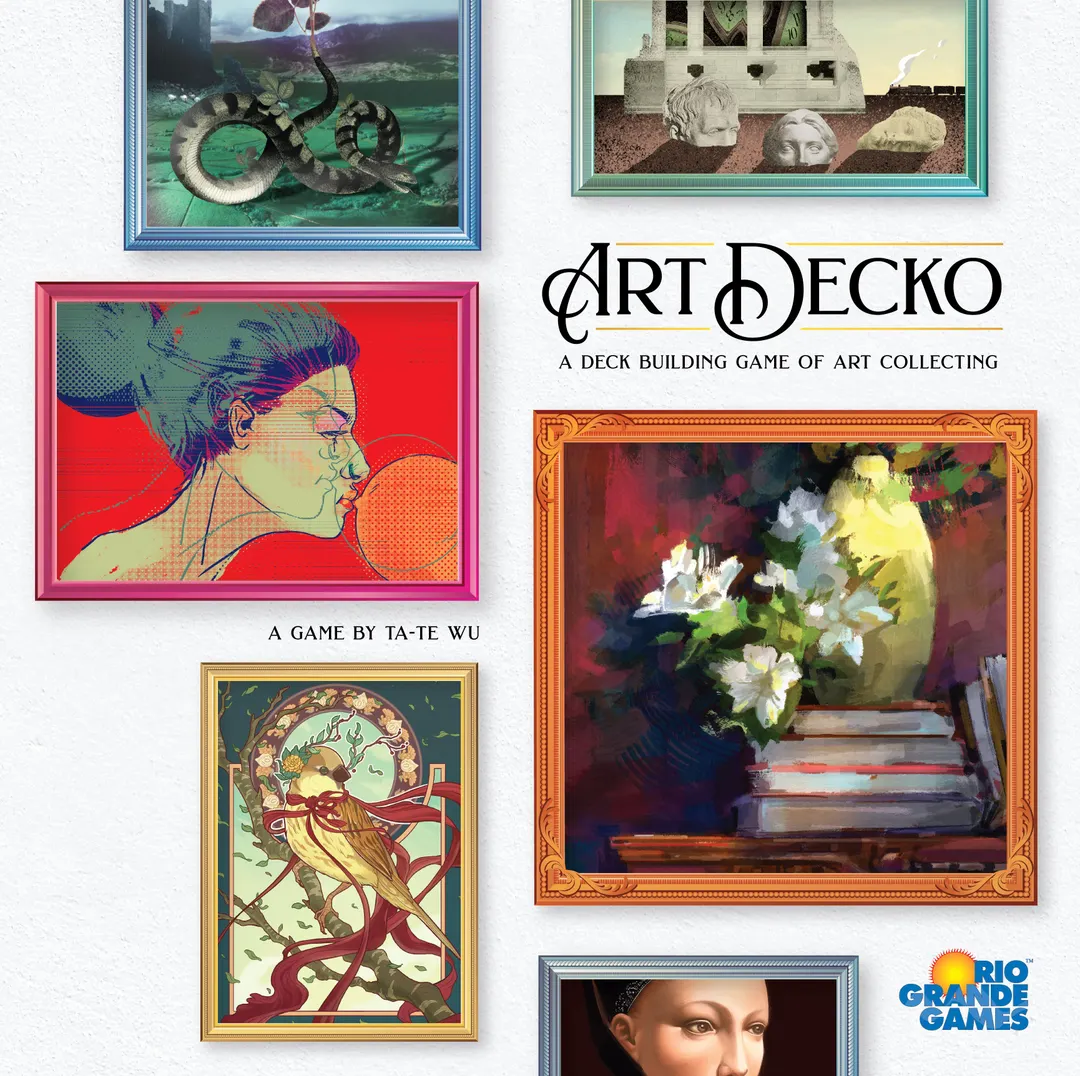
Art Decko es un juego de mesa publicado en 2019 para 2–4 jugadores, con partidas de 45 a 60 minutos y a partir de 10 años. Fue diseñado por Ta-Te Wu y sus mecánicas principales son Commodity Speculation y Deck, Bag, and Pool Building.








En inglés
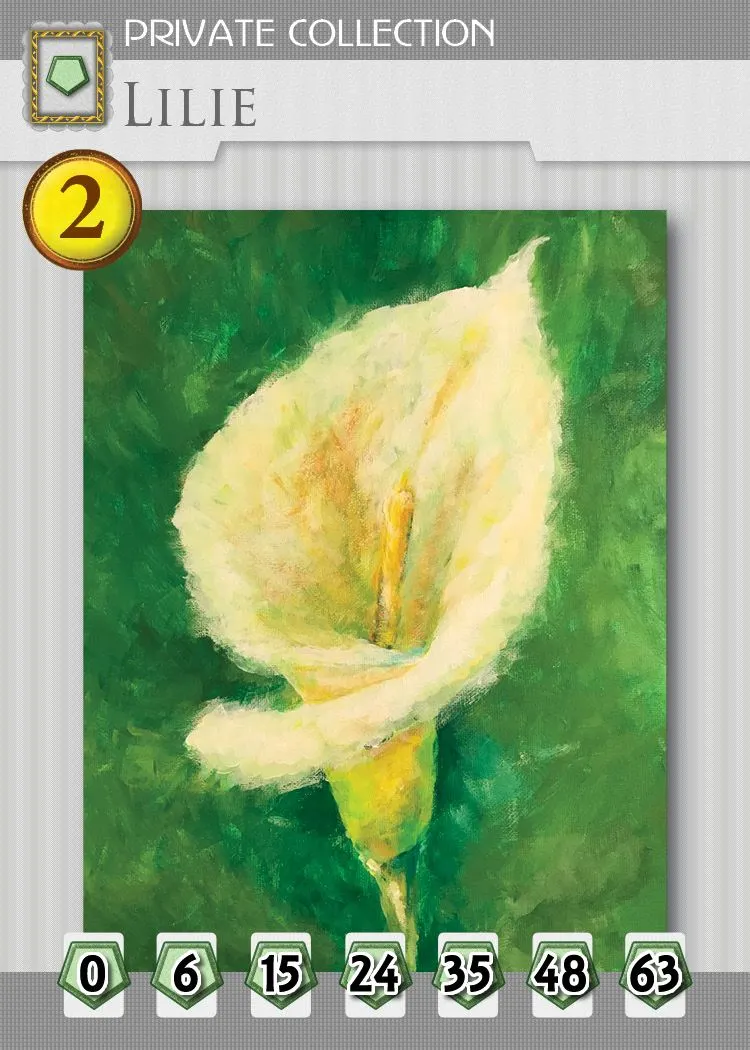
Art Decko, first released as Promenade, is a light strategy game for 2 to 4 painting collectors in which you try to create a valuable deck of gold and painting cards over the course of play. These cards — gold and paintings — both count as currencies in the game, and you can use them to purchase more paintings, acquire more gold, and pay for exhibition space in a museum. Your long-term goal is to manipulate the market value of certain styles of artwork, while also earning points by placing paintings in the museum. The game includes paintings from five styles of art — Art Nouveau, Pop Art, Renaissance, Surrealism, and Impressionism — and you start with five random painting cards in your deck. Each art style starts with a value of 1 gold for a painting. You also have five starting gold cards in your deck, with the cards being worth 1 or 2 gold, with some cards having a special ability on them. To start the game, shuffle your deck, then take five cards in hand. Fill the four galleries with 2-3 random paintings each, then place two random 3-gold cards (each with a special power) in the bank, along with the deck of 5-gold cards. Paintings in galleries cost 1-8 gold, while gold cards cost 5 or 8 gold. On a turn, take two actions from these three choices, repeating an action, if desired: • Haggle: Discard a card from your hand to draw two cards from your deck. • Acquire: Pay the acquisition cost of a painting or gold card by discarding cards from your hand, then place that card in your discard pile. Increase the "market rating" of the painting's art style or gold by the value listed in the gallery/bank. As the market rating of an art style increases, each painting in that style is worth more gold, effectively increasing its buying power; that art style is also worth more points at game's end. • Exhibit: Pay the exhibition cost for a gallery, then place a painting into that gallery that matches one of that gallery's invitation markers. (A gallery might want, for example, 2 Impressionistic paintings, 1 Renaissance painting, and 1 painting of any type.) Mark that painting with one of your ownership tokens, then place the related invitation marker on the highest available victory point (VP) space, scoring those points for yourself immediately. That painting is now removed from your deck. If you use the special ability on a gold card instead of its listed numerical value, remove that card from the game. At the end of your turn, discard any number of cards from your hand, then refill your hand to five cards. If a gallery has no paintings in it, refill all of the galleries with 2-3 paintings, then replace each empty gallery's cost token with the next highest one available. When at least twelve paintings are in the museum, the painting deck is empty, or an art style or gold reaches a market rating of 70, finish the round, then proceed to final scoring. The value of gold depends on its market rating, with its value ratio ranging from 6:1 to 1:1. Each painting in your deck is worth 1-7 VPs depending on the market rating of its art style. Each exhibition space in the museum also has a random bonus that was revealed at the start of play, and you can earn additional points through these bonuses. In the end, the player with most VPs wins.
Según el catálogo, Art Decko admite de 2 a 4 jugadores. Este intervalo corresponde al número de jugadores indicado por la editorial, así que el juego puede prepararse para cualquier grupo dentro de ese margen. La preparación, algunas reglas y la puntuación pueden variar según el número de jugadores; consulta la configuración exacta en el reglamento de tu edición.
La duración indicada para Art Decko es de 45 a 60 minutos, la estimación de la editorial para una partida completa. El tiempo real depende del grupo, del número de jugadores y del conocimiento de las reglas: las primeras partidas suelen alargarse y los grupos con experiencia terminan antes. La preparación y la explicación de las reglas no están incluidas.
El catálogo indica Art Decko a partir de 10 años. Es la recomendación de la editorial y refleja la lectura necesaria, la complejidad de las reglas y las piezas pequeñas, no solo el tema. Los más pequeños a menudo pueden jugar con ayuda de un adulto: comprueba la edad recomendada en tu edición y la experiencia de tu grupo.
Art Decko tiene una puntuación de complejidad de 2,2 sobre 5 según los jugadores de BoardGameGeek, lo que lo convierte en un juego algo ligero. La puntuación refleja cuánto conocimiento de reglas, planificación y toma de decisiones exige una partida típica. Los juegos exigentes requieren una explicación inicial más larga, así que conviene usar una guía de preparación.
Art Decko pertenece a estas categorías: Card Game y Economic. Sus mecánicas principales son Commodity Speculation y Deck, Bag, and Pool Building. Las categorías describen el tema y la ambientación de un juego, mientras que las mecánicas describen lo que los jugadores hacen realmente en su turno. Cada mecánica lleva a una página del catálogo con juegos similares.
Los autores acreditados de Art Decko son: Ta-Te Wu. Estos créditos proceden de los datos publicados del juego y nombran a las personas responsables de su diseño, no a ilustradores ni editoriales. Las páginas de autor de MeepleRules reúnen otros títulos de los mismos autores, algo útil cuando un juego te gusta y buscas otros parecidos.
El catálogo clasifica Art Decko como juego base. Se juega por sí solo con los componentes de la caja y no requiere ningún otro título. Las expansiones, si existen, añaden contenido o reglas nuevas y aparecen por separado en el catálogo con un enlace a este juego base.