- Puesto en BGG
- BGG #8138
- Puntuación BGG
- 7,3
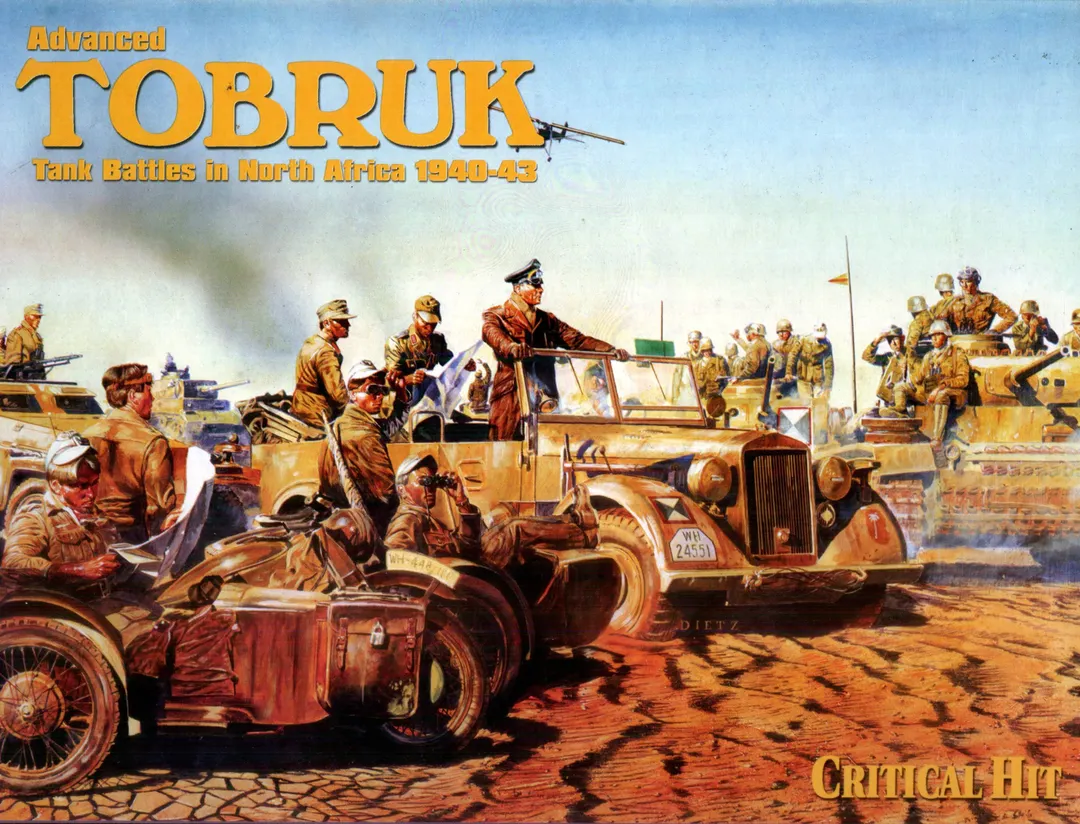
Advanced Tobruk: Tank Battles in North Africa 1940-43
- 2 jugadores
- 180 min
- Complejidad 4,1/5
- 2002
2012
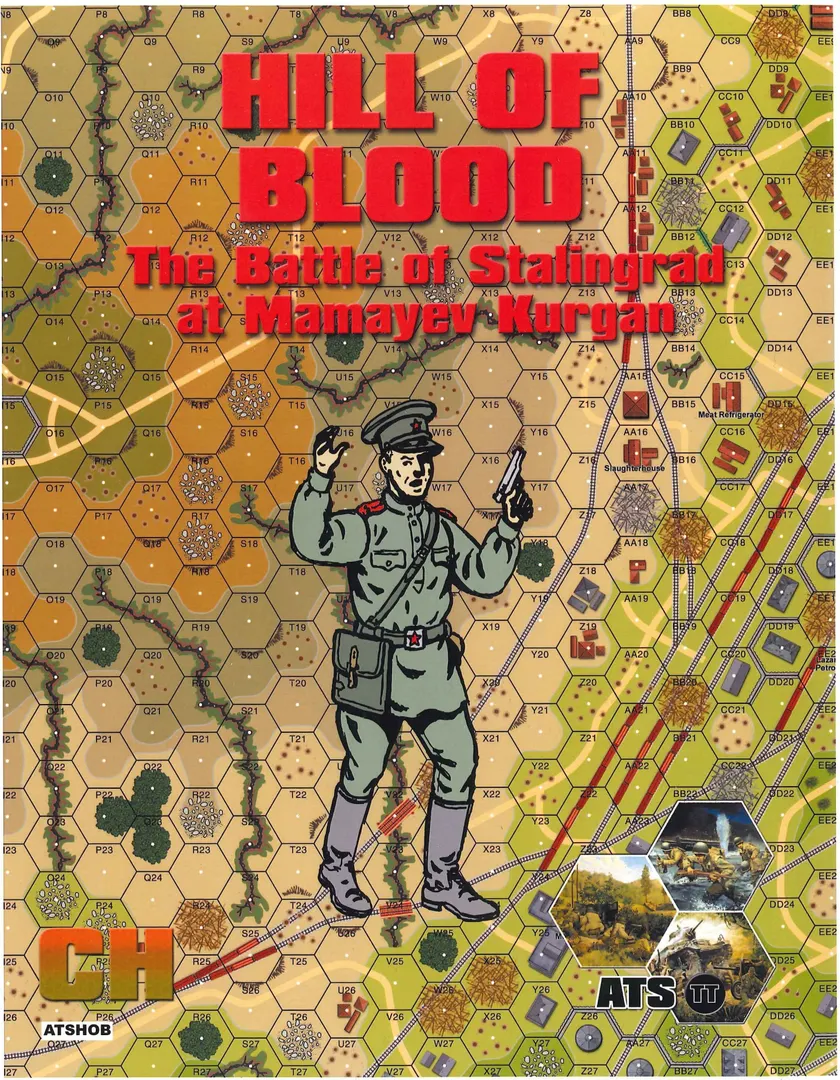
Ayuda con las reglas de ATS TT: Hill of Blood – Mamayev Kurgan
Explicaciones claras de turnos, efectos de cartas y situaciones dudosas, con referencias a fuentes oficiales e historial de preguntas guardado.
¿Qué quieres saber?
Las respuestas salen del reglamento oficial, con la página para comprobarlo.
ATS TT: Hill of Blood – Mamayev Kurgan es una expansión de juego de mesa publicada en 2012 para 2 jugadores, con partidas de 240 minutos y a partir de 12 años. Fue diseñado por Ray Tapio y David Lamb y sus mecánicas principales son Hexagon Grid.






En inglés
MAMAEV KURGAN, STALINGRAD, RUSSIA, 27 September 1942: Acknowledging the damage done to his army in assaulting the southern and central sections of the city, General von Paulus had systematically reconfigured his forces for a fresh assault. Two shock groups were formed, with one consisting primarily of the 100th Jäger Division, whose task was to clear and control Mamaev Kurgan, followed by an advance into the Tennis Racket and the Bannyi Ravine and finally to occupy the Krasnyi Oktiabr workers' settlements. Paulus' counterpart, General Chuikov was well aware of these preparations and had planned appropriate spoiling attacks, though he was unaware of the fresh German reinforcements. His attack was disrupted before it could even begin, with waves of Stukas strafing his advancing forces. His strongpoint on the crest of the burial mound was destroyed. Bombs and artillery cut down the attackers, decimating their ranks and allowing the following German advance to gain ground. The jägers advanced two regiments abreast and captured the western slopes, but initially failed to take the southern slopes. The 227th Jäger Regiment's vigorous assaults, supported by intense artillery, destroyed the Russian ability to hold on. The Germans would secure the summit that evening (though some bypassed remnants would harass the Germans on the southern and western slopes for the next few days). By day's end, the 95th Division retained a foothold on the northern and eastern slopes of the burial mound, but was down to only 400 effective fighting men. The Battle of Stalingrad has received no shortage of treatment in the wargame realm. No tactical-level game has ever treated the titanic and unique battle for Stalingrad's Mamayev Hill, aka Mamayev Kurgan ... until NOW. From the first thrusts of Hitler's Wehrmacht on 13 September to the last days of 1942 the hill changed hands time and again. By 27 September the Germans had again captured half of Mamayev Kurgan. The Soviets held their own positions on the slopes of the hill, as the 284th Rifle Division desperately defended key strongholds. The defenders held out until 26 January 1943, when the Soviet winter offensive known as Operation Uranus, relieved them, in the process trapping and destroying the German VI Armee in the tomb of Stalingrad. When the battle ended, the blood-soaked hill known as Mamayev Kurgan was plowed up and under ... and mixed with blood and fragments of shrapnel (between 500 and 1,250 steel splinters were later counted per square meter). The earth on the hill had remained black in the winter, as the snow kept melting in the many fires and explosions. During the spring of 1943 the soil of Mamayev Kurgan remained black. No grass would sprout in its scorched and blood-soaked soil. It's time to come out of the factories ... at least until CH's ATS Krasny Oktyabr hits the streets ... and have a unique Stalingrad-themed experience as you fight to hold, capture, or re-capture Mamayev Kurgan. Interested in accurate, color Molotov Projector counters? Check. Panzers in Eastern Front summer 1942 colors? Check. And a battlefield like none you and your cardboard soldiers have ever contested? Check and mate. It's time to get your Schmeisser strapped on, hitch a ride on the pack of a Panzerkampfwagen IIIj ... and get to where your Feldwebel tells you to get. Raus!
Según el catálogo, ATS TT: Hill of Blood – Mamayev Kurgan admite 2 jugadores. Es el número de jugadores indicado por la editorial, así que el juego está diseñado exactamente para esa cantidad de participantes. Las variantes para otros tamaños de grupo, si existen, se describen en el reglamento de tu edición; consúltalo antes de preparar otra configuración.
La duración indicada para ATS TT: Hill of Blood – Mamayev Kurgan es de 240 minutos, la estimación de la editorial para una partida completa. El tiempo real depende del grupo, del número de jugadores y del conocimiento de las reglas: las primeras partidas suelen alargarse y los grupos con experiencia terminan antes. La preparación y la explicación de las reglas no están incluidas.
El catálogo indica ATS TT: Hill of Blood – Mamayev Kurgan a partir de 12 años. Es la recomendación de la editorial y refleja la lectura necesaria, la complejidad de las reglas y las piezas pequeñas, no solo el tema. Los más pequeños a menudo pueden jugar con ayuda de un adulto: comprueba la edad recomendada en tu edición y la experiencia de tu grupo.
ATS TT: Hill of Blood – Mamayev Kurgan pertenece a estas categorías: Wargame, World War II y Expansion for Base-game. Sus mecánicas principales son Hexagon Grid. Las categorías describen el tema y la ambientación de un juego, mientras que las mecánicas describen lo que los jugadores hacen realmente en su turno. Cada mecánica lleva a una página del catálogo con juegos similares.
Los autores acreditados de ATS TT: Hill of Blood – Mamayev Kurgan son: Ray Tapio y David Lamb. Estos créditos proceden de los datos publicados del juego y nombran a las personas responsables de su diseño, no a ilustradores ni editoriales. Las páginas de autor de MeepleRules reúnen otros títulos de los mismos autores, algo útil cuando un juego te gusta y buscas otros parecidos.
El catálogo clasifica ATS TT: Hill of Blood – Mamayev Kurgan como expansión. Las expansiones añaden contenido, reglas o escenarios a un juego base existente y normalmente no se pueden jugar solas. Comprueba en la caja o en la descripción de la editorial qué juego base se necesita y asegúrate de que tu edición de ese juego sea compatible con esta expansión.