
- Puesto en BGG
- BGG #24.848
- Puntuación BGG
- 6,4
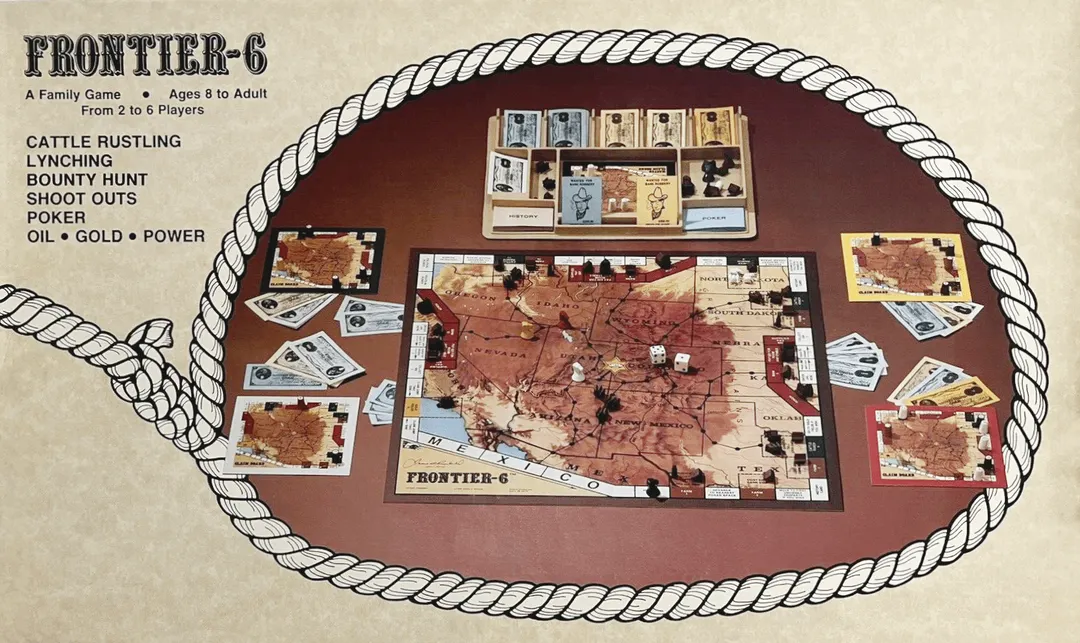
Frontier-6
- 2–6 jugadores
- 60 min
- Complejidad 1,9/5
- 1980
1986
Ayuda con las reglas de Az Ezüst-tó kincse
Explicaciones claras de turnos, efectos de cartas y situaciones dudosas, con referencias a fuentes oficiales e historial de preguntas guardado.
Para 2 jugadores
¿Qué quieres saber?
Las respuestas salen del reglamento oficial, con la página para comprobarlo.
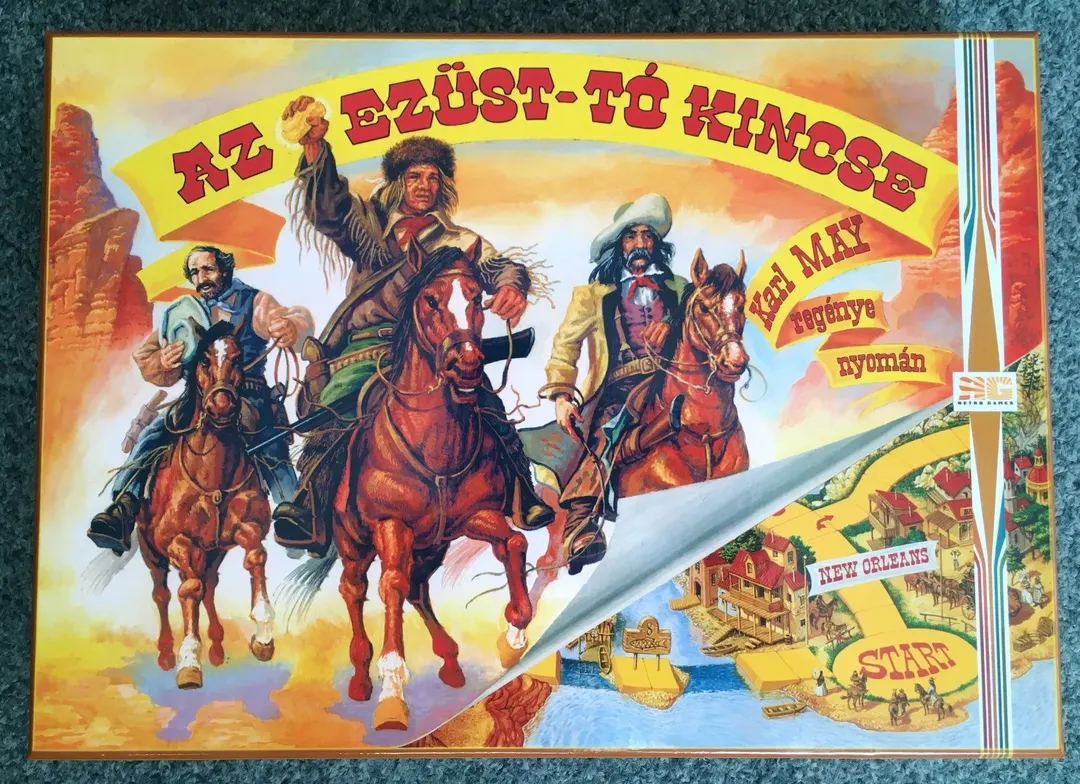
Az Ezüst-tó kincse es un juego de mesa publicado en 1986 para 2–6 jugadores, con partidas de 60 a 90 minutos y a partir de 10 años. Sus mecánicas principales son Roll / Spin and Move.


En inglés
During the first half of the last century the blood-soaked field of the Far-West, the hunting grounds of the expelled Indians were populated by white settlers. New towns were born, where many adventurers, soldiers of fortune even robbers were living. On the roads public security was nil. Brave travellers, hunters, miners were much threatened. The players drop in to this venturesome world written by Charles May as well. Their goal is to pass through the marked direction at least five to six times amid many adventures and dangers and to gain as many mining, fishing and hunting fields as possible. In the fields where the treasure of the Silver Lake is hidden gold nuggets are found which are brought by the Bank of New Orleans presuming that the player is not robbed along the way. The winner is, who made the biggest fortune at the end. We wish you exciting adventures on the way! (straight from the back of the box) This monopoly-type game is based on the book Der Schatz im Silbersee (in Hungarian: Az Ezüst-tó kincse) by Karl May. Players can buy fishery, shooting and mining concessions instead of buying properties.
Según el catálogo, Az Ezüst-tó kincse admite de 2 a 6 jugadores. Este intervalo corresponde al número de jugadores indicado por la editorial, así que el juego puede prepararse para cualquier grupo dentro de ese margen. La preparación, algunas reglas y la puntuación pueden variar según el número de jugadores; consulta la configuración exacta en el reglamento de tu edición.
La duración indicada para Az Ezüst-tó kincse es de 60 a 90 minutos, la estimación de la editorial para una partida completa. El tiempo real depende del grupo, del número de jugadores y del conocimiento de las reglas: las primeras partidas suelen alargarse y los grupos con experiencia terminan antes. La preparación y la explicación de las reglas no están incluidas.
El catálogo indica Az Ezüst-tó kincse a partir de 10 años. Es la recomendación de la editorial y refleja la lectura necesaria, la complejidad de las reglas y las piezas pequeñas, no solo el tema. Los más pequeños a menudo pueden jugar con ayuda de un adulto: comprueba la edad recomendada en tu edición y la experiencia de tu grupo.
Az Ezüst-tó kincse tiene una puntuación de complejidad de 1,5 sobre 5 según los jugadores de BoardGameGeek, lo que lo convierte en un juego ligero. La puntuación refleja cuánto conocimiento de reglas, planificación y toma de decisiones exige una partida típica. Los juegos exigentes requieren una explicación inicial más larga, así que conviene usar una guía de preparación.
Az Ezüst-tó kincse pertenece a estas categorías: Economic, American West y Novel-based. Sus mecánicas principales son Roll / Spin and Move. Las categorías describen el tema y la ambientación de un juego, mientras que las mecánicas describen lo que los jugadores hacen realmente en su turno. Cada mecánica lleva a una página del catálogo con juegos similares.
El catálogo clasifica Az Ezüst-tó kincse como juego base. Se juega por sí solo con los componentes de la caja y no requiere ningún otro título. Las expansiones, si existen, añaden contenido o reglas nuevas y aparecen por separado en el catálogo con un enlace a este juego base.