
- Puesto en BGG
- BGG #3342
- Puntuación BGG
- 7,8
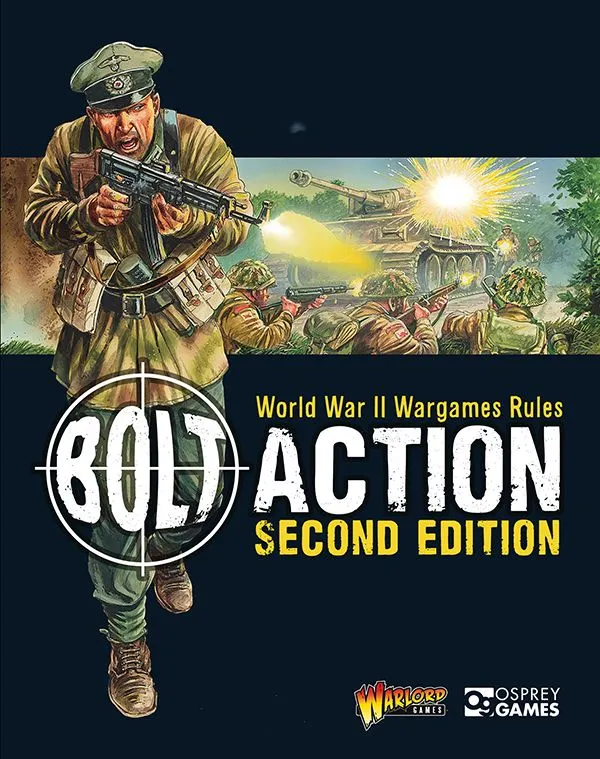
Bolt Action
- 2–6 jugadores
- 120 min
- Complejidad 2,7/5
- 2012

2018
Ayuda con las reglas de Barbarossa: Kicking in the Door... – Germany Invades the Soviet Union
Explicaciones claras de turnos, efectos de cartas y situaciones dudosas, con referencias a fuentes oficiales e historial de preguntas guardado.
¿Qué quieres saber?
Las respuestas salen del reglamento oficial, con la página para comprobarlo.
Barbarossa: Kicking in the Door... – Germany Invades the Soviet Union es una expansión de juego de mesa publicada en 2018 para 4–12 jugadores y a partir de 12 años. Fue diseñado por Andrew Rolph y sus mecánicas principales son Simulation y Scenario / Mission / Campaign Game.




En inglés
Barbarossa – Kicking in the Door… is a wargames campaign covering the German invasion of the Soviet Union between June and September 1941. It is designed for games in which a stand represents a platoon, such as Blitzkrieg Commander, Command Decision: TOB, A Fistful of Tows, Rapid Fire and others, including those which wargamers may have written themselves. The system generates 150+ hours of gaming spread over 50+ individual battles which are fought over fifteen weekly campaign turns. Bookkeeping is kept to a minimum as players take command of four of the German panzer divisions spearheading the invasion or the Soviet tank and infantry forces opposing them. Straightforward German attacks will be interspersed with Soviet counterattacks, storming city outskirts, holding bridgeheads or trying to break through the fortifications of the Stalin Line. Each type of battle has its own terrain specifications, victory conditions, set up restrictions and likely opposition. Individual battles are reinforced regimental/brigade sized, with some battalions of each division selected to fight whilst others are rested. In addition to managing the individual battles, however, the German player also needs to manage the campaign. Ever increasing Soviet resistance needs to be curtailed by encircling their forces. Such encirclements reduce the availability of ‘mobilisation points’ which the Soviet players use as currency to ‘buy’ greater or better equipped forces and fortifications with which the slow the German advance. A rapid, deep advance, however, will exact a heavy toll in attrition. Supply will also become a problem for the German players, limiting the numbers they can commit to battle and their artillery/air support. The book also includes a brief history of the campaign background information (such as time and groundscale) useful in adapting the system to different sets of rules and some suggestions for additional optional rules a system for generating table layouts for individual battles a comprehensive set of Appendices covering the Tables of Organisation and Equipment to both platoon and company level for all divisions and regiments involved 42 colour terrain squares to assist in creating the terrain for individual battles a worked example of the terrain generation system a Campaign Quick Reference Sheet an example Campaign Turn a complete set of very quick play rules a full colour A4 Campaign Map Barbarossa – Kicking in the Door… is an ideal campaign for a club (with eight of more players for twelve or more three hour sessions) or one to be organised remotely, by e-mail, with shorter options available for fewer players or those with less time available. For those who have purchased the author’s previous book of eastern front scenarios (Grey Steel, Red Storm – available on Wargame Vault) please note that around seven pages of history and background from that book are reproduced largely unchanged in Part One of this volume. —description from the publisher
Según el catálogo, Barbarossa: Kicking in the Door... – Germany Invades the Soviet Union admite de 4 a 12 jugadores. Este intervalo corresponde al número de jugadores indicado por la editorial, así que el juego puede prepararse para cualquier grupo dentro de ese margen. La preparación, algunas reglas y la puntuación pueden variar según el número de jugadores; consulta la configuración exacta en el reglamento de tu edición.
El catálogo indica Barbarossa: Kicking in the Door... – Germany Invades the Soviet Union a partir de 12 años. Es la recomendación de la editorial y refleja la lectura necesaria, la complejidad de las reglas y las piezas pequeñas, no solo el tema. Los más pequeños a menudo pueden jugar con ayuda de un adulto: comprueba la edad recomendada en tu edición y la experiencia de tu grupo.
Barbarossa: Kicking in the Door... – Germany Invades the Soviet Union pertenece a estas categorías: Wargame, World War II y Expansion for Base-game. Sus mecánicas principales son Simulation y Scenario / Mission / Campaign Game. Las categorías describen el tema y la ambientación de un juego, mientras que las mecánicas describen lo que los jugadores hacen realmente en su turno. Cada mecánica lleva a una página del catálogo con juegos similares.
Los autores acreditados de Barbarossa: Kicking in the Door... – Germany Invades the Soviet Union son: Andrew Rolph. Estos créditos proceden de los datos publicados del juego y nombran a las personas responsables de su diseño, no a ilustradores ni editoriales. Las páginas de autor de MeepleRules reúnen otros títulos de los mismos autores, algo útil cuando un juego te gusta y buscas otros parecidos.
El catálogo clasifica Barbarossa: Kicking in the Door... – Germany Invades the Soviet Union como expansión. Las expansiones añaden contenido, reglas o escenarios a un juego base existente y normalmente no se pueden jugar solas. Comprueba en la caja o en la descripción de la editorial qué juego base se necesita y asegúrate de que tu edición de ese juego sea compatible con esta expansión.