
- Puntuación BGG
- 6,9
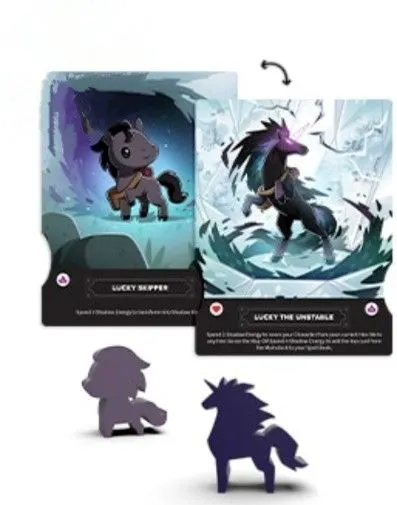
Casting Shadows: Lucky Skipper / Lucky the Unstable Player Board
- 2–4 jugadores
- 30–60 min
- Complejidad 1,0/5
- 2023
2023
Ayuda con las reglas de Casting Shadows
Explicaciones claras de turnos, efectos de cartas y situaciones dudosas, con referencias a fuentes oficiales e historial de preguntas guardado.
Para 2 jugadores
¿Qué quieres saber?
Las respuestas salen del reglamento oficial, con la página para comprobarlo.
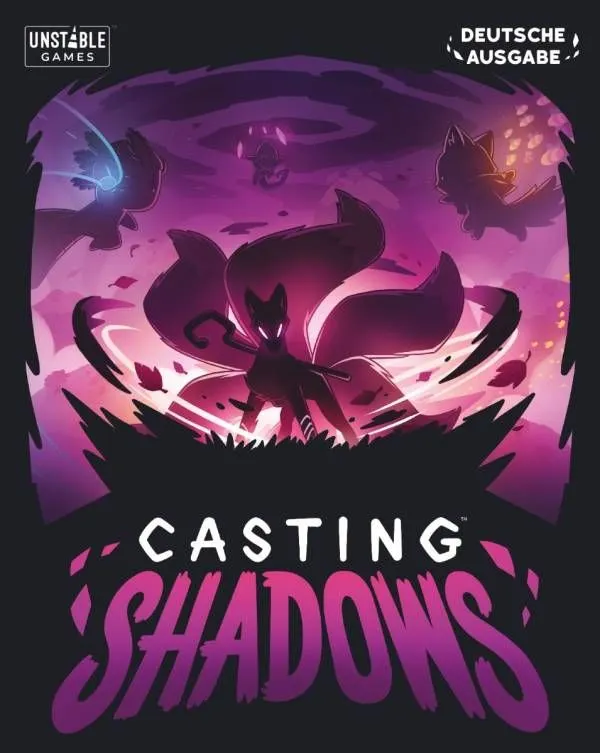
Casting Shadows es un juego de mesa publicado en 2023 para 2–4 jugadores, con partidas de 30 a 60 minutos y a partir de 12 años. Fue diseñado por Ramy Badie y sus mecánicas principales son Player Elimination, Area Movement y Dice Rolling.


En inglés
Explore a dark, enchanting world and battle your opponents in this 2-4 player turn-based competitive strategic board game. Throughout the game, you'll collect resources, learn new spells, summon a companion, and - if you're lucky - unlock your Shadow Form, all in the quest to become the ultimate Shadow Caster. The last player standing after this supernatural showdown wins the game! The Standard edition of Casting Shadows inlcludes 73 standard-sized cards, 4 rules reference cards, 5 custom dice, 7 Hex tiles, 13 Resource tokens, 4 Player boards, and 4 meeples. How to Play Your turn consists of 3 phases: Phase 1 Take the 5 Resource dice and roll them in front of you to form your Resource Pool, which contains the Resources you can spend this turn. If you start your turn on a Hex tile that grants you a specific Resource, add the corresponding Resource token to your Resource Pool. Phase 2 During this phase, you get 4 Action points to spend, and you can use them to perform any of the Actions below in any order. Each Action costs 1 Action point. You can perform the same Action more than once on your turn if you still have Action points tospend. You do not have to spend all 4 Action points each turn, but unused Action points do not roll over to subsequent turns. Your Actions include: TRAVEL: Move your Character from your current Hex tile (the Hex tile where your Meeple currently stands) to any adjacent Hex tile. COLLECT: Move a Spell, Counterspell, or Resource card from next to your current Hex tile to your Spell Book by spending the required Resources shown in the card’s Collection Cost. After you Collect a Spell or Resource card, immediately replace it with the top card from the Main deck. If you Collect a Counterspell card from the Counterspell deck, you do not need to replace it with a card from the Main deck. REFRESH: Move the card next to your current Hex tile to the discard pile and replace it with the top card from the Main deck. You cannot Refresh a card from an Ancient Rune Hex tile or a Dusty Desert Hex tile. REROLL: Choose any number of rolled Resource dice and roll them again. You cannot Reroll Cursed Crystals. PROTECT: Remove 1 Cursed Crystal from your Resource Pool. Heads up: Any Cursed Crystals remaining in front of you will hurt you at the end of your turn! CAST: Spend Resources to use a Spell card effect from your Spell Book. You can use each Spell card effect only once per turn. In addition to an Action point cost, some Actions (such as COLLECT and CAST) require you to spend Resources. Remove spent Resources from your Resource Pool by returning that Resource to the central area of Resource dice and tokens. Phase 3 During this phase, you may absorb any remaining Shadow Fragments in your Resource Pool by moving your Shadow Tracker up by that amount. If you’ve absorbed enough Shadow Energy and you are in your Base Form, you may immediately transform into Shadow Form. How to Win When the dust settles and the echoes of the last spell fade, there can be only one victor. The last player standing is crowned the champion and wins the game. View the Rulebook
Según el catálogo, Casting Shadows admite de 2 a 4 jugadores. Este intervalo corresponde al número de jugadores indicado por la editorial, así que el juego puede prepararse para cualquier grupo dentro de ese margen. La preparación, algunas reglas y la puntuación pueden variar según el número de jugadores; consulta la configuración exacta en el reglamento de tu edición.
La duración indicada para Casting Shadows es de 30 a 60 minutos, la estimación de la editorial para una partida completa. El tiempo real depende del grupo, del número de jugadores y del conocimiento de las reglas: las primeras partidas suelen alargarse y los grupos con experiencia terminan antes. La preparación y la explicación de las reglas no están incluidas.
El catálogo indica Casting Shadows a partir de 12 años. Es la recomendación de la editorial y refleja la lectura necesaria, la complejidad de las reglas y las piezas pequeñas, no solo el tema. Los más pequeños a menudo pueden jugar con ayuda de un adulto: comprueba la edad recomendada en tu edición y la experiencia de tu grupo.
Casting Shadows tiene una puntuación de complejidad de 2,3 sobre 5 según los jugadores de BoardGameGeek, lo que lo convierte en un juego algo ligero. La puntuación refleja cuánto conocimiento de reglas, planificación y toma de decisiones exige una partida típica. Los juegos exigentes requieren una explicación inicial más larga, así que conviene usar una guía de preparación.
Casting Shadows pertenece a estas categorías: Fantasy, Animals y Children's Game. Sus mecánicas principales son Player Elimination, Area Movement y Dice Rolling. Las categorías describen el tema y la ambientación de un juego, mientras que las mecánicas describen lo que los jugadores hacen realmente en su turno. Cada mecánica lleva a una página del catálogo con juegos similares.
Los autores acreditados de Casting Shadows son: Ramy Badie. Estos créditos proceden de los datos publicados del juego y nombran a las personas responsables de su diseño, no a ilustradores ni editoriales. Las páginas de autor de MeepleRules reúnen otros títulos de los mismos autores, algo útil cuando un juego te gusta y buscas otros parecidos.
El catálogo clasifica Casting Shadows como juego base. Se juega por sí solo con los componentes de la caja y no requiere ningún otro título. Las expansiones, si existen, añaden contenido o reglas nuevas y aparecen por separado en el catálogo con un enlace a este juego base.