
- Puesto en BGG
- BGG #238
- Puntuación BGG
- 7,5
Castles of Mad King Ludwig
- 1–4 jugadores
- 90 min
- Complejidad 2,7/5
- 2014
Expansión de Castles of Mad King Ludwig: Collector's Edition
2022
Ayuda con las reglas de Castles of Mad King Ludwig: Colossal
Explicaciones claras de turnos, efectos de cartas y situaciones dudosas, con referencias a fuentes oficiales e historial de preguntas guardado.
¿Qué quieres saber?
Las respuestas salen del reglamento oficial, con la página para comprobarlo.
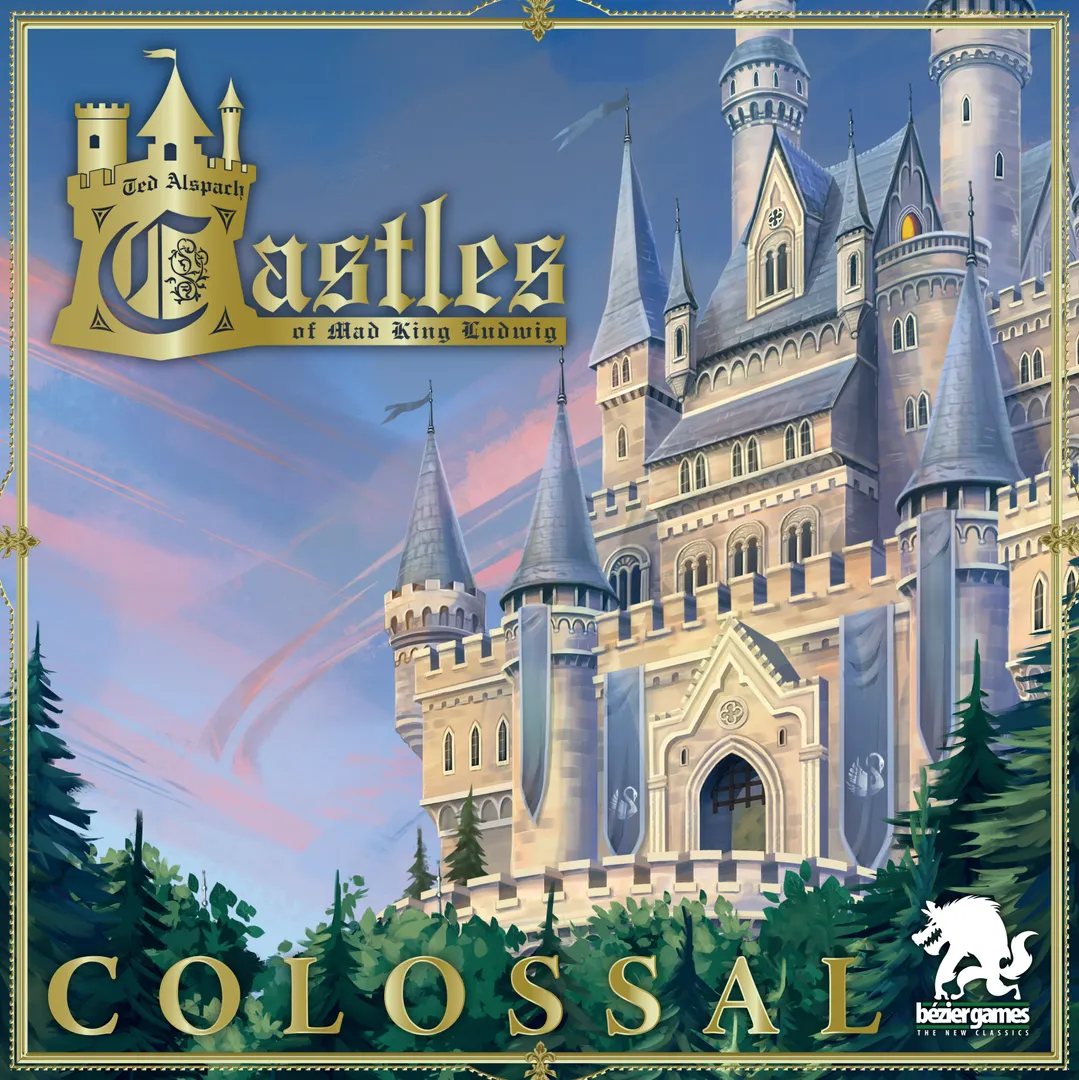
Castles of Mad King Ludwig: Colossal es una expansión de Castles of Mad King Ludwig: Collector's Edition publicada en 2022 para 1–5 jugadores. Fue diseñado por Ted Alspach.

En inglés
Castles of Mad King Ludwig: Colossal contains enlarged room tiles, tile trays with lids doubling as within-game tile holders, and a score track adjusted to the setup with the larger pieces (as they are not stored on the track in contrast to the standard game). The tiles are twice as big (i.e. four times bigger in area) compared to the standard tiles. The expansion allows the Castles of Mad King Ludwig: Collector's edition to be played with larger pieces, especially convenient for solo play and conventions. For playing the game, the expansion requires the cards, card trays, and game pieces (player markers, coins, towers, tokens, etc.) of the base game. The expansion contains a gameplay differences compared to the base game: The Foyer tiles (i.e. the starting tile for each player) of the base game have three entrances at both sides of the tiles. The Foyer tiles of the "Colossal" expansion have three entrances on one side and four entrances on the other side, thus allowing more variation in the starting position. This expansion was available as a bundle with Castles of Mad King Ludwig: Royal Collector's Edition in the Kickstarter campaign.
Según el catálogo, Castles of Mad King Ludwig: Colossal admite de 1 a 5 jugadores. Este intervalo corresponde al número de jugadores indicado por la editorial, así que el juego puede prepararse para cualquier grupo dentro de ese margen. La preparación, algunas reglas y la puntuación pueden variar según el número de jugadores; consulta la configuración exacta en el reglamento de tu edición.
Castles of Mad King Ludwig: Colossal pertenece a estas categorías: Expansion for Base-game. Las categorías describen el tema, la ambientación y el estilo de un juego, no sus reglas. Filtra el catálogo por la misma categoría para encontrar juegos similares si te gustó Castles of Mad King Ludwig: Colossal y buscas algo parecido para tu próxima noche de juegos.
Los autores acreditados de Castles of Mad King Ludwig: Colossal son: Ted Alspach. Estos créditos proceden de los datos publicados del juego y nombran a las personas responsables de su diseño, no a ilustradores ni editoriales. Las páginas de autor de MeepleRules reúnen otros títulos de los mismos autores, algo útil cuando un juego te gusta y buscas otros parecidos.
El catálogo clasifica Castles of Mad King Ludwig: Colossal como expansión de Castles of Mad King Ludwig: Collector's Edition. Las expansiones añaden contenido, reglas o escenarios al juego base y normalmente no se pueden jugar solas, así que necesitas Castles of Mad King Ludwig: Collector's Edition para usarla. Comprueba que tu edición de Castles of Mad King Ludwig: Collector's Edition sea compatible, porque algunas expansiones se revisaron entre ediciones.