

- Puesto en BGG
- BGG #21.539
- Puntuación BGG
- 6,6
Tractics
- 2 jugadores
- 90 min
- Complejidad 3,8/5
- 1971
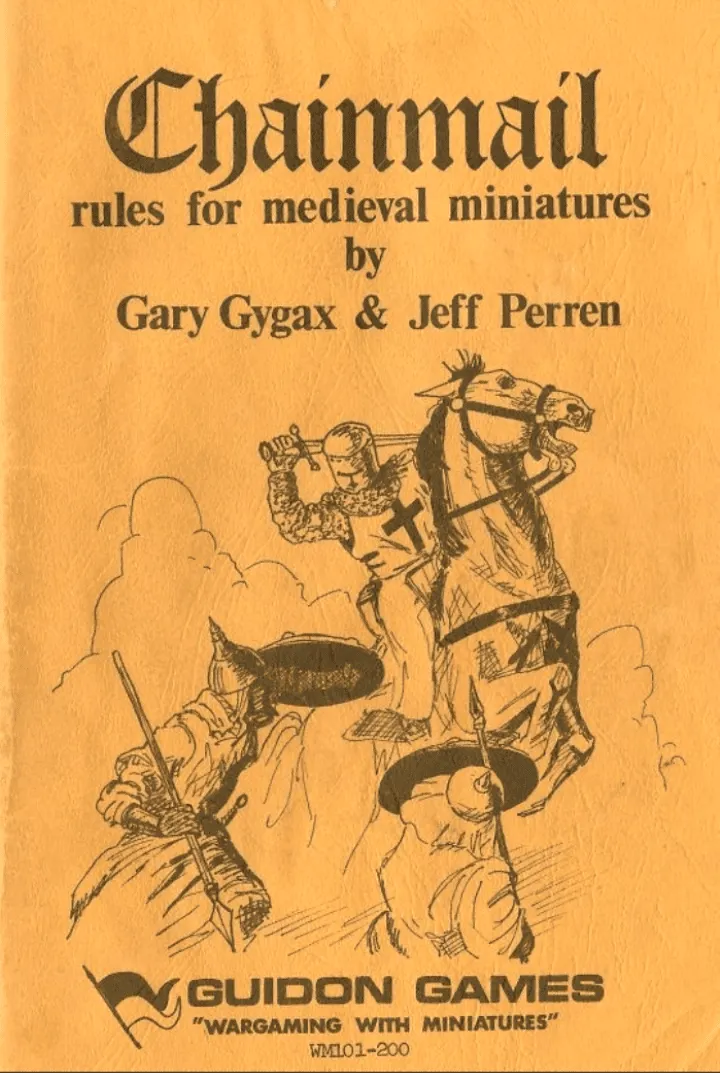
1971
Ayuda con las reglas de Chainmail: Rules for Medieval Miniatures
Explicaciones claras de turnos, efectos de cartas y situaciones dudosas, con referencias a fuentes oficiales e historial de preguntas guardado.
¿Qué quieres saber?
Las respuestas salen del reglamento oficial, con la página para comprobarlo.
Chainmail: Rules for Medieval Miniatures es un juego de mesa publicado en 1971 para 2–10 jugadores, con partidas de 360 minutos y a partir de 12 años. Fue diseñado por Gary Gygax y Jeff Perren y sus mecánicas principales son Variable Player Powers, Dice Rolling y Variable Set-up.





En inglés
Chainmail is a medieval miniatures wargame created by Gary Gygax and fellow Lake Geneva Tactical Studies Association (LGTSA) member Jeff Perren, a hobby-shop owner with whom Gygax had become friendly. The game was first published in 1971 by Guidon Games. That first edition also included a fantasy supplement, and is one of the oldest sets of rules for fantasy miniature wargaming. In 1975, Tactical Studies Rules (TSR) acquired the rights to publish Chainmail and the game may have been the basis for the earliest Dungeons & Dragons game and campaigns (Dave Arneson, co-author of the original D&D game, apparently disputes this). In the original boxed set of D&D one is directed to Chainmail for the combat system but it offered an "optional" combat system involving 20 sided dice -- a system that eventually became the D&D standard. Regardless of who you believe, the Chainmail fantasy supplement contained spells and monsters that reappeared in Dungeons & Dragons and most certainly influenced Gary Gygax and his thinking about Fantasy games in that era.
Según el catálogo, Chainmail: Rules for Medieval Miniatures admite de 2 a 10 jugadores. Este intervalo corresponde al número de jugadores indicado por la editorial, así que el juego puede prepararse para cualquier grupo dentro de ese margen. La preparación, algunas reglas y la puntuación pueden variar según el número de jugadores; consulta la configuración exacta en el reglamento de tu edición.
La duración indicada para Chainmail: Rules for Medieval Miniatures es de 360 minutos, la estimación de la editorial para una partida completa. El tiempo real depende del grupo, del número de jugadores y del conocimiento de las reglas: las primeras partidas suelen alargarse y los grupos con experiencia terminan antes. La preparación y la explicación de las reglas no están incluidas.
El catálogo indica Chainmail: Rules for Medieval Miniatures a partir de 12 años. Es la recomendación de la editorial y refleja la lectura necesaria, la complejidad de las reglas y las piezas pequeñas, no solo el tema. Los más pequeños a menudo pueden jugar con ayuda de un adulto: comprueba la edad recomendada en tu edición y la experiencia de tu grupo.
Chainmail: Rules for Medieval Miniatures tiene una puntuación de complejidad de 2,3 sobre 5 según los jugadores de BoardGameGeek, lo que lo convierte en un juego algo ligero. La puntuación refleja cuánto conocimiento de reglas, planificación y toma de decisiones exige una partida típica. Los juegos exigentes requieren una explicación inicial más larga, así que conviene usar una guía de preparación.
Chainmail: Rules for Medieval Miniatures pertenece a estas categorías: Fantasy, Wargame y Miniatures. Sus mecánicas principales son Variable Player Powers, Dice Rolling y Variable Set-up. Las categorías describen el tema y la ambientación de un juego, mientras que las mecánicas describen lo que los jugadores hacen realmente en su turno. Cada mecánica lleva a una página del catálogo con juegos similares.
Los autores acreditados de Chainmail: Rules for Medieval Miniatures son: Gary Gygax y Jeff Perren. Estos créditos proceden de los datos publicados del juego y nombran a las personas responsables de su diseño, no a ilustradores ni editoriales. Las páginas de autor de MeepleRules reúnen otros títulos de los mismos autores, algo útil cuando un juego te gusta y buscas otros parecidos.
El catálogo clasifica Chainmail: Rules for Medieval Miniatures como juego base. Se juega por sí solo con los componentes de la caja y no requiere ningún otro título. Las expansiones, si existen, añaden contenido o reglas nuevas y aparecen por separado en el catálogo con un enlace a este juego base.