
- Puesto en BGG
- BGG #6882
- Puntuación BGG
- 7,1
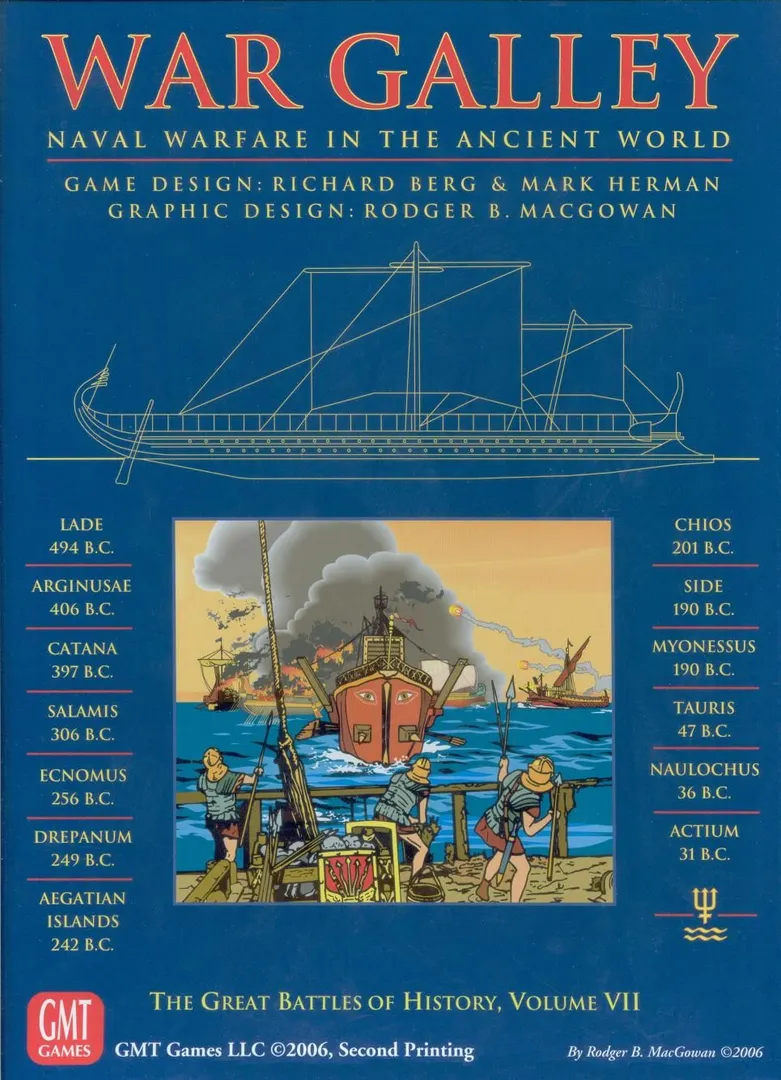
War Galley: Naval Warfare in the Ancient World
- 1–2 jugadores
- 360 min
- Complejidad 3,1/5
- 1999
1994
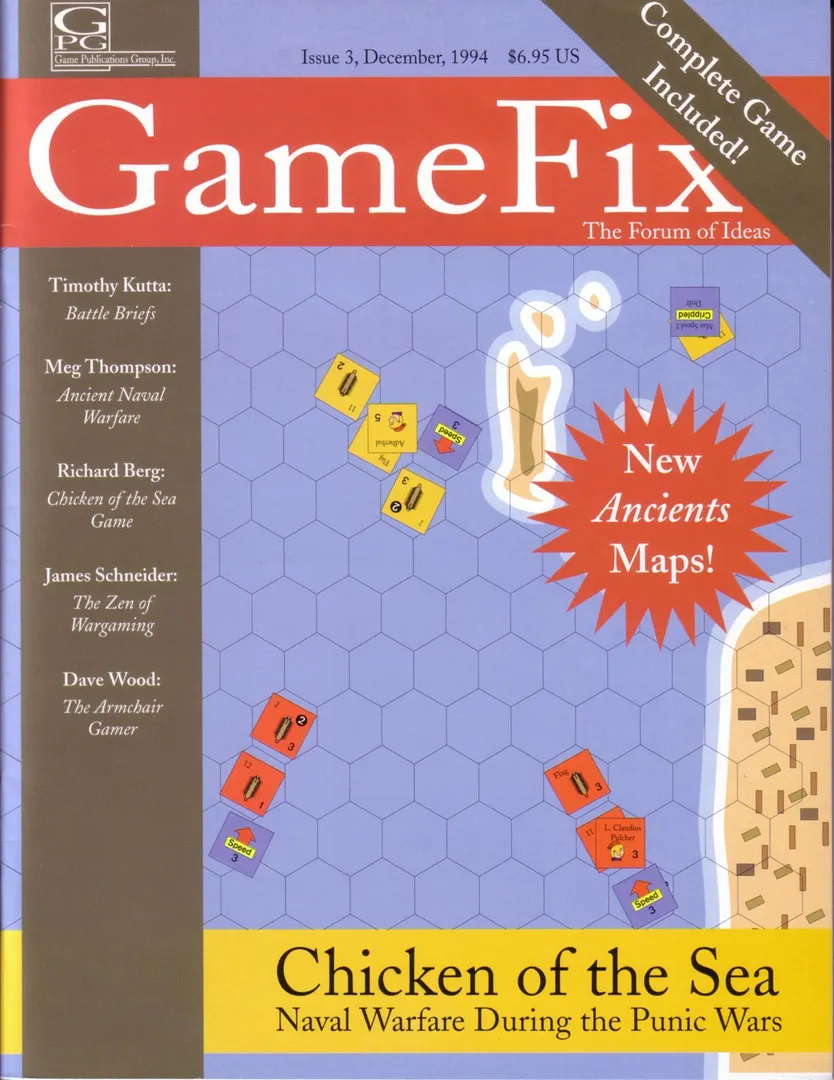
Ayuda con las reglas de Chicken of the Sea
Explicaciones claras de turnos, efectos de cartas y situaciones dudosas, con referencias a fuentes oficiales e historial de preguntas guardado.
Para 2 jugadores
¿Qué quieres saber?
Las respuestas salen del reglamento oficial, con la página para comprobarlo.
Chicken of the Sea es un juego de mesa publicado en 1994 para 2 jugadores, con partidas de 60 minutos y a partir de 10 años. Fue diseñado por Richard H. Berg y sus mecánicas principales son Dice Rolling y Hexagon Grid.






En inglés
Chicken of the Sea is a game included in issue #3 of GameFix magazine. It's a wargame simulation of the battle of Drepanum, 249 BC (Rome vs Carthage). The title comes from a rather audacious act of the Roman admiral, Claudius the Handsome. He was told by the official augurs that the portents were not good for a naval battle: "the sacred chickens will not eat." Claudius threw the sacred chickens into the sea, saying "then let them drink." The game comes with 100 counters representing both ships and informational counters, an 11" x 17" map (28x43 cm), and eight pages of illustrated rules with sidebars. A small game by wargame standards. The basic sequence is mutual assignment of speed to galleys, Carthaginian ships move then board, and finally Roman ships move then board. Facing is important, ramming, fouling other ships and shearing oars are all possible. Melee fighting is common. There are optional command/control/formation rules. All in all, fairly low complexity as wargame simulations go.
Según el catálogo, Chicken of the Sea admite 2 jugadores. Es el número de jugadores indicado por la editorial, así que el juego está diseñado exactamente para esa cantidad de participantes. Las variantes para otros tamaños de grupo, si existen, se describen en el reglamento de tu edición; consúltalo antes de preparar otra configuración.
La duración indicada para Chicken of the Sea es de 60 minutos, la estimación de la editorial para una partida completa. El tiempo real depende del grupo, del número de jugadores y del conocimiento de las reglas: las primeras partidas suelen alargarse y los grupos con experiencia terminan antes. La preparación y la explicación de las reglas no están incluidas.
El catálogo indica Chicken of the Sea a partir de 10 años. Es la recomendación de la editorial y refleja la lectura necesaria, la complejidad de las reglas y las piezas pequeñas, no solo el tema. Los más pequeños a menudo pueden jugar con ayuda de un adulto: comprueba la edad recomendada en tu edición y la experiencia de tu grupo.
Chicken of the Sea tiene una puntuación de complejidad de 2,1 sobre 5 según los jugadores de BoardGameGeek, lo que lo convierte en un juego algo ligero. La puntuación refleja cuánto conocimiento de reglas, planificación y toma de decisiones exige una partida típica. Los juegos exigentes requieren una explicación inicial más larga, así que conviene usar una guía de preparación.
Chicken of the Sea pertenece a estas categorías: Wargame, Nautical y Ancient. Sus mecánicas principales son Dice Rolling y Hexagon Grid. Las categorías describen el tema y la ambientación de un juego, mientras que las mecánicas describen lo que los jugadores hacen realmente en su turno. Cada mecánica lleva a una página del catálogo con juegos similares.
Los autores acreditados de Chicken of the Sea son: Richard H. Berg. Estos créditos proceden de los datos publicados del juego y nombran a las personas responsables de su diseño, no a ilustradores ni editoriales. Las páginas de autor de MeepleRules reúnen otros títulos de los mismos autores, algo útil cuando un juego te gusta y buscas otros parecidos.
El catálogo clasifica Chicken of the Sea como juego base. Se juega por sí solo con los componentes de la caja y no requiere ningún otro título. Las expansiones, si existen, añaden contenido o reglas nuevas y aparecen por separado en el catálogo con un enlace a este juego base.