

- Puesto en BGG
- BGG #9307
- Puntuación BGG
- 7,9
WARIGIN
- 2–3 jugadores
- 15–60 min
- Complejidad 2,3/5
- 2018
2013
Ayuda con las reglas de C.O.A.L.: Combat-Oriented Armored League
Explicaciones claras de turnos, efectos de cartas y situaciones dudosas, con referencias a fuentes oficiales e historial de preguntas guardado.
¿Qué quieres saber?
Las respuestas salen del reglamento oficial, con la página para comprobarlo.
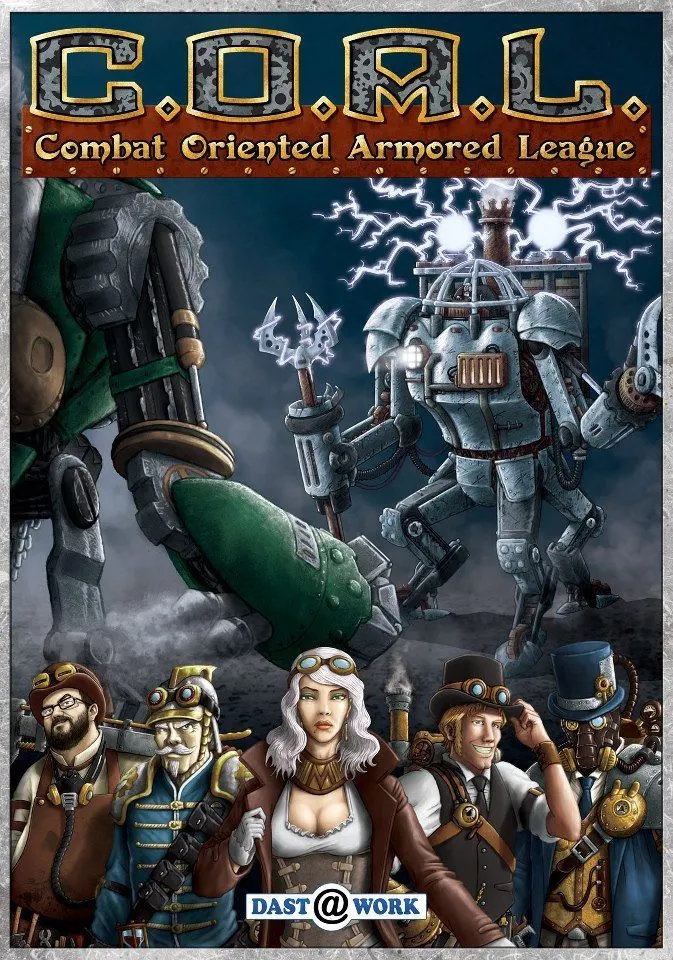
C.O.A.L.: Combat-Oriented Armored League es un juego de mesa publicado en 2013 para 2–4 jugadores, con partidas de 10 minutos y a partir de 8 años. Fue diseñado por Stefano Castelli y sus mecánicas principales son Variable Player Powers, Memory y Open Drafting.






En inglés
In a world in which computers have never been invented and coal is the most precious resource, a group of brave pilots board their armored steambots, take their place in the pilot seats of these 30-feet-tall, steam-powered fighting machines, and drive them into fierce arena battles. This is C.O.A.L.: Combat-Oriented Armored League, a two- to four-player card game with a steampunk setting. C.O.A.L. uses an original game mechanism that combines resource management, bluffing, and memory to simulate the heat of a real battle. The game includes four steambot models – each with its own features, attacks, and defensive maneuvers – and eight different pilots, which have special piloting abilities of their own. C.O.A.L.: Combat-Oriented Armored League includes customized rules for two-player games, for battles with three or four players, and for two-vs-two partnership games. Deck-building rules are included for advanced players who want to combine parts to build different steambot models. Duels are quick, typically ending in about ten minutes.
Según el catálogo, C.O.A.L.: Combat-Oriented Armored League admite de 2 a 4 jugadores. Este intervalo corresponde al número de jugadores indicado por la editorial, así que el juego puede prepararse para cualquier grupo dentro de ese margen. La preparación, algunas reglas y la puntuación pueden variar según el número de jugadores; consulta la configuración exacta en el reglamento de tu edición.
La duración indicada para C.O.A.L.: Combat-Oriented Armored League es de 10 minutos, la estimación de la editorial para una partida completa. El tiempo real depende del grupo, del número de jugadores y del conocimiento de las reglas: las primeras partidas suelen alargarse y los grupos con experiencia terminan antes. La preparación y la explicación de las reglas no están incluidas.
El catálogo indica C.O.A.L.: Combat-Oriented Armored League a partir de 8 años. Es la recomendación de la editorial y refleja la lectura necesaria, la complejidad de las reglas y las piezas pequeñas, no solo el tema. Los más pequeños a menudo pueden jugar con ayuda de un adulto: comprueba la edad recomendada en tu edición y la experiencia de tu grupo.
C.O.A.L.: Combat-Oriented Armored League tiene una puntuación de complejidad de 2,4 sobre 5 según los jugadores de BoardGameGeek, lo que lo convierte en un juego algo ligero. La puntuación refleja cuánto conocimiento de reglas, planificación y toma de decisiones exige una partida típica. Los juegos exigentes requieren una explicación inicial más larga, así que conviene usar una guía de preparación.
C.O.A.L.: Combat-Oriented Armored League pertenece a estas categorías: Card Game, Fighting y Bluffing. Sus mecánicas principales son Variable Player Powers, Memory y Open Drafting. Las categorías describen el tema y la ambientación de un juego, mientras que las mecánicas describen lo que los jugadores hacen realmente en su turno. Cada mecánica lleva a una página del catálogo con juegos similares.
Los autores acreditados de C.O.A.L.: Combat-Oriented Armored League son: Stefano Castelli. Estos créditos proceden de los datos publicados del juego y nombran a las personas responsables de su diseño, no a ilustradores ni editoriales. Las páginas de autor de MeepleRules reúnen otros títulos de los mismos autores, algo útil cuando un juego te gusta y buscas otros parecidos.
El catálogo clasifica C.O.A.L.: Combat-Oriented Armored League como juego base. Se juega por sí solo con los componentes de la caja y no requiere ningún otro título. Las expansiones, si existen, añaden contenido o reglas nuevas y aparecen por separado en el catálogo con un enlace a este juego base.