
- Puntuación BGG
- 8,1
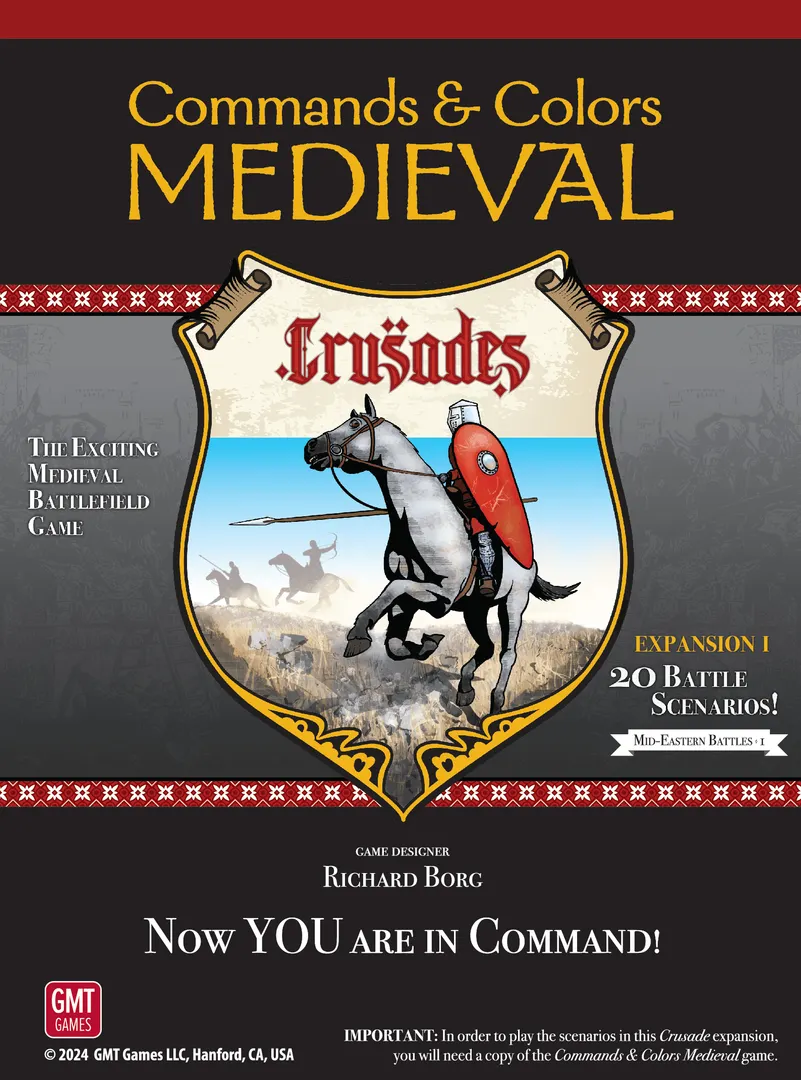
Commands & Colors: Medieval – Expansion #1 Crusades Mid-Eastern Battles I
- 2 jugadores
- 60–120 min
- Complejidad 2,0/5
- 2024
2019
Ayuda con las reglas de Commands & Colors: Medieval
Explicaciones claras de turnos, efectos de cartas y situaciones dudosas, con referencias a fuentes oficiales e historial de preguntas guardado.
Para 2 jugadores
¿Qué quieres saber?
Las respuestas salen del reglamento oficial, con la página para comprobarlo.
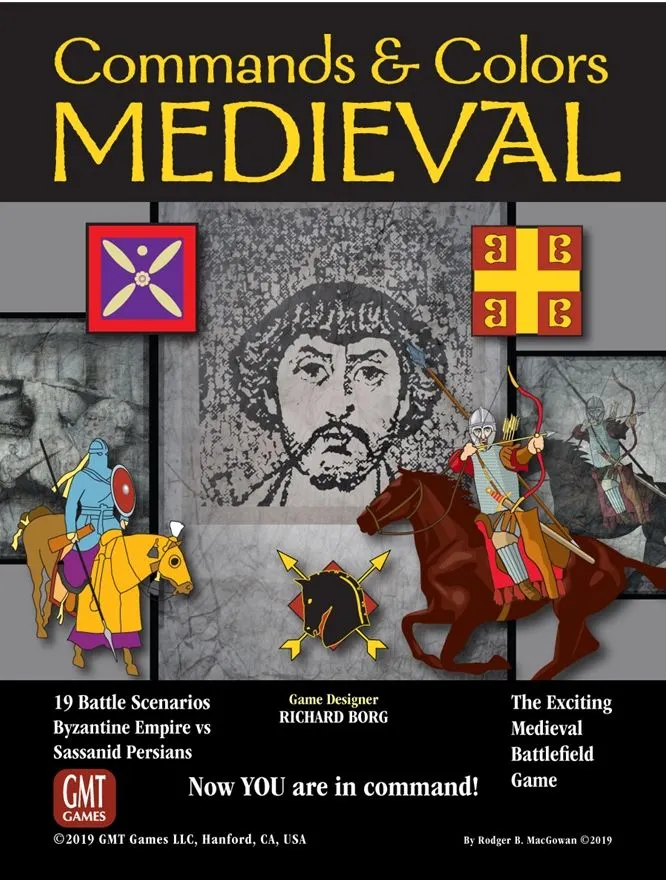
Commands & Colors: Medieval es un juego de mesa publicado en 2019 para 2 jugadores, con partidas de 60 a 120 minutos y a partir de 12 años. Fue diseñado por Richard Borg y sus mecánicas principales son Dice Rolling, Hexagon Grid y Line of Sight.




En inglés
Game description from the designer: Commands & Colors: Medieval is based on the Commands & Colors game system and by design is not overly complex. The Medieval game introduces many new game concepts to the Commands & Colors system, which add historical depth and flavor. Some of the new concepts are: Superior armor and status when battling Cavalry units increase to 4 blocks Heavy infantry battle dice are reduced from 5 dice down to 4 Light Bow Cavalry units can employ the Parthian Shot when they evade Still, some Commands & Colors game mechanics remain familiar to players of other games in the system, like the deck of Medieval Command cards that drive movement while creating a “fog of war,” and the battle dice that will resolve combat quickly and efficiently. The stylized battlefield scenario maps emphasize the important terrain features and highlight the historical deployment of forces in scale with the game system. The scale of the game is flexible, and varies from battle to battle. For some scenarios, a unit may represent a Chiliarchy of soldiers, while in other scenarios a unit may represent just a few brave warriors. The battlefield tactics, however, that you will need to execute to gain victory conform remarkably well to the strengths and limitations of the various medieval unit types, their weapons, the terrain, and history. The medieval battles showcased in the scenario book focus on the historical confrontations between the Byzantine Empire and Sassanid Persians (530 to 627 AD) with a slight detour to battle the Moors and their rebel allies (645 - 648 AD). The Byzantine Empire during this period of medieval history was one of constant transition and reorganization. Its army tended to mirror its eastern adversaries by deploying an increasing number of armored cavalry formations (Cataphracts) and more missile troops. Yet, it was how the Byzantines adapted their battlefield tactics in relation to the enemy it faced that is perhaps the chief reason for the longevity of their Empire. Although the Byzantine army fought on other frontiers, against a multitude of opponents, Visigoths, Vandals, Ostrogoths, Franks, Alemanni, those conflicts are beyond the scope and space of this one package. Additional expansion modules that address those battles will be forthcoming.
Según el catálogo, Commands & Colors: Medieval admite 2 jugadores. Es el número de jugadores indicado por la editorial, así que el juego está diseñado exactamente para esa cantidad de participantes. Las variantes para otros tamaños de grupo, si existen, se describen en el reglamento de tu edición; consúltalo antes de preparar otra configuración.
La duración indicada para Commands & Colors: Medieval es de 60 a 120 minutos, la estimación de la editorial para una partida completa. El tiempo real depende del grupo, del número de jugadores y del conocimiento de las reglas: las primeras partidas suelen alargarse y los grupos con experiencia terminan antes. La preparación y la explicación de las reglas no están incluidas.
El catálogo indica Commands & Colors: Medieval a partir de 12 años. Es la recomendación de la editorial y refleja la lectura necesaria, la complejidad de las reglas y las piezas pequeñas, no solo el tema. Los más pequeños a menudo pueden jugar con ayuda de un adulto: comprueba la edad recomendada en tu edición y la experiencia de tu grupo.
Commands & Colors: Medieval tiene una puntuación de complejidad de 2,6 sobre 5 según los jugadores de BoardGameGeek, lo que lo convierte en un juego algo ligero. La puntuación refleja cuánto conocimiento de reglas, planificación y toma de decisiones exige una partida típica. Los juegos exigentes requieren una explicación inicial más larga, así que conviene usar una guía de preparación.
Commands & Colors: Medieval pertenece a estas categorías: Wargame y Medieval. Sus mecánicas principales son Dice Rolling, Hexagon Grid y Line of Sight. Las categorías describen el tema y la ambientación de un juego, mientras que las mecánicas describen lo que los jugadores hacen realmente en su turno. Cada mecánica lleva a una página del catálogo con juegos similares.
Los autores acreditados de Commands & Colors: Medieval son: Richard Borg. Estos créditos proceden de los datos publicados del juego y nombran a las personas responsables de su diseño, no a ilustradores ni editoriales. Las páginas de autor de MeepleRules reúnen otros títulos de los mismos autores, algo útil cuando un juego te gusta y buscas otros parecidos.
El catálogo clasifica Commands & Colors: Medieval como juego base. Se juega por sí solo con los componentes de la caja y no requiere ningún otro título. Las expansiones, si existen, añaden contenido o reglas nuevas y aparecen por separado en el catálogo con un enlace a este juego base.