
- Puesto en BGG
- BGG #27.520
- Puntuación BGG
- 5,5
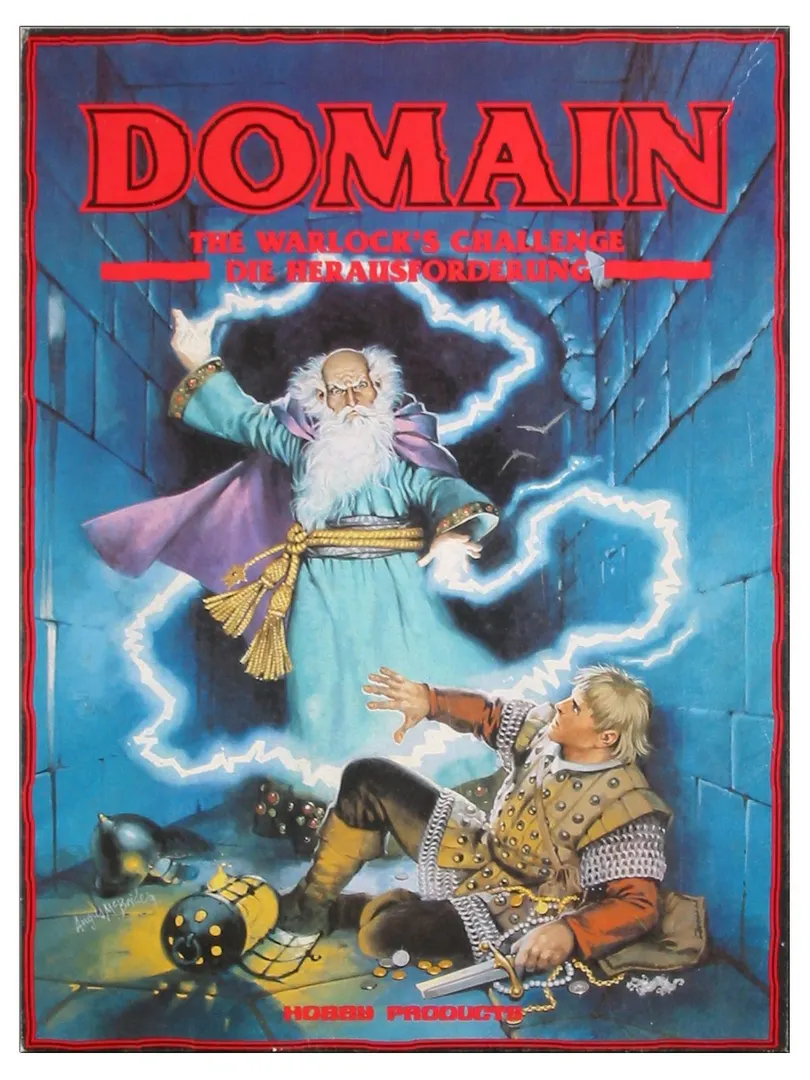
Domain: The Warlock's Challenge
- 1–4 jugadores
- 120 min
- Complejidad 2,1/5
- 1991
1999
Ayuda con las reglas de Demonworld
Explicaciones claras de turnos, efectos de cartas y situaciones dudosas, con referencias a fuentes oficiales e historial de preguntas guardado.
Para 2 jugadores
¿Qué quieres saber?
Las respuestas salen del reglamento oficial, con la página para comprobarlo.
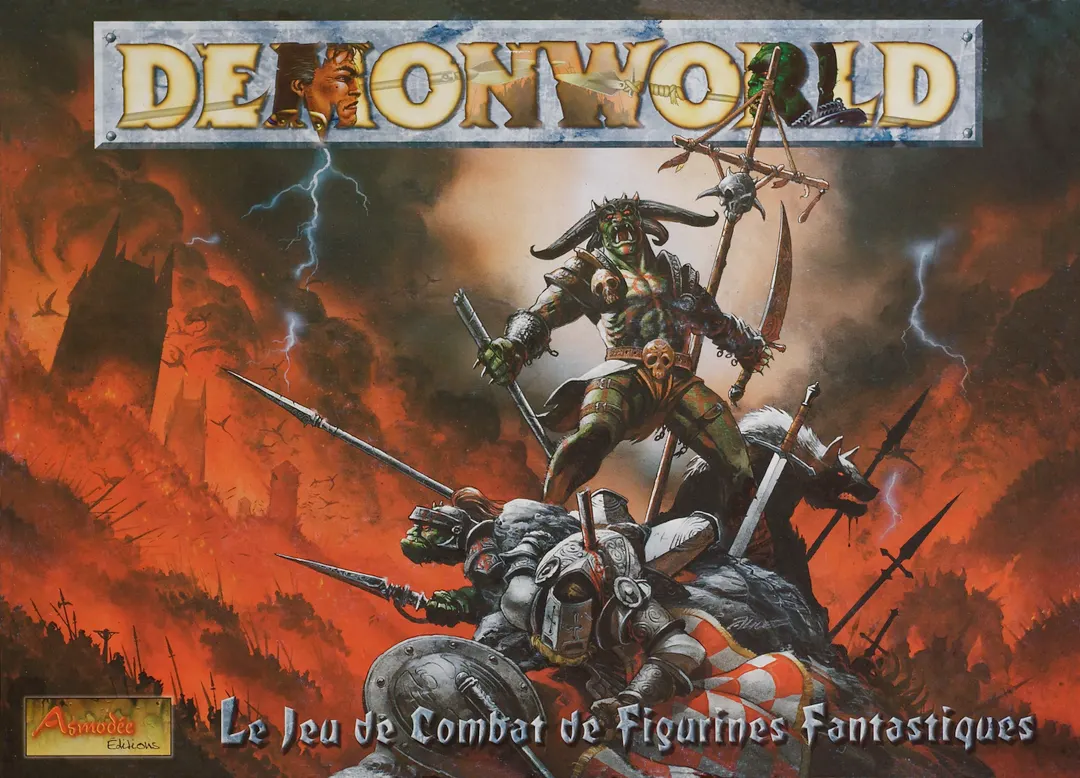
Demonworld es un juego de mesa publicado en 1999 para 2–6 jugadores, con partidas de 120 minutos y a partir de 12 años. Fue diseñado por Hermann Mlitz, Ingo Martin y Dirk Kias y sus mecánicas principales son Hexagon Grid.
En inglés
Demonworld is a hybrid miniatures and hex style wargame. The basic game comes with a 140 page rulebook, reference sheets, unit recruitment cards, 4 hex maps, and card stock counters representing a small orc and human (Empire) army. The maps are generic terrain maps with light woods and small hills. They may be combined in different ways to create different battlefields. If you enjoy the game you can invest more money in it by purchasing the different 15mm regiment packs. The game supports several races typical of the fantasy genre (elves, dwarves, orcs, dark elves) and adds a few unique ones as well (Thain[Norse], Isthak [chaos-like]). The regiments generally consist of 8 to 10 counters. Gameplay: Players are free to set their objectives for each battle, though some simple scenarios are provided to get you started. Players spend points to add regiments for their armies. Armies are set up on the edge of the mapboard and maneuvered to contact. Orders are selected for each unit for each turn indicating whether it will skirmish (move and fire), attack (move to contact), move (move long distance), or hold (defend and fire at incoming attackers if missile equipped). Use of ordered formations help a unit fight and move. Combat bonuses are given to units who are able to hit their target in the flank or rear, use terrain to advantage, and use weapons that confer advantage in special cases (ie lance from a charging knight). Morale rules determine whether a unit is going to hold their position, rout, or in some cases become 'impetuous' and aggressively continue an attack without orders to do so. As a player you assume the role of General of an army. The game begins by recruiting an army. Each army is made up of several units. A unit is a group of soldiers who fight together in an organized fashion. Most units have 40 foot troops or 20 mounted models on ten individual hex bases. Sometimes a unit might be a single large creature like a dragon or war machine such as a catapult. Every unit has a points value and when you create an Army, both players will have an agreed upon amount of points to spend to create their army. This is most often 1200 points, the amount used for tournament play. For your army you may also want to recruit special heroes, commanders or wizards. Every unit in the Demonworld game has its own recruiting card which is included in the army book. These handy little cards make recruiting an army easy because they include all the information about a unit including its points cost. Once both players have spent all their points and created their army, it is time to create the battlefield. Demonworld is played on a large flat surface like a table. This could be a kitchen, dining room, or work table or even the floor. The Demonworld game is great because the battlefield consists of four or more of the Demonworld maps. You can also augment the maps with model trees, buildings or hills. This is not really necessary however, because the maps look great. Using the maps makes setting up a game really fast. Four of these maps are provided with the basic game. If you would like more variety several additional map sets are available. Once the maps are laid out each player will deploy their units on the battlefield. Where you place your units is crucial to the success of your army. Try to take advantage of the terrain. This could mean creating an ambush by hiding a unit in the woods. Or putting a unit on a hill where your opponent will have to fight uphill to attack them. If you can, also try to imagine what your opponent will do and then you may be able to set a trap for them or otherwise create a plan to defeat them. Once both armies are deployed (put on the table) play begins. Demonworld uses a simultaneous turn sequence. In each turn both players will have an opportunity to move all of their units and shoot missile weapons like bows, engage in hand to hand combat, or cast spells. The rules on how to perform these actions are in the Demonworld rule book. The army books have extra rules for special units which only that army may recruit and special spells which only that army can cast. As the turns progress each player will try to move their units to a position of advantage and eliminate the opponents units. Sometimes people play a game with a specific set of objectives. These games are called scenarios. In scenarios achieving your objectives is often more important than destroying your opponents army or preventing your own losses. Once one side has achieved its objectives or destroyed the opposing army, they are the winner and the game is over. Most games take about three hours. Experienced players play much faster than novices and can handle larger armies.
Según el catálogo, Demonworld admite de 2 a 6 jugadores. Este intervalo corresponde al número de jugadores indicado por la editorial, así que el juego puede prepararse para cualquier grupo dentro de ese margen. La preparación, algunas reglas y la puntuación pueden variar según el número de jugadores; consulta la configuración exacta en el reglamento de tu edición.
La duración indicada para Demonworld es de 120 minutos, la estimación de la editorial para una partida completa. El tiempo real depende del grupo, del número de jugadores y del conocimiento de las reglas: las primeras partidas suelen alargarse y los grupos con experiencia terminan antes. La preparación y la explicación de las reglas no están incluidas.
El catálogo indica Demonworld a partir de 12 años. Es la recomendación de la editorial y refleja la lectura necesaria, la complejidad de las reglas y las piezas pequeñas, no solo el tema. Los más pequeños a menudo pueden jugar con ayuda de un adulto: comprueba la edad recomendada en tu edición y la experiencia de tu grupo.
Demonworld tiene una puntuación de complejidad de 4,0 sobre 5 según los jugadores de BoardGameGeek, lo que lo convierte en un juego exigente. La puntuación refleja cuánto conocimiento de reglas, planificación y toma de decisiones exige una partida típica. Los juegos exigentes requieren una explicación inicial más larga, así que conviene usar una guía de preparación.
Demonworld pertenece a estas categorías: Fantasy, Wargame y Adventure. Sus mecánicas principales son Hexagon Grid. Las categorías describen el tema y la ambientación de un juego, mientras que las mecánicas describen lo que los jugadores hacen realmente en su turno. Cada mecánica lleva a una página del catálogo con juegos similares.
Los autores acreditados de Demonworld son: Hermann Mlitz, Ingo Martin y Dirk Kias. Estos créditos proceden de los datos publicados del juego y nombran a las personas responsables de su diseño, no a ilustradores ni editoriales. Las páginas de autor de MeepleRules reúnen otros títulos de los mismos autores, algo útil cuando un juego te gusta y buscas otros parecidos.
El catálogo clasifica Demonworld como juego base. Se juega por sí solo con los componentes de la caja y no requiere ningún otro título. Las expansiones, si existen, añaden contenido o reglas nuevas y aparecen por separado en el catálogo con un enlace a este juego base.