

- Puesto en BGG
- BGG #17.499
- Puntuación BGG
- 6,5
Tri-Tactics
- 2 jugadores
- 240 min
- Complejidad 2,5/5
- 1932
1919
Ayuda con las reglas de Dover Patrol
Explicaciones claras de turnos, efectos de cartas y situaciones dudosas, con referencias a fuentes oficiales e historial de preguntas guardado.
Para 2 jugadores
¿Qué quieres saber?
Las respuestas salen del reglamento oficial, con la página para comprobarlo.
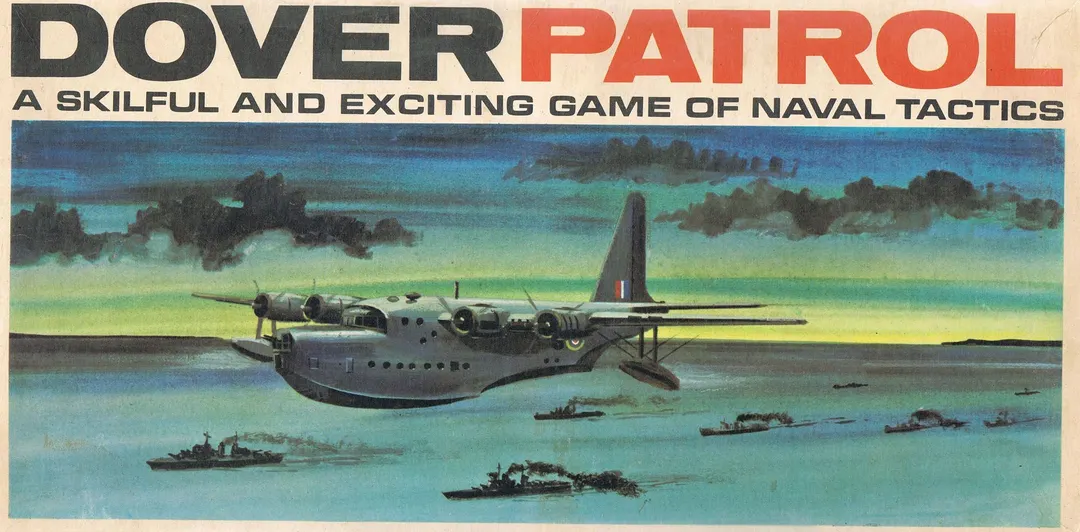
Dover Patrol es un juego de mesa publicado en 1919 para 2 jugadores, con partidas de 180 minutos y a partir de 12 años. Fue diseñado por Harry Gibson y sus mecánicas principales son Square Grid, Memory y Grid Movement.



En inglés
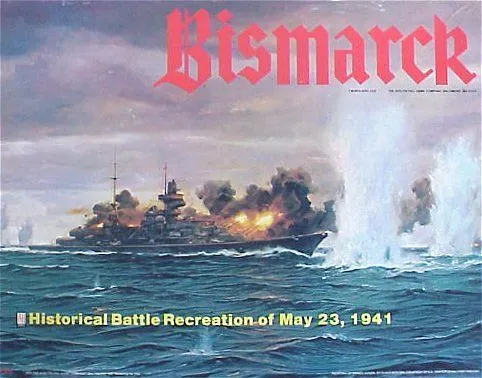
This game DOVER PATROL by Harry Gibson is a wonderful Naval themed and early version of a type of hidden tactics game of skill. It was sold alongside the similar L'Attaque and Aviation: The Aerial Tactics Game of Attack and Defence and a more complicated game called Tri-Tactics designed as an incorporation of all three, by Gibsons and marketed together at the time as Series: The Big Four (Gibsons). Note: L'Attaque was patented in 1909 in France by Mademoiselle Hermance Edan, the U.K. distribution rights for which were acquired in 1925 by Gibsons. Dover Patrol was launched in 1911, whereas the original H. P. Gibson & Sons company was registered in 1919. Prior to that, The International Card Company operated between 1903 and 1919, when Harry Percy Gibson purchased ICC to form his company. Whether Harry Gibson designed the game is therefore open to some doubt. The game play of Dover Patrol is very much like L'Attaque, which forms the basis of the near-identical game Stratego by Jumbo, published in 1946 after World War II when the patent would have expired. Gibsons themselves had to effectively ‘start again’ around that time having had their premises destroyed in the Blitz. The board, which supposedly represents an area of sea, is superimposed with a rectangular grid. A Base is shown on two of the opposite edges of the board. The area round each base is protected by a harbour wall. Each player has a fleet of forty playing pieces. These pieces are rectangles of cardboard which stand upon plastic supports. The two sides are distinguished by the colour on the back of each card, red and blue in this case. The fronts of the cards depict various ships, mines and a flying boat. Each piece has a printed value from 1 for a Patrol Vessel to 10 for the Flagship. These values represent the relative strength of each ship and also indicate the type of ship; battle cruisers, light cruisers, etc.. The ships are also named, H.M.S. Lion, H.M.S. Glasgow and so on. The object of the game is to capture the enemy Flag and transport it back to one's own base while still retaining possession of one's own Flag. To start the game, the players place their Flag on their Base and then set up their pieces, one per rectangle, on their own side of the board and with the backs of the cards facing the opponent. In turn the players move a piece one space orthogonally until two opposing pieces are back-to-back. The moving player may then call 'Attack', the two relevant pieces are then revealed and the one with the lower value is sunk and removed from the board. In addition to the fighting ships, the players have a number of auxiliary pieces. Mines will automatically blow up virtually all ships that are moved into an attacking position, regardless of whether the owner of the moving ship attacks or not. Once placed, mines may not be moved. Only the mine sweepers can destroy mines. The mine layers act as floating mines. They can be moved but may not attack, but have the same effect upon enemy shipping as a mine. Only the destroyers can sink them. Submarines have a marauding role and can sink all ships except mine layers and MTB's. The good old flying boat has a very important role as it is principally used to capture the enemy flag because it can fly over the harbour walls. Only MTB's and destroyers can shoot it down. When the opposing flag is captured, it is clipped to the top of the capturing piece and thus its whereabouts are known to all. The Flag can be transferred to any other piece standing orthogonally adjacent to the piece which is transporting it. It is a fairly straightforward game to play, though tactics can well be employed, particularly in the setting up phase. Similar to: L'Attaque Aviation: The Aerial Tactics Game of Attack and Defence Tri-Tactics Stratego
Según el catálogo, Dover Patrol admite 2 jugadores. Es el número de jugadores indicado por la editorial, así que el juego está diseñado exactamente para esa cantidad de participantes. Las variantes para otros tamaños de grupo, si existen, se describen en el reglamento de tu edición; consúltalo antes de preparar otra configuración.
La duración indicada para Dover Patrol es de 180 minutos, la estimación de la editorial para una partida completa. El tiempo real depende del grupo, del número de jugadores y del conocimiento de las reglas: las primeras partidas suelen alargarse y los grupos con experiencia terminan antes. La preparación y la explicación de las reglas no están incluidas.
El catálogo indica Dover Patrol a partir de 12 años. Es la recomendación de la editorial y refleja la lectura necesaria, la complejidad de las reglas y las piezas pequeñas, no solo el tema. Los más pequeños a menudo pueden jugar con ayuda de un adulto: comprueba la edad recomendada en tu edición y la experiencia de tu grupo.
Dover Patrol tiene una puntuación de complejidad de 2,1 sobre 5 según los jugadores de BoardGameGeek, lo que lo convierte en un juego algo ligero. La puntuación refleja cuánto conocimiento de reglas, planificación y toma de decisiones exige una partida típica. Los juegos exigentes requieren una explicación inicial más larga, así que conviene usar una guía de preparación.
Dover Patrol pertenece a estas categorías: Wargame, Nautical y World War II. Sus mecánicas principales son Square Grid, Memory y Grid Movement. Las categorías describen el tema y la ambientación de un juego, mientras que las mecánicas describen lo que los jugadores hacen realmente en su turno. Cada mecánica lleva a una página del catálogo con juegos similares.
Los autores acreditados de Dover Patrol son: Harry Gibson. Estos créditos proceden de los datos publicados del juego y nombran a las personas responsables de su diseño, no a ilustradores ni editoriales. Las páginas de autor de MeepleRules reúnen otros títulos de los mismos autores, algo útil cuando un juego te gusta y buscas otros parecidos.
El catálogo clasifica Dover Patrol como juego base. Se juega por sí solo con los componentes de la caja y no requiere ningún otro título. Las expansiones, si existen, añaden contenido o reglas nuevas y aparecen por separado en el catálogo con un enlace a este juego base.