
- Puesto en BGG
- BGG #2742
- Puntuación BGG
- 7,3
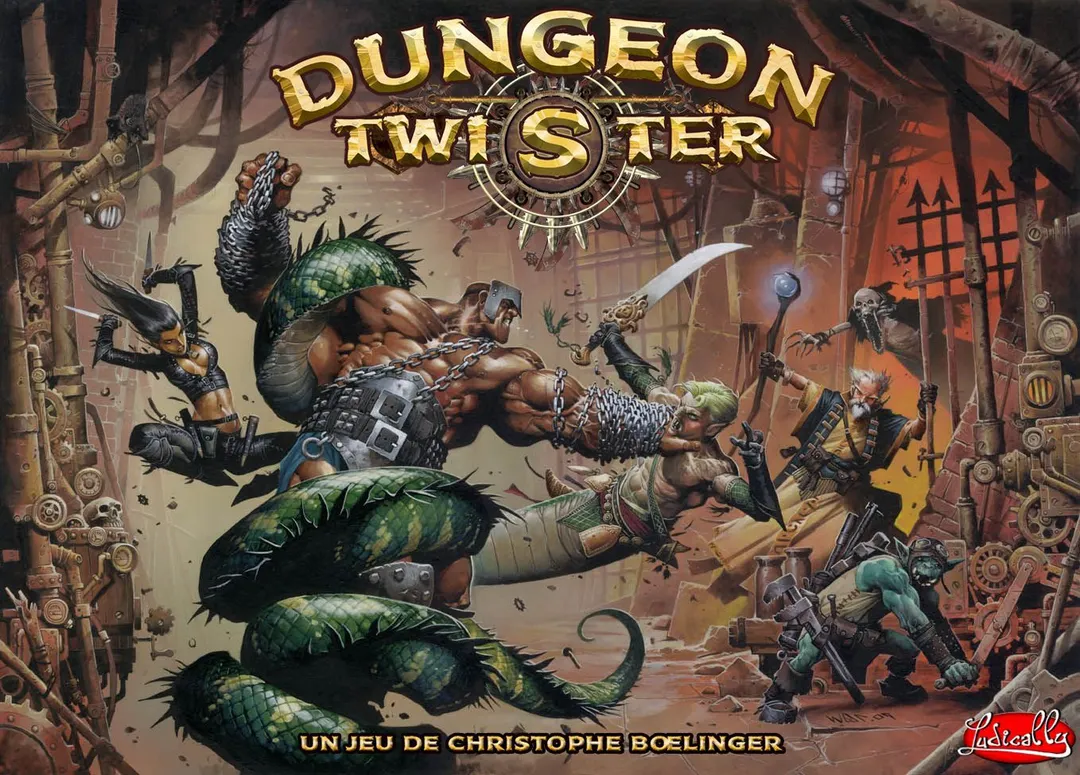
Dungeon Twister 2: Prison
- 1–2 jugadores
- 60 min
- Complejidad 3,2/5
- 2009
Ayuda con las reglas de Dungeon Twister: Master of Time
Explicaciones claras de turnos, efectos de cartas y situaciones dudosas, con referencias a fuentes oficiales e historial de preguntas guardado.
¿Qué quieres saber?
Las respuestas salen del reglamento oficial, con la página para comprobarlo.
Dungeon Twister: Master of Time es una expansión de Dungeon Twister publicada en 2006 para 2 jugadores, con partidas de 60 minutos y a partir de 11 años. Fue diseñado por Christophe Boelinger y sus mecánicas principales son Variable Player Powers, Hand Management y Tile Placement.




En inglés
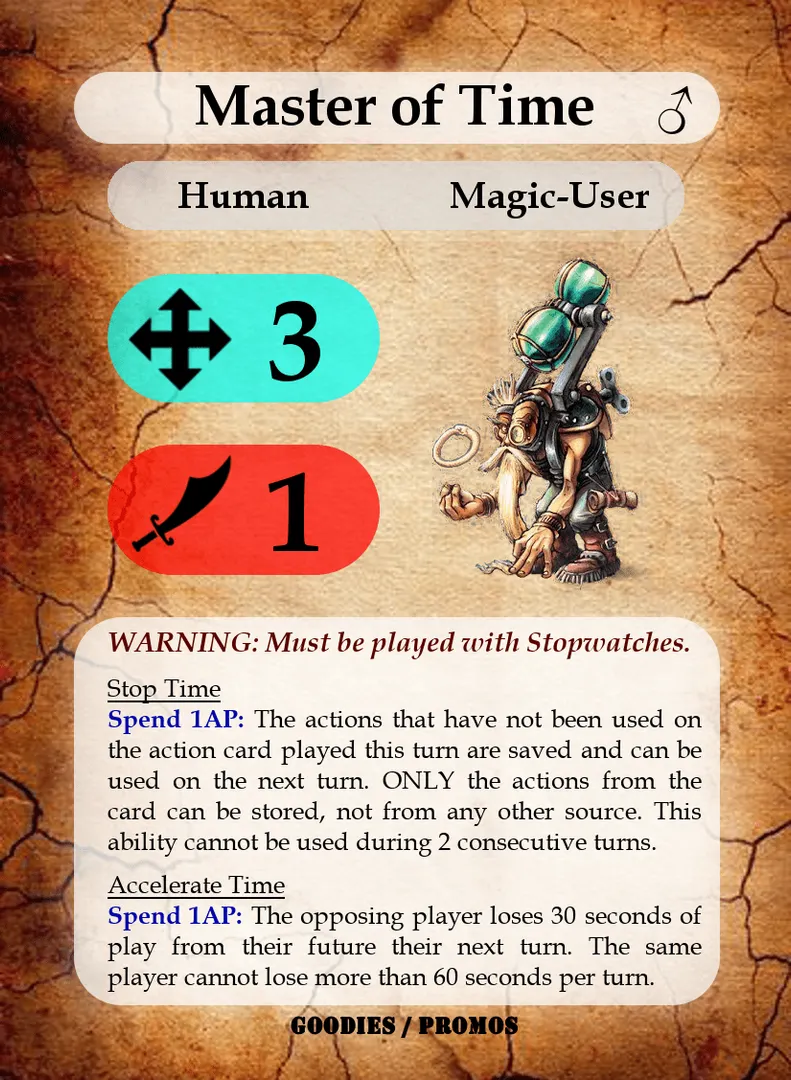
Warning: The Master of Time, because of his abilities, forces players to play their best, as the players play with a stopwatch (explained in the Basic Rules, page 11 "Playing with a Timer"). The Master of Time is a magic-user and can use scrolls. The Master of Time for 1 AP can "stop time". The actions that have not been used on the action card played this turn are saved and can be used on the next turn. Only the actions from the card can be stored. Actions from another source (Speed Potion, Charm Scroll, etc.) cannot be stored. It is possible at most to have 9 actions in one turn. The Master of Time cannot "stop time" during two consecutive turns. He cannot stop time during a turn in which saved actions are being used. The Master of Time can also "accelerate time" for 1 AP. The opponent of the player controlling the Master of Time then loses 30 seconds to play in his future turn. The same player cannot lose more than 60 seconds per turn.
Según el catálogo, Dungeon Twister: Master of Time admite 2 jugadores. Es el número de jugadores indicado por la editorial, así que el juego está diseñado exactamente para esa cantidad de participantes. Las variantes para otros tamaños de grupo, si existen, se describen en el reglamento de tu edición; consúltalo antes de preparar otra configuración.
La duración indicada para Dungeon Twister: Master of Time es de 60 minutos, la estimación de la editorial para una partida completa. El tiempo real depende del grupo, del número de jugadores y del conocimiento de las reglas: las primeras partidas suelen alargarse y los grupos con experiencia terminan antes. La preparación y la explicación de las reglas no están incluidas.
El catálogo indica Dungeon Twister: Master of Time a partir de 11 años. Es la recomendación de la editorial y refleja la lectura necesaria, la complejidad de las reglas y las piezas pequeñas, no solo el tema. Los más pequeños a menudo pueden jugar con ayuda de un adulto: comprueba la edad recomendada en tu edición y la experiencia de tu grupo.
Dungeon Twister: Master of Time pertenece a estas categorías: Fantasy, Fighting y Exploration. Sus mecánicas principales son Variable Player Powers, Hand Management y Tile Placement. Las categorías describen el tema y la ambientación de un juego, mientras que las mecánicas describen lo que los jugadores hacen realmente en su turno. Cada mecánica lleva a una página del catálogo con juegos similares.
Los autores acreditados de Dungeon Twister: Master of Time son: Christophe Boelinger. Estos créditos proceden de los datos publicados del juego y nombran a las personas responsables de su diseño, no a ilustradores ni editoriales. Las páginas de autor de MeepleRules reúnen otros títulos de los mismos autores, algo útil cuando un juego te gusta y buscas otros parecidos.
El catálogo clasifica Dungeon Twister: Master of Time como expansión de Dungeon Twister. Las expansiones añaden contenido, reglas o escenarios al juego base y normalmente no se pueden jugar solas, así que necesitas Dungeon Twister para usarla. Comprueba que tu edición de Dungeon Twister sea compatible, porque algunas expansiones se revisaron entre ediciones.