Firefight: BRA/FRA Expansion pack
- 2 jugadores
- 2019
1976
Ayuda con las reglas de Firefight: Modern U.S. and Soviet Small Unit Tactics
Explicaciones claras de turnos, efectos de cartas y situaciones dudosas, con referencias a fuentes oficiales e historial de preguntas guardado.
Para 2 jugadores
¿Qué quieres saber?
Las respuestas salen del reglamento oficial, con la página para comprobarlo.
Firefight: Modern U.S. and Soviet Small Unit Tactics es un juego de mesa publicado en 1976 para 2 jugadores, con partidas de 90 minutos y a partir de 12 años. Fue diseñado por Jim Dunnigan e Irad B. Hardy y sus mecánicas principales son Dice Rolling, Grid Movement y Hexagon Grid.



En inglés
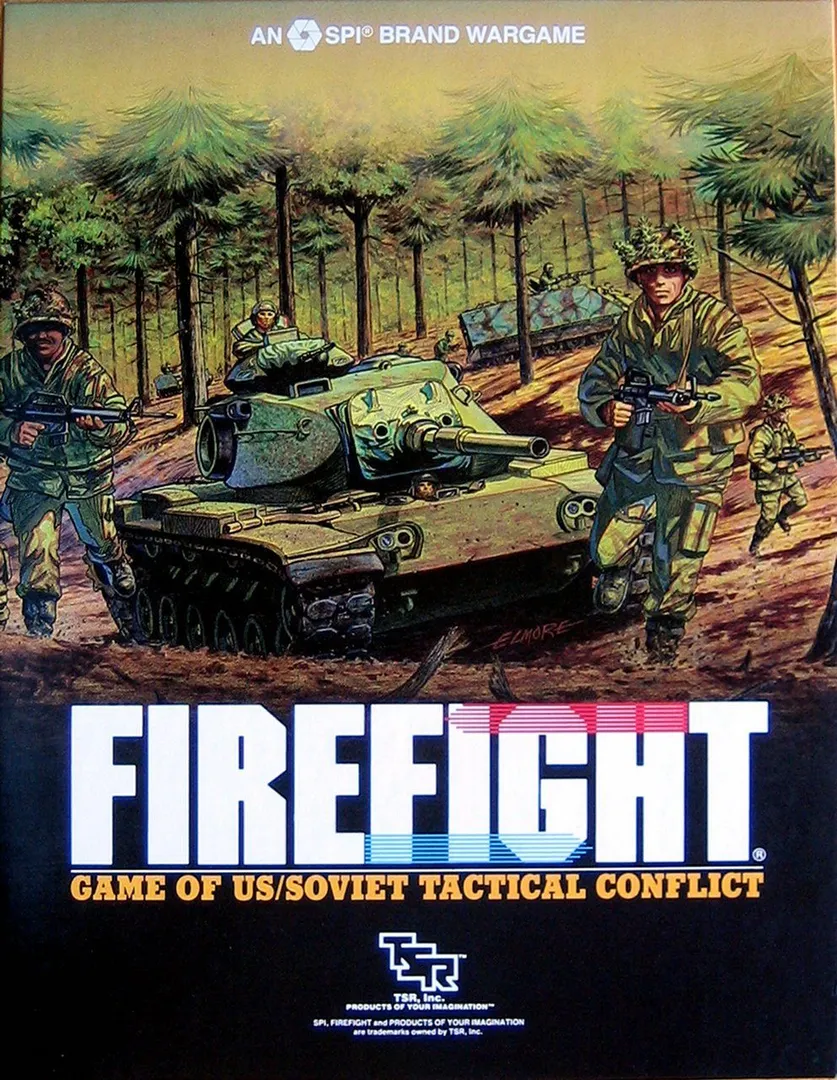
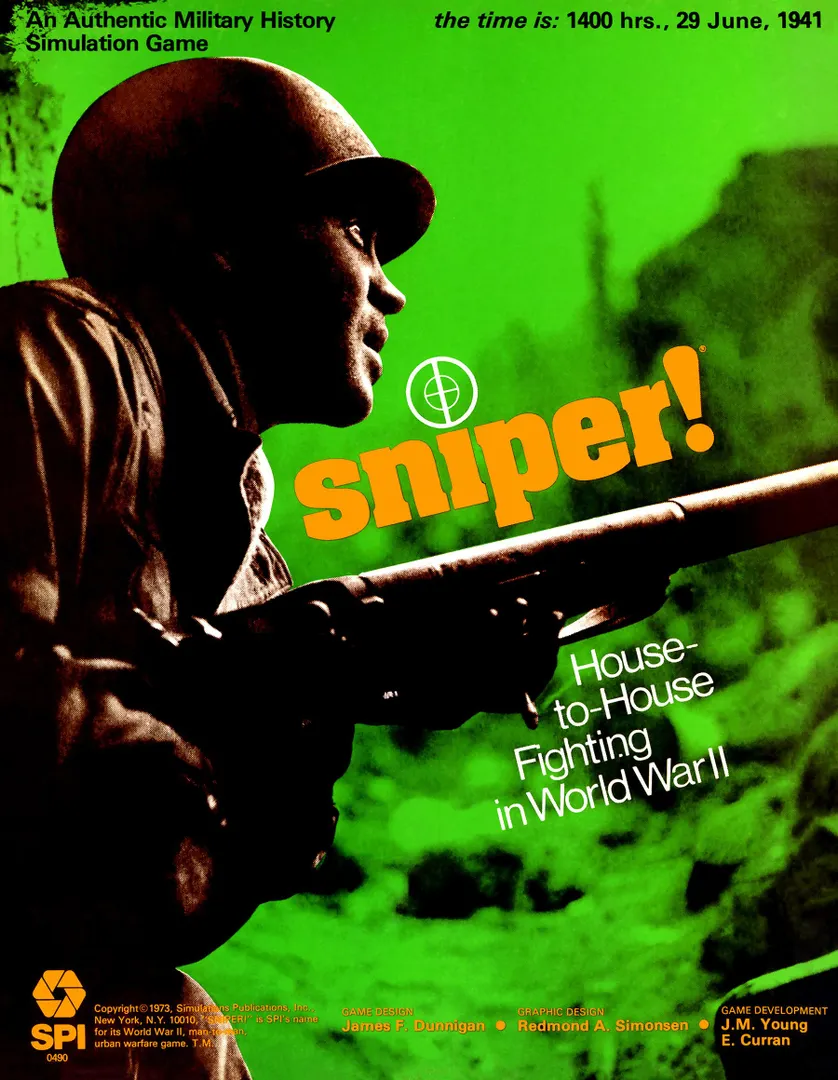
Firefight: Game of US/Soviet Tactical Combat, A tactical game of modern (late 1970's) mechanized combat, partly funded by the US Army as a training tool, to show the effects of the long range and lethality of modern weapons on the techniques and tactics of the modern battlefield. Game components: 400 die cut counters, two 22" x34" geomorphic maps, rules booklet, briefing booklet. Game Scale: Game Turn: 40 seconds Hex: 54 yards / 50 meters Units: Fireteams & Individual Vehicles Game Inventory: Two 22 x 34" four color mapsheets One dual-side printed countersheet (400 1/2" counters) One 20-page Firefight rulebook One 20-page Reference Data booklet Two 6-sided dice Solitaire Playability: Medium Complexity Level: Medium Players: 1 or more Playing Time: 2-6 hours (from the original SPI flat tray and z-pack cover sheet:) Modern US and Soviet Small Unit Tactics An Historical Simulation Game the time is: The First Battle of the Next War Two separate 22" x 34" maps in four colors Terrain and target sensitive CRT's Individual, sequenced fire and movement Firefight is game which highlights the dynamics of the modern battlefield. Each unit represents either one vehicle or one "fireteam" (four infantrymen). The game scale is 50 meters per hex and 40 seconds per Game-Turn. Each Game-Turn is comprised of a Fire Phase, followed by a Movement Phase, during which the players alternate moving units (those that have not fired), and terminating with an Indirect Fire Phase, during which the players employ and assess fire from off-map artillery and mortar units. Firefight makes extensive use of tables to express the strength of a firing unit against a particular target at a given distance. This strength (or firepower rating) is then referred to a Combat Results Table. This procedure allows us to rate different weapon systems versus different target types with much greater accuracy than heretofore. Another innovation is the integration of the terrain effects directly onto the CRT's. Results are colour-coded to graphically display the protection offered by woods, building and defilade (hull-down) positions. The whole effect is a much simpler, but more accurate system of combat. Firefight is presented in three stages. Firefight I, II and III. Firefight I introduces the player to the fundamental game system. Firefight II introduces more complex rules, which add realistic effects yo play. Firefight III explores the effects of weapons systems presently under development. (from the SPI soap box cover:) Modern US and Soviet Small Unit Tactics A Fascinating Future-History Simulation Game the time is: The First Battle of the Next War What if the US and USSR were to meet in a conventional war? Firefight highlights the dynamics of today's battlefield and includes an intensive survey of battlefield tactics and doctrine. The range and lethality of weapons in each country's service are contrasted as players use the tactical deployment of their combined arms system to test the capabilities of their small tactical units. Firefight simulates this possible conflict on a map based on US Army specifications of probable terrain conditions. Colorful cardboard playing pieces move, position, and engage for battle through a superimposed hexagonal grid, which functions like a chessboard's squares. Simple probability charts determine each combat's outcome. Contains: comprehensive historical situation briefing; 20 page rules booklet; 400 die-cut cardboard playing pieces; two different 22" x 34" soft map sections; and various playing aids. Level of Complexity: Moderate Average Playing Time: 2 hours Suitability for Solitaire Play: Moderate
Según el catálogo, Firefight: Modern U.S. and Soviet Small Unit Tactics admite 2 jugadores. Es el número de jugadores indicado por la editorial, así que el juego está diseñado exactamente para esa cantidad de participantes. Las variantes para otros tamaños de grupo, si existen, se describen en el reglamento de tu edición; consúltalo antes de preparar otra configuración.
La duración indicada para Firefight: Modern U.S. and Soviet Small Unit Tactics es de 90 minutos, la estimación de la editorial para una partida completa. El tiempo real depende del grupo, del número de jugadores y del conocimiento de las reglas: las primeras partidas suelen alargarse y los grupos con experiencia terminan antes. La preparación y la explicación de las reglas no están incluidas.
El catálogo indica Firefight: Modern U.S. and Soviet Small Unit Tactics a partir de 12 años. Es la recomendación de la editorial y refleja la lectura necesaria, la complejidad de las reglas y las piezas pequeñas, no solo el tema. Los más pequeños a menudo pueden jugar con ayuda de un adulto: comprueba la edad recomendada en tu edición y la experiencia de tu grupo.
Firefight: Modern U.S. and Soviet Small Unit Tactics tiene una puntuación de complejidad de 2,8 sobre 5 según los jugadores de BoardGameGeek, lo que lo convierte en un juego algo ligero. La puntuación refleja cuánto conocimiento de reglas, planificación y toma de decisiones exige una partida típica. Los juegos exigentes requieren una explicación inicial más larga, así que conviene usar una guía de preparación.
Firefight: Modern U.S. and Soviet Small Unit Tactics pertenece a estas categorías: Wargame y Modern Warfare. Sus mecánicas principales son Dice Rolling, Grid Movement y Hexagon Grid. Las categorías describen el tema y la ambientación de un juego, mientras que las mecánicas describen lo que los jugadores hacen realmente en su turno. Cada mecánica lleva a una página del catálogo con juegos similares.
Los autores acreditados de Firefight: Modern U.S. and Soviet Small Unit Tactics son: Jim Dunnigan e Irad B. Hardy. Estos créditos proceden de los datos publicados del juego y nombran a las personas responsables de su diseño, no a ilustradores ni editoriales. Las páginas de autor de MeepleRules reúnen otros títulos de los mismos autores, algo útil cuando un juego te gusta y buscas otros parecidos.
El catálogo clasifica Firefight: Modern U.S. and Soviet Small Unit Tactics como juego base. Se juega por sí solo con los componentes de la caja y no requiere ningún otro título. Las expansiones, si existen, añaden contenido o reglas nuevas y aparecen por separado en el catálogo con un enlace a este juego base.