
- Puesto en BGG
- BGG #1069
- Puntuación BGG
- 8,1
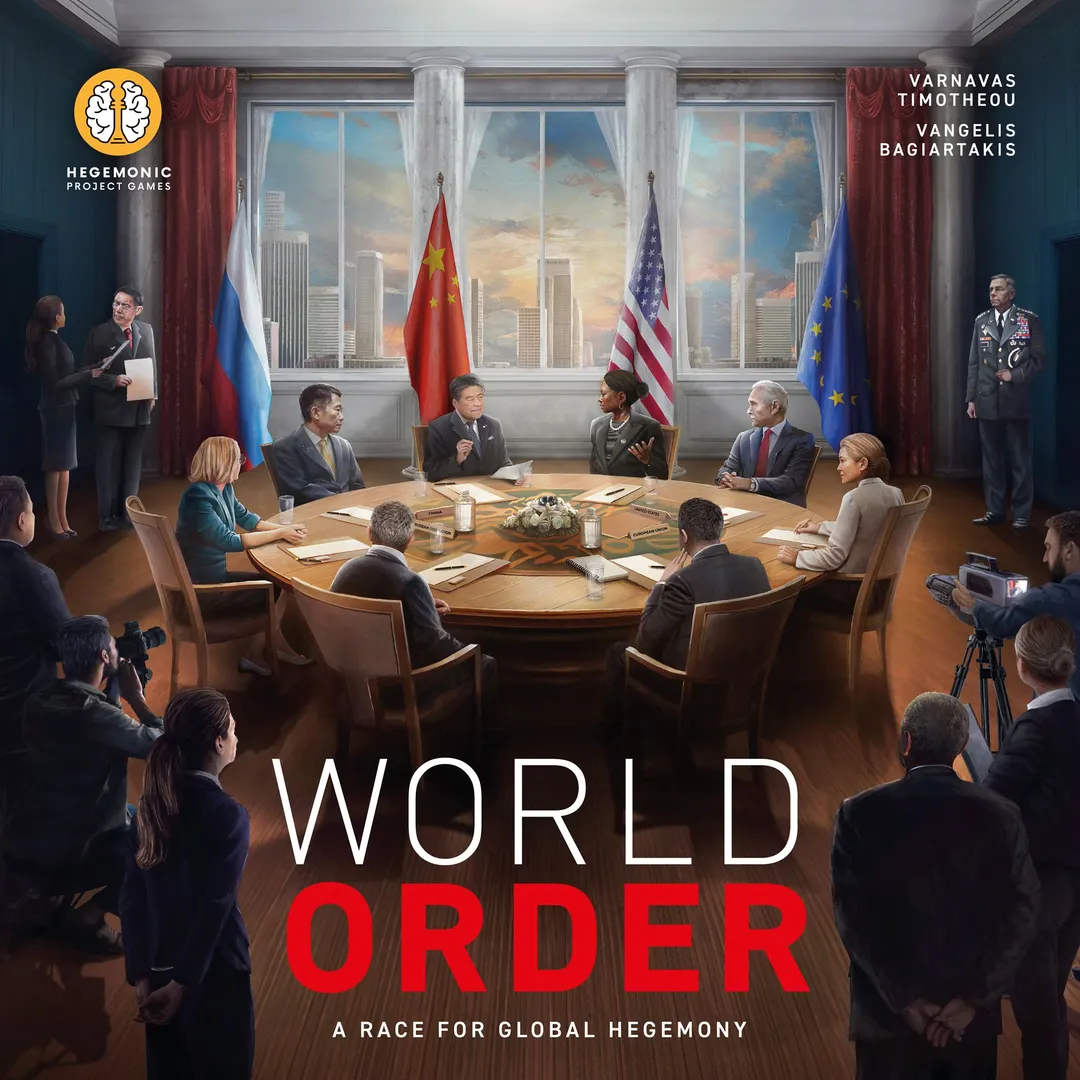
World Order
- 2–4 jugadores
- 120–180 min
- Complejidad 3,8/5
- 2026
2026
Ayuda con las reglas de First Monday in October
Explicaciones claras de turnos, efectos de cartas y situaciones dudosas, con referencias a fuentes oficiales e historial de preguntas guardado.
Para 1 jugador
¿Qué quieres saber?
Las respuestas salen del reglamento oficial, con la página para comprobarlo.
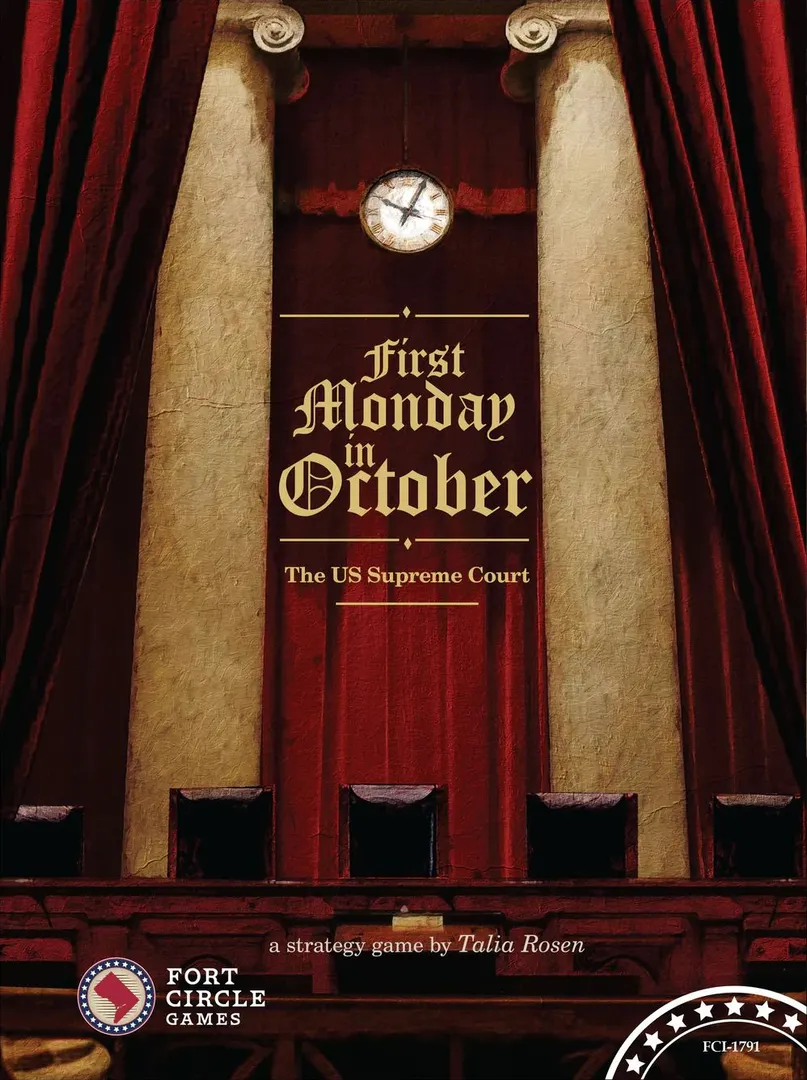
First Monday in October es un juego de mesa publicado en 2026 para 1–4 jugadores, con partidas de 90 a 120 minutos y a partir de 12 años. Fue diseñado por Talia Rosen y sus mecánicas principales son Dice Rolling, Area Majority / Influence y End Game Bonuses.




En inglés
On the First Monday in October, the all-powerful Justices of the U.S. Supreme Court gather each year in their "marble palace" to decide the fate of a nation. Over the course of two hours, First Monday in October re-creates the history of the U.S. Supreme Court from 1789 to the present day, through three distinct eras: Era I represents the founding of the Court in 1789 through the Civil War in 1865; Era II represents the time period from 1866 until the seminal decision of Brown v. Board in 1954; and Era III represents the modern era from 1955 until 2010. Players compete to score renown points in this card-driven strategy game by advocating for the winning side of cases decided by the Supreme Court and by shaping the judicial philosophy of the Court to align with their objectives. During each round, players can choose to place their clerks on what they hope to be the winning side of cases as they progress along the Docket track. In order to help their litigants win, players can take actions to change the composition of the Court by encouraging Justices throughout history to retire and by supporting judicial candidates. At the end of each round, one case will be scored and awarded to the player with the most clerks on the prevailing side. The player with the most points at the end of the game wins. Each player represents a long-standing institution or school of thought attempting to gain renown by shaping the composition of the high court. Players need to use their limited influence and actions wisely to manipulate the judicial philosophy of the Court and to prevail in as many cases as possible. Commerce Clause: This track represents the scope of Article I, Section 8 of the U.S. Constitution, which grants Congress the power to "regulate commerce" among the several states. Equality & Liberty: This track broadly represents the scope of individual equality and liberty, including but not limited to the 14th Amendment (i.e., equal protection, due process, and privacy rights). Free Speech: This track represents the obligation in the 1st Amendment that Congress make no law abridging a person's freedom of speech, and the scope of permissible restrictions on that freedom. Executive Power: This track broadly represents the scope of Article II of the U.S. Constitution, which enumerates the powers of the executive branch, including the Office of the President and law enforcement. Shifting each philosophy one way generally represents a more expansive Federalist interpretation of the above constitutional provisions that supports a stronger centralized federal government, whereas shifting each philosophy the other direction generally represents a more narrow Anti-Federalist application of these provisions that supports a more decentralized approach to government with less power concentrated at the federal level. —description from the publisher
Según el catálogo, First Monday in October admite de 1 a 4 jugadores. Este intervalo corresponde al número de jugadores indicado por la editorial, así que el juego puede prepararse para cualquier grupo dentro de ese margen. La preparación, algunas reglas y la puntuación pueden variar según el número de jugadores; consulta la configuración exacta en el reglamento de tu edición.
La duración indicada para First Monday in October es de 90 a 120 minutos, la estimación de la editorial para una partida completa. El tiempo real depende del grupo, del número de jugadores y del conocimiento de las reglas: las primeras partidas suelen alargarse y los grupos con experiencia terminan antes. La preparación y la explicación de las reglas no están incluidas.
El catálogo indica First Monday in October a partir de 12 años. Es la recomendación de la editorial y refleja la lectura necesaria, la complejidad de las reglas y las piezas pequeñas, no solo el tema. Los más pequeños a menudo pueden jugar con ayuda de un adulto: comprueba la edad recomendada en tu edición y la experiencia de tu grupo.
First Monday in October tiene una puntuación de complejidad de 3,0 sobre 5 según los jugadores de BoardGameGeek, lo que lo convierte en un juego de complejidad media. La puntuación refleja cuánto conocimiento de reglas, planificación y toma de decisiones exige una partida típica. Los juegos exigentes requieren una explicación inicial más larga, así que conviene usar una guía de preparación.
First Monday in October pertenece a estas categorías: Political y Educational. Sus mecánicas principales son Dice Rolling, Area Majority / Influence y End Game Bonuses. Las categorías describen el tema y la ambientación de un juego, mientras que las mecánicas describen lo que los jugadores hacen realmente en su turno. Cada mecánica lleva a una página del catálogo con juegos similares.
Los autores acreditados de First Monday in October son: Talia Rosen. Estos créditos proceden de los datos publicados del juego y nombran a las personas responsables de su diseño, no a ilustradores ni editoriales. Las páginas de autor de MeepleRules reúnen otros títulos de los mismos autores, algo útil cuando un juego te gusta y buscas otros parecidos.
El catálogo clasifica First Monday in October como juego base. Se juega por sí solo con los componentes de la caja y no requiere ningún otro título. Las expansiones, si existen, añaden contenido o reglas nuevas y aparecen por separado en el catálogo con un enlace a este juego base.