

- Puesto en BGG
- BGG #8795
- Puntuación BGG
- 5,9
Spank the Monkey
- 2–6 jugadores
- 30 min
- Complejidad 1,4/5
- 2003
2010
Ayuda con las reglas de Genesis
Explicaciones claras de turnos, efectos de cartas y situaciones dudosas, con referencias a fuentes oficiales e historial de preguntas guardado.
Para 2 jugadores
¿Qué quieres saber?
Las respuestas salen del reglamento oficial, con la página para comprobarlo.
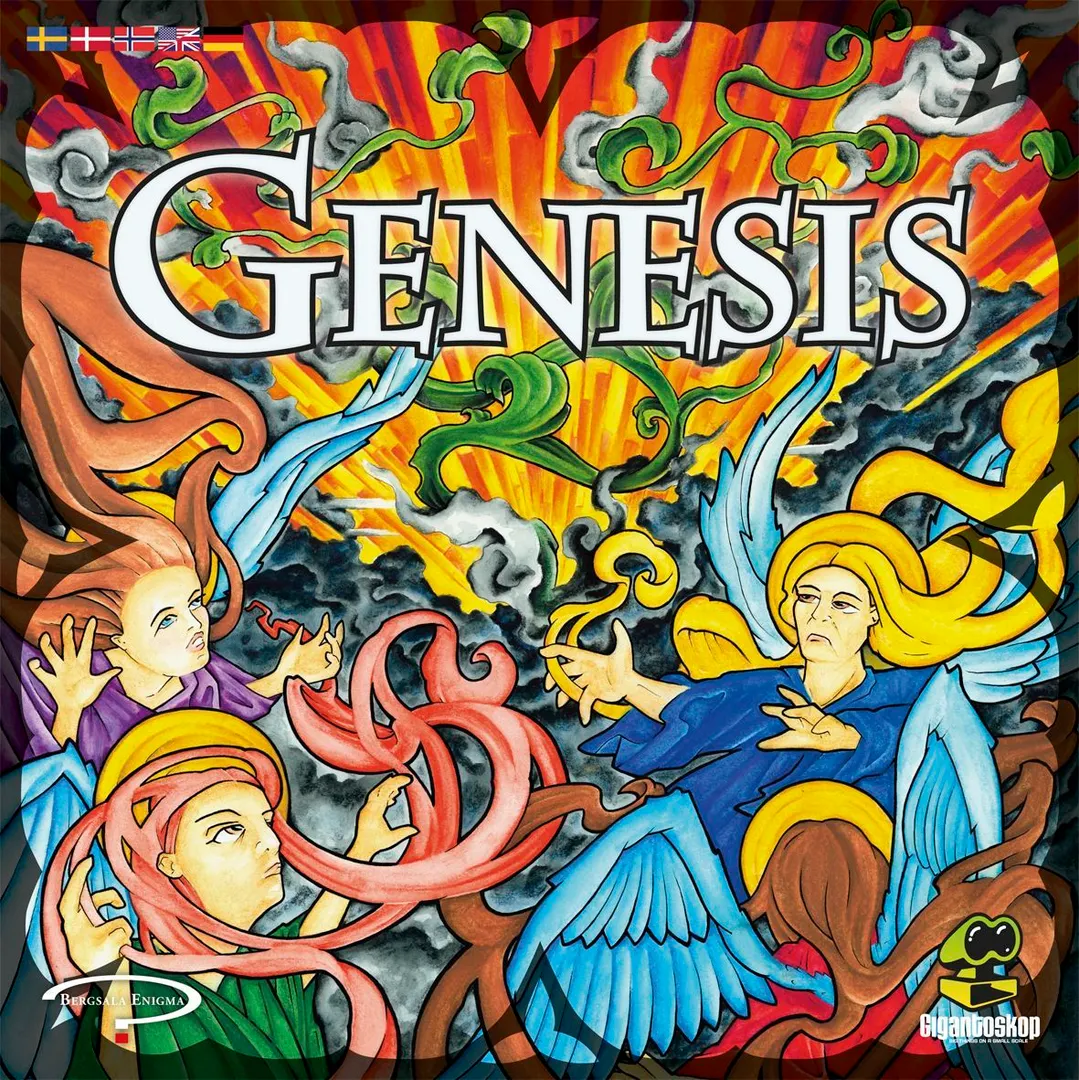
Genesis es un juego de mesa publicado en 2010 para 2–6 jugadores, con partidas de 60 minutos y a partir de 10 años. Fue diseñado por Peter Hansson y sus mecánicas principales son Set Collection.



En inglés
In the Beginning In the beginning God created the heaven and the earth. It took him six days to complete his work, assisted by a host of heavenly angels doing his divine bidding. On the seventh day God rested and examined the result. Seeing that it was good, he praised the angel who had contributed the most. Genesis - In the Beginning gives you the chance to become that angel. By gathering the essence of creation - chaos, matter and life - and turning it into seas and mountains, birds and beasts, you hope to win Gods approval - and the game! But the way to victory is wrought with hard decisions. You must gather essence when it's most advantageous, move at the right time and do your days’ work where they count the most. And beware of the dark angel who's trying to outshine you all. Now - let there be light! Contents 1 game board 1 God 1 dark angel 6 player angels 42 day work markers 1 starting player marker 72 essence cubes 1 rules booklet Gameplay Before the creation, the players’ angels are gathered in the void with God. When God starts the creation with the words "let there be light", the angels start their monumental task. There’s a lot do to and only seven days to get it done in, so every action counts. Throughout the game, God moves over each of the seven days on the game board, stopping morning, midday and evening, allowing the players 21 rounds to act. During their turn, players can choose to collect the essence of creation (chaos, matter and life), to do a day work on the current day using the different kinds of essence they have collected, or to follow in God’s path to another day. When players move from day to day, they’re positioned along the essence track. The essence track determines both the order of play and the type of essence a player can gather. The first player to move to a certain day gets the first position, the second player the second position, and so on. As different positions yield different kinds of essence, the players must plan their movement to get the right kind and the right amount of essence. If they’re not happy with their position, they can spend essence to swap positions with a neighboring angel, thereby also thwarting other players’ plans. When God creates a new day with new tasks for the angels, players can move to that day. The first player to do a day work on a certain day is awarded the highest points, the second player the second highest, and so on. As the week progresses, the points earned for doing a day work increase, which affects players’ long-term strategy. As the seventh day is a day of rest, God looks favorably on angels that retire from their hard work. The first player to retire their angel on the seventh day earns the highest points, the second player the second highest, and so on. When God reaches the evening of the seventh day, the game is over. All points will be tallied and the player with the highest score is declared the winner. To make things even more challenging, a dark angel is mixed in with the players’ angels, doing his best to snatch as many points as possible. The dark angel follows a pre-determined pattern of actions that the players can predict and delay but never stop. If the players aren’t careful, or if they’re too caught up in their own plans, the dark angel will surely outshine them, making all of them lose the game. The mechanics of the game are quite simple: the sooner you do a day work on a day, the higher the points you score, making it a good idea to keep close in God’s wake. Unfortunately, simply following God throughout the creation might not give you the exact essence you need to do your day work. Eventually you must stop to collect essence, preferably in the right position, making you lose momentum. In the end it’s always about choices: when and what to collect, when to move and when to do a day work. The winner, God willing, is the player who makes the right choices at the right time, a task easier said than done.
Según el catálogo, Genesis admite de 2 a 6 jugadores. Este intervalo corresponde al número de jugadores indicado por la editorial, así que el juego puede prepararse para cualquier grupo dentro de ese margen. La preparación, algunas reglas y la puntuación pueden variar según el número de jugadores; consulta la configuración exacta en el reglamento de tu edición.
La duración indicada para Genesis es de 60 minutos, la estimación de la editorial para una partida completa. El tiempo real depende del grupo, del número de jugadores y del conocimiento de las reglas: las primeras partidas suelen alargarse y los grupos con experiencia terminan antes. La preparación y la explicación de las reglas no están incluidas.
El catálogo indica Genesis a partir de 10 años. Es la recomendación de la editorial y refleja la lectura necesaria, la complejidad de las reglas y las piezas pequeñas, no solo el tema. Los más pequeños a menudo pueden jugar con ayuda de un adulto: comprueba la edad recomendada en tu edición y la experiencia de tu grupo.
Genesis tiene una puntuación de complejidad de 2,4 sobre 5 según los jugadores de BoardGameGeek, lo que lo convierte en un juego algo ligero. La puntuación refleja cuánto conocimiento de reglas, planificación y toma de decisiones exige una partida típica. Los juegos exigentes requieren una explicación inicial más larga, así que conviene usar una guía de preparación.
Genesis pertenece a estas categorías: Abstract Strategy, Religious y Mythology. Sus mecánicas principales son Set Collection. Las categorías describen el tema y la ambientación de un juego, mientras que las mecánicas describen lo que los jugadores hacen realmente en su turno. Cada mecánica lleva a una página del catálogo con juegos similares.
Los autores acreditados de Genesis son: Peter Hansson. Estos créditos proceden de los datos publicados del juego y nombran a las personas responsables de su diseño, no a ilustradores ni editoriales. Las páginas de autor de MeepleRules reúnen otros títulos de los mismos autores, algo útil cuando un juego te gusta y buscas otros parecidos.
El catálogo clasifica Genesis como juego base. Se juega por sí solo con los componentes de la caja y no requiere ningún otro título. Las expansiones, si existen, añaden contenido o reglas nuevas y aparecen por separado en el catálogo con un enlace a este juego base.