

- Puesto en BGG
- BGG #12.116
- Puntuación BGG
- 6,5
Envelopes of Cash
- 1–4 jugadores
- 60–150 min
- Complejidad 3,1/5
- 2023
1960
Ayuda con las reglas de Goal!
Explicaciones claras de turnos, efectos de cartas y situaciones dudosas, con referencias a fuentes oficiales e historial de preguntas guardado.
Para 2 jugadores
¿Qué quieres saber?
Las respuestas salen del reglamento oficial, con la página para comprobarlo.
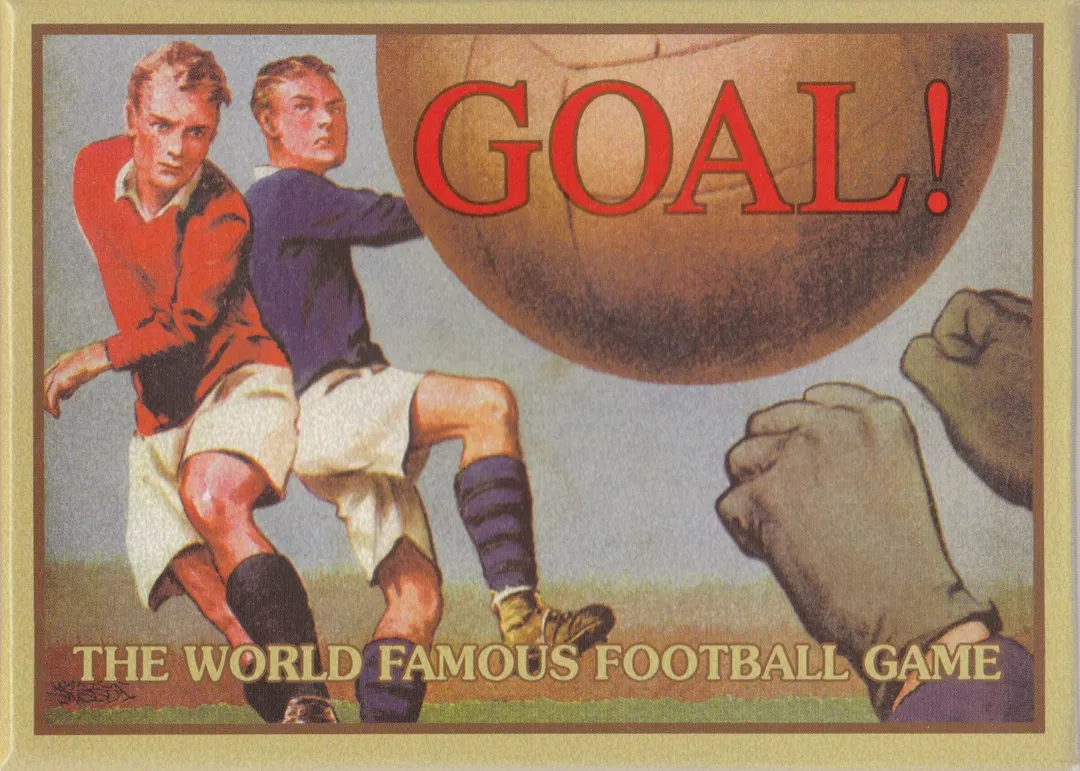
Goal! es un juego de mesa publicado en 1960 para 2–4 jugadores, con partidas de 30 minutos y a partir de 7 años. Sus mecánicas principales son Hand Management y Open Drafting.



En inglés
Very simply, this is a card-and-board simulation of football (a.k.a. Soccer). A ball moves on the board as a result of card play by the players (who team up when more than two play). Kick off, free kicks, penalty kicks, goalkeepers, corner kicks, clearing kicks --it's all in there in a neat, fast-playing package. The aim of the game is to score the most number of goals at the end of the game. It plays with cards that allow players to kick the ball and score goals. The game is played in two periods. The first period ends when there are 3 or less cards remaining in the card stack. (same thing for the second period). Cards can be played in several situation due to severals indications on them. Attack cards: played for the initial kick and during the game. Free kick cards that you can play all time (exept to beging a game), and you can play an Attack card after this one. Stop cards: To stop goals Corner cards: to avoid goal and make the opponent kick a corner. One penalty card. According to Lagoon Games this is believed to have been originally produced as "Goal!" in England in the 1950s, and their version is an authentic reproduction of the game
Según el catálogo, Goal! admite de 2 a 4 jugadores. Este intervalo corresponde al número de jugadores indicado por la editorial, así que el juego puede prepararse para cualquier grupo dentro de ese margen. La preparación, algunas reglas y la puntuación pueden variar según el número de jugadores; consulta la configuración exacta en el reglamento de tu edición.
La duración indicada para Goal! es de 30 minutos, la estimación de la editorial para una partida completa. El tiempo real depende del grupo, del número de jugadores y del conocimiento de las reglas: las primeras partidas suelen alargarse y los grupos con experiencia terminan antes. La preparación y la explicación de las reglas no están incluidas.
El catálogo indica Goal! a partir de 7 años. Es la recomendación de la editorial y refleja la lectura necesaria, la complejidad de las reglas y las piezas pequeñas, no solo el tema. Los más pequeños a menudo pueden jugar con ayuda de un adulto: comprueba la edad recomendada en tu edición y la experiencia de tu grupo.
Goal! tiene una puntuación de complejidad de 1,1 sobre 5 según los jugadores de BoardGameGeek, lo que lo convierte en un juego ligero. La puntuación refleja cuánto conocimiento de reglas, planificación y toma de decisiones exige una partida típica. Los juegos exigentes requieren una explicación inicial más larga, así que conviene usar una guía de preparación.
Goal! pertenece a estas categorías: Card Game y Sports. Sus mecánicas principales son Hand Management y Open Drafting. Las categorías describen el tema y la ambientación de un juego, mientras que las mecánicas describen lo que los jugadores hacen realmente en su turno. Cada mecánica lleva a una página del catálogo con juegos similares.
El catálogo clasifica Goal! como juego base. Se juega por sí solo con los componentes de la caja y no requiere ningún otro título. Las expansiones, si existen, añaden contenido o reglas nuevas y aparecen por separado en el catálogo con un enlace a este juego base.