

- Puesto en BGG
- BGG #9028
- Puntuación BGG
- 7,2
Great War at Sea: Jutland
- 2 jugadores
- 30–120 min
- Complejidad 3,1/5
- 2006
Ayuda con las reglas de Great War at Sea: Central Powers
Explicaciones claras de turnos, efectos de cartas y situaciones dudosas, con referencias a fuentes oficiales e historial de preguntas guardado.
¿Qué quieres saber?
Las respuestas salen del reglamento oficial, con la página para comprobarlo.
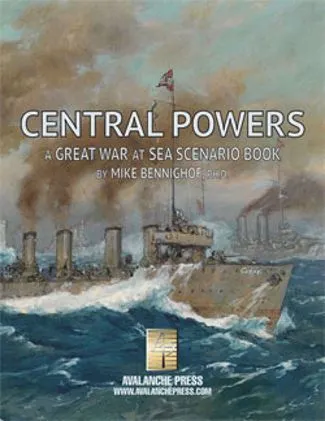
Great War at Sea: Central Powers es una expansión de Great War at Sea: Dreadnoughts publicada en 2015 para 1–2 jugadores, con partidas de 30 a 180 minutos y a partir de 12 años. Fue diseñado por Michael Bennighof y sus mecánicas principales son Dice Rolling, Secret Unit Deployment y Hexagon Grid.








En inglés
From the publisher's website: In Great War at Sea: Triple Alliance, we explored the notion of Italy remaining true to her alliance partners, Germany and Austria-Hungary, during the outbreak of the First World War in 1914. Staff officers from all three fleets prepared detailed operational plans, yet when war came in August 1914 Italy refused to join her Alliance partners and those plans would never be used. The joint staffs foresaw an aggressive Triple Alliance, one attemtping to seize control of the Mediterranean from the British and French. Our book Triple Alliance looked at the first year of such a naval war in a set of 43 new scenarios for our Great War at Sea: Mediterranean boxed game. Central Powers picks up that story in September 1915, with Italy, Austria-Hungary and Germany still struggling against Britain and France as new warships join the fleets of both sides. The fleets are almost evenly matched, with a slight Allied superiority in numbers matched by the Central Powers' central position. In this war, the fighting on the Mediterranean Sea has been just as bloody and destructive as that on the land fronts. Central Powers is a book supplement for the Great War at Sea series based on this naval war that never happened, but was probably more likely to have occurred than the actual events. It is not a complete game; ownership of our Mediterranean and Jutland boxed games and Triple Alliance, Dreadnoughts and Zeppelins supplements is required to enjoy all of the scenarios. The book includes 90 new playing pieces. The French receive their powerful Normandie- and Lyons-class super-dreadnoughts, and a pair of battle cruisers as well. And there's a quartet of French light cruisers proposed before the war but never built, that would have been very useful in fleet actions. With the Royal Navy unwilling to detach too much strength from the Grand Fleet facing the Germans across the North Sea, it falls on the other Allies to bolster this very active naval front. The Americans enter the Mediterranean naval war with their oldest dreadnoughts and newest pre-dreadnoughts, plus a large squadron of the armored cruisers. The Japanese are present as well with a squadron of battleships and one of cruisers. Plus there are four re-armed Austrian light cruisers (there have to be Austrians) and an Italian seaplane carrier (with seaplanes). The forty-two (42) scenarios continue the Triple Alliance story line through to the end of the Great War; since the book shares the special rules of Triple Alliance, we have more room for the story! It's a unique project, telling the alternative history of the entire Triple Alliance Mediterranean naval war in a series of game scenarios.
Según el catálogo, Great War at Sea: Central Powers admite de 1 a 2 jugadores. Este intervalo corresponde al número de jugadores indicado por la editorial, así que el juego puede prepararse para cualquier grupo dentro de ese margen. La preparación, algunas reglas y la puntuación pueden variar según el número de jugadores; consulta la configuración exacta en el reglamento de tu edición.
La duración indicada para Great War at Sea: Central Powers es de 30 a 180 minutos, la estimación de la editorial para una partida completa. El tiempo real depende del grupo, del número de jugadores y del conocimiento de las reglas: las primeras partidas suelen alargarse y los grupos con experiencia terminan antes. La preparación y la explicación de las reglas no están incluidas.
El catálogo indica Great War at Sea: Central Powers a partir de 12 años. Es la recomendación de la editorial y refleja la lectura necesaria, la complejidad de las reglas y las piezas pequeñas, no solo el tema. Los más pequeños a menudo pueden jugar con ayuda de un adulto: comprueba la edad recomendada en tu edición y la experiencia de tu grupo.
Great War at Sea: Central Powers tiene una puntuación de complejidad de 3,0 sobre 5 según los jugadores de BoardGameGeek, lo que lo convierte en un juego de complejidad media. La puntuación refleja cuánto conocimiento de reglas, planificación y toma de decisiones exige una partida típica. Los juegos exigentes requieren una explicación inicial más larga, así que conviene usar una guía de preparación.
Great War at Sea: Central Powers pertenece a estas categorías: Wargame, Nautical y Expansion for Base-game. Sus mecánicas principales son Dice Rolling, Secret Unit Deployment y Hexagon Grid. Las categorías describen el tema y la ambientación de un juego, mientras que las mecánicas describen lo que los jugadores hacen realmente en su turno. Cada mecánica lleva a una página del catálogo con juegos similares.
Los autores acreditados de Great War at Sea: Central Powers son: Michael Bennighof. Estos créditos proceden de los datos publicados del juego y nombran a las personas responsables de su diseño, no a ilustradores ni editoriales. Las páginas de autor de MeepleRules reúnen otros títulos de los mismos autores, algo útil cuando un juego te gusta y buscas otros parecidos.
El catálogo clasifica Great War at Sea: Central Powers como expansión de Great War at Sea: Dreadnoughts. Las expansiones añaden contenido, reglas o escenarios al juego base y normalmente no se pueden jugar solas, así que necesitas Great War at Sea: Dreadnoughts para usarla. Comprueba que tu edición de Great War at Sea: Dreadnoughts sea compatible, porque algunas expansiones se revisaron entre ediciones.