- Puntuación BGG
- 6,8
Gulf, Mobile & Ohio: Expansion #1
- 3–5 jugadores
- 75 min
- Complejidad 3,0/5
- 2009
2008
Ayuda con las reglas de Gulf, Mobile & Ohio
Explicaciones claras de turnos, efectos de cartas y situaciones dudosas, con referencias a fuentes oficiales e historial de preguntas guardado.
Para 3 jugadores
¿Qué quieres saber?
Las respuestas salen del reglamento oficial, con la página para comprobarlo.
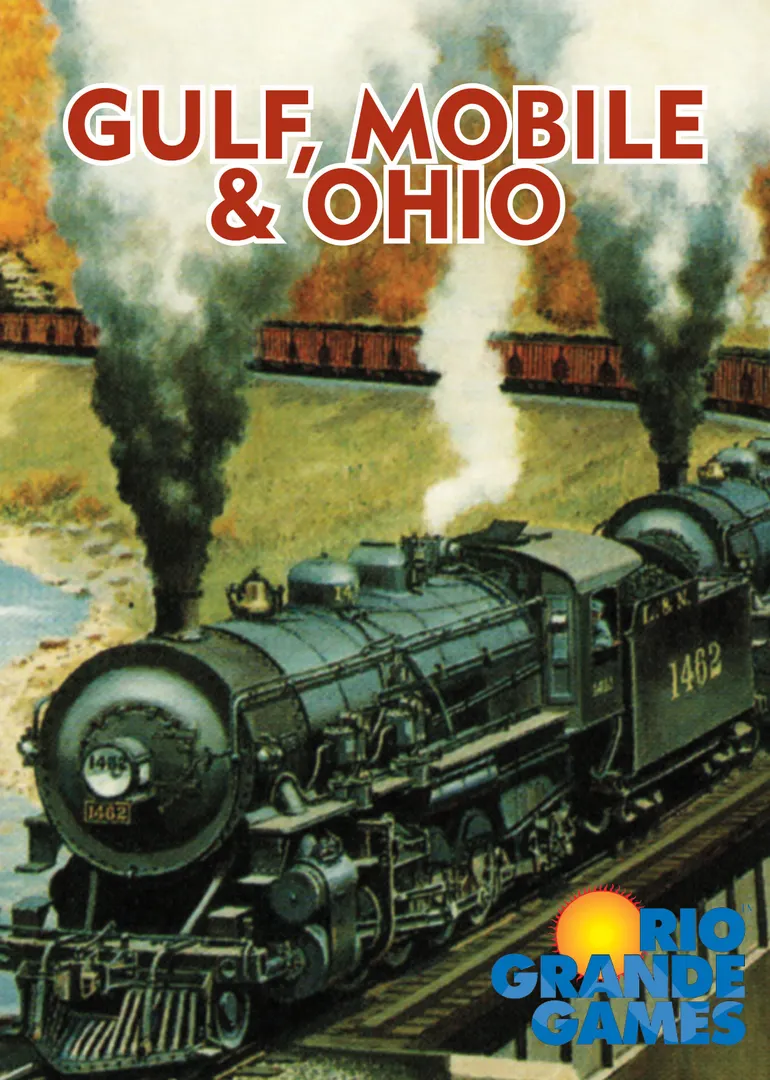
Gulf, Mobile & Ohio es un juego de mesa publicado en 2008 para 3–5 jugadores y con partidas de 45 a 60 minutos. Fue diseñado por John Bohrer y sus mecánicas principales son Auction / Bidding, Income y Hexagon Grid.



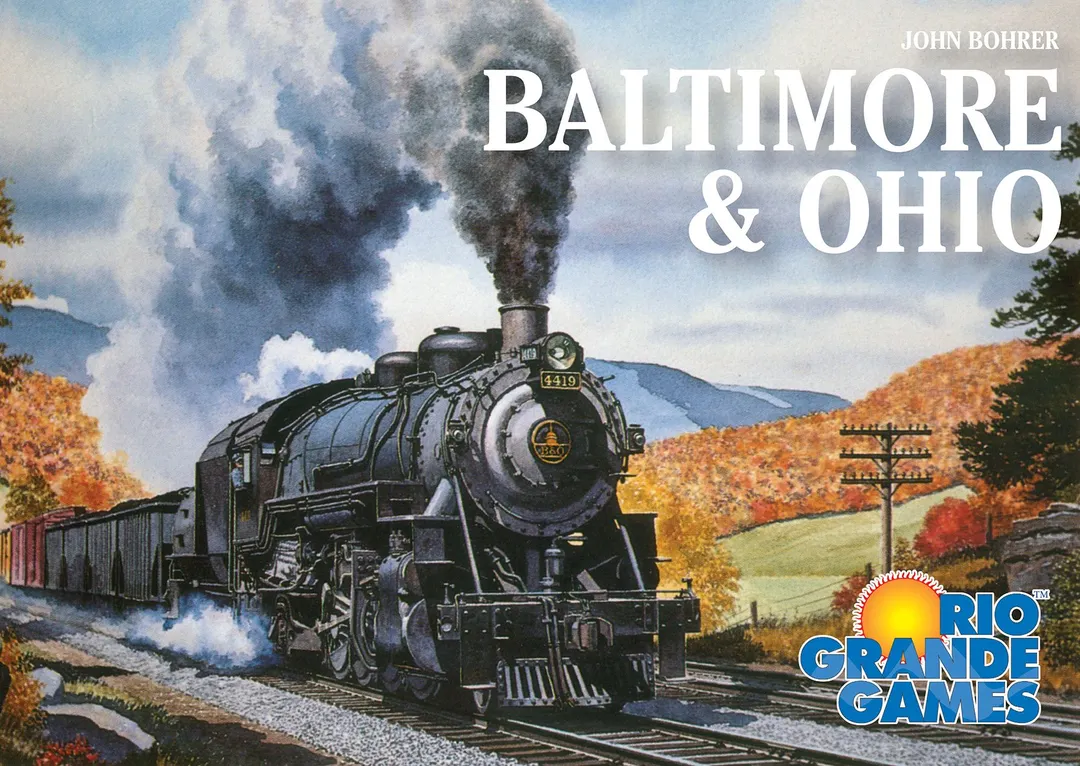
En inglés
In Gulf, Mobile & Ohio, the third entry in Winsome Games's Historic Railroads System, players build railroads in the South that existed between 1830-1860, with the game board featuring cities from Richmond to New Orleans, and from Memphis to Savannah. Twenty-three different railroad lines exist in the game, each represented by two shares of stock: a charter share for the player who founds this railroad, and a common share that might be auctioned later in the game. Eight railroads are designated as starting lines, and initially only the shares for these eight lines are available to players. Railroad lines will be represented on the game board with wooden cubes that come in six colors, with the number of cubes ranging from 6 to 32. On a turn, a player takes one of four actions: • Charter a railroad: The active player starts an auction for the charter share of a railroad that hasn't yet been founded. Players place bids for this share, with the winner claiming this charter share, placing a cube of the color that's most common on it, then using the money spent in the auction to place additional cubes on the game board at a cost of $3/cube. One cube of the same color is placed in the railroad's starting city (and sometimes you have a choice of starting city), and additional cubes are placed on track intersections and in connecting cities. You must bid enough that you can place this line in at least two cities. If the color of the cube that's most available in the stock is already in this city (thanks to railroad lines previously built), then the active player can't put this line up for auction. Whenever you build or expand railroad lines, you can't place cubes so that two lines of the same color touch. If a white cube has been placed in Grenada, for example, you can't found the MC or M&T lines in that city if white is the most common color of cubes. • Auction a common share: Once the charter share of a line has been acquired, the active player can start an auction for the common share of that line, with the winning bid once again being used to expand that line with additional cubes of that railroad's color, although in this case you have no building requirement and a winning bid of $0 is allowed. After each auction, a "common share" tracking marker is moved, and after the second such movement, players receive dividends from the bank for the shares they hold: $5 for a charter share when that railroad has issued only that one share, and $3 for each share otherwise held. • Expand a line: If you own the charter share of a line, you can spend your funds to expand this line. • Pass: If all players pass in turn, the game ends. When a railroad line expands into a city that's the starting city for a railroad line not yet available in the auction pool, you take the two shares of that new line and place them in the auction pool. Each time you build railroad lines, you score victory points: 1 VP for founding a new line (with three lines being worth 2 VP), 1 VP for placing a cube in a city (2 VP for going into Atlanta), and 1 VP for the first time that a line connects to a line of each other color (which can occur only in cities). If all players pass in turn or the sixth color of cubes is on the board following the chartering of a railroad, the game ends. Whoever has the most points wins!
Según el catálogo, Gulf, Mobile & Ohio admite de 3 a 5 jugadores. Este intervalo corresponde al número de jugadores indicado por la editorial, así que el juego puede prepararse para cualquier grupo dentro de ese margen. La preparación, algunas reglas y la puntuación pueden variar según el número de jugadores; consulta la configuración exacta en el reglamento de tu edición.
La duración indicada para Gulf, Mobile & Ohio es de 45 a 60 minutos, la estimación de la editorial para una partida completa. El tiempo real depende del grupo, del número de jugadores y del conocimiento de las reglas: las primeras partidas suelen alargarse y los grupos con experiencia terminan antes. La preparación y la explicación de las reglas no están incluidas.
Gulf, Mobile & Ohio tiene una puntuación de complejidad de 2,8 sobre 5 según los jugadores de BoardGameGeek, lo que lo convierte en un juego algo ligero. La puntuación refleja cuánto conocimiento de reglas, planificación y toma de decisiones exige una partida típica. Los juegos exigentes requieren una explicación inicial más larga, así que conviene usar una guía de preparación.
Gulf, Mobile & Ohio pertenece a estas categorías: Economic y Trains. Sus mecánicas principales son Auction / Bidding, Income y Hexagon Grid. Las categorías describen el tema y la ambientación de un juego, mientras que las mecánicas describen lo que los jugadores hacen realmente en su turno. Cada mecánica lleva a una página del catálogo con juegos similares.
Los autores acreditados de Gulf, Mobile & Ohio son: John Bohrer. Estos créditos proceden de los datos publicados del juego y nombran a las personas responsables de su diseño, no a ilustradores ni editoriales. Las páginas de autor de MeepleRules reúnen otros títulos de los mismos autores, algo útil cuando un juego te gusta y buscas otros parecidos.
El catálogo clasifica Gulf, Mobile & Ohio como juego base. Se juega por sí solo con los componentes de la caja y no requiere ningún otro título. Las expansiones, si existen, añaden contenido o reglas nuevas y aparecen por separado en el catálogo con un enlace a este juego base.