

- Puesto en BGG
- BGG #175
- Puntuación BGG
- 8,2
Vantage
- 1–6 jugadores
- 120–180 min
- Complejidad 2,3/5
- 2025
2017
Ayuda con las reglas de In Tenebris Lux
Explicaciones claras de turnos, efectos de cartas y situaciones dudosas, con referencias a fuentes oficiales e historial de preguntas guardado.
¿Qué quieres saber?
Las respuestas salen del reglamento oficial, con la página para comprobarlo.
In Tenebris Lux es un juego de mesa publicado en 2017 para 1–4 jugadores y a partir de 13 años. Fue diseñado por Owen Aurelio y sus mecánicas principales son Dice Rolling, Solo / Solitaire Game y Narrative Choice / Paragraph.





En inglés
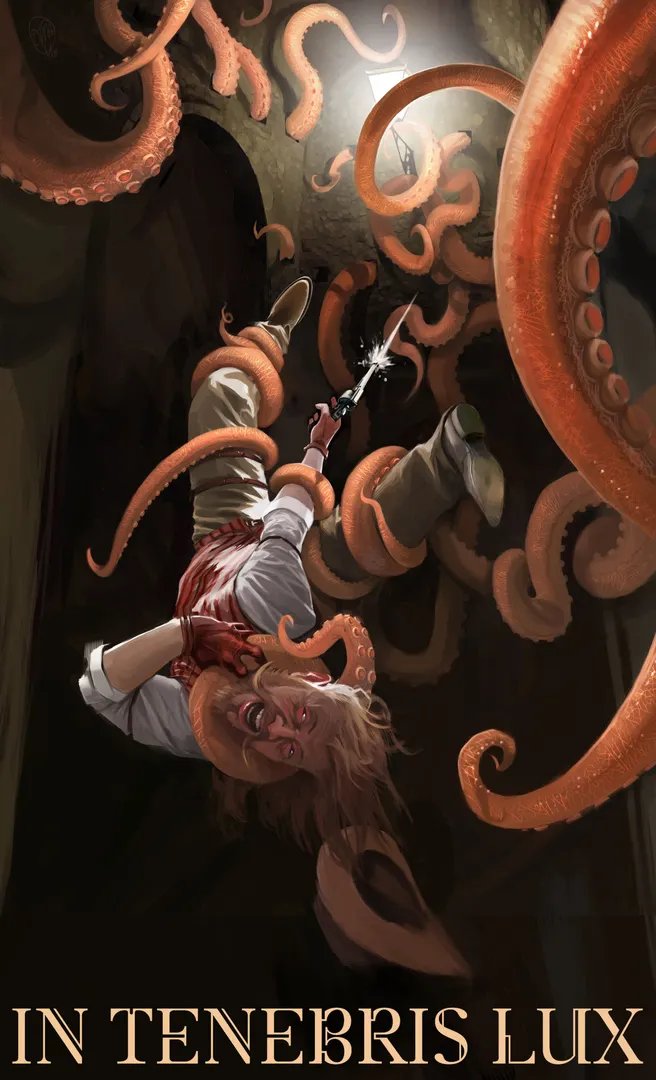
ENTER A WORLD OF VICTORIAN HORROR! In 19th-century Rome, ancient crypts have been discovered beneath the Capuchin tombs. Take on the role of a dauntless explorer and plunder these catacombs of their secrets and spoils. Build your catacomb as you go, seeking finds and surviving horrors. End your story before the evils of the catacomb devour you all! IN TENEBRIS LUX is a game for 1-4 players ages 13 and up, and can be played in about 45 minutes to an hour. Players rush to explore and resolve personal quests, called narratives, before their opponents can resolve their own, or the dark catacombs close in on them, ending the game. The game is played in turns, each broken into 3 Steps, with several Phases. STEP 1: BREATHE The first Step adds Rooms to the Catacombs, by drawing them from a random pile. This builds up the game board out of playing card sized map pieces, or Rooms. This step also has a phase allowing Explorers to change their gear, referred to as Equipment or Finds… this is critical as these important items strengthen an Explorer so that they may deal with the dangers to come. Following phases allow an Explorer to adjust their card hand and play any non-room cards, if so desired. STEP 2: SEEK The second step allows Explorers to actually explore and navigate through the Catacombs, or growing game board. This dangerous course allows Explorers to search for new Finds and gear. More phases allow for adding extra Rooms, or cards, onto the board, moving around from card to card, and interacting with Room Cards in order to complete Naratives, or the game’s objectives. This is the Phase where Explorers are most at risk of stumbling upon Horrors, as they are actively exploring the Catacombs. STEP 3: SURVIVE In Step 3 Horrors, the game’s many monsters in the dark, may attack your Explorer! Canny and brave Explorers may also strike out and attack each other in hopes of thwarting each other’s progress in pursuit of personal Narratives. This phase resolves each combat one by one, and adjusts health and loot bodies. Basic combat is simple. As the attacker, role one of the game’s 14 included dice, and add it to your chosen Trait (Grit, Wit or Daring). The Defender rolls one die and adds it to their same Trait, as they defend along the same lines as the incoming attack. Whichever result is highest wins. The game’s “Combat Reference Card” will take players through any extra steps, notably the way in which rooms impact the outcomes with rolls in combat. Each Horror and Explorer features an affinity with different Room types, this gives an edge or disadvantage in combat. Be careful of the Room you land on, it will have dire consequences! After each Step is resolved a player finishes their turn and, moving clockwise, the next player goes, and so on. The game is ended when one player completes their randomly drawn Narrative objective, all Explorers are killed, or the Doom Counter (the Game’s timer) has run its course, sending the catacombs crashing in on the hapless Explorers. In Tenebris Lux comes with 13 Jumbo Explorer cards, 4 jumbo Combat and Turn Cycle reference cards, a full color rule book, 24 Horror cards, 18 Equipment cards, 21 Find cards, 12 Narrative cards, 32 Room cards, 3 Great Room Jumbo cards, one Jumbo Doom Counter card, 14 Dice, 13 Double Sided Explorer counters with 4 stands, and a counter for each Horror as well as many counters to help record progress for Narratives.
Según el catálogo, In Tenebris Lux admite de 1 a 4 jugadores. Este intervalo corresponde al número de jugadores indicado por la editorial, así que el juego puede prepararse para cualquier grupo dentro de ese margen. La preparación, algunas reglas y la puntuación pueden variar según el número de jugadores; consulta la configuración exacta en el reglamento de tu edición.
El catálogo indica In Tenebris Lux a partir de 13 años. Es la recomendación de la editorial y refleja la lectura necesaria, la complejidad de las reglas y las piezas pequeñas, no solo el tema. Los más pequeños a menudo pueden jugar con ayuda de un adulto: comprueba la edad recomendada en tu edición y la experiencia de tu grupo.
In Tenebris Lux tiene una puntuación de complejidad de 2,0 sobre 5 según los jugadores de BoardGameGeek, lo que lo convierte en un juego algo ligero. La puntuación refleja cuánto conocimiento de reglas, planificación y toma de decisiones exige una partida típica. Los juegos exigentes requieren una explicación inicial más larga, así que conviene usar una guía de preparación.
In Tenebris Lux pertenece a estas categorías: Adventure, Science Fiction y Post-Napoleonic. Sus mecánicas principales son Dice Rolling, Solo / Solitaire Game y Narrative Choice / Paragraph. Las categorías describen el tema y la ambientación de un juego, mientras que las mecánicas describen lo que los jugadores hacen realmente en su turno. Cada mecánica lleva a una página del catálogo con juegos similares.
Los autores acreditados de In Tenebris Lux son: Owen Aurelio. Estos créditos proceden de los datos publicados del juego y nombran a las personas responsables de su diseño, no a ilustradores ni editoriales. Las páginas de autor de MeepleRules reúnen otros títulos de los mismos autores, algo útil cuando un juego te gusta y buscas otros parecidos.
El catálogo clasifica In Tenebris Lux como juego base. Se juega por sí solo con los componentes de la caja y no requiere ningún otro título. Las expansiones, si existen, añaden contenido o reglas nuevas y aparecen por separado en el catálogo con un enlace a este juego base.