
- Puesto en BGG
- BGG #2295
- Puntuación BGG
- 7,1
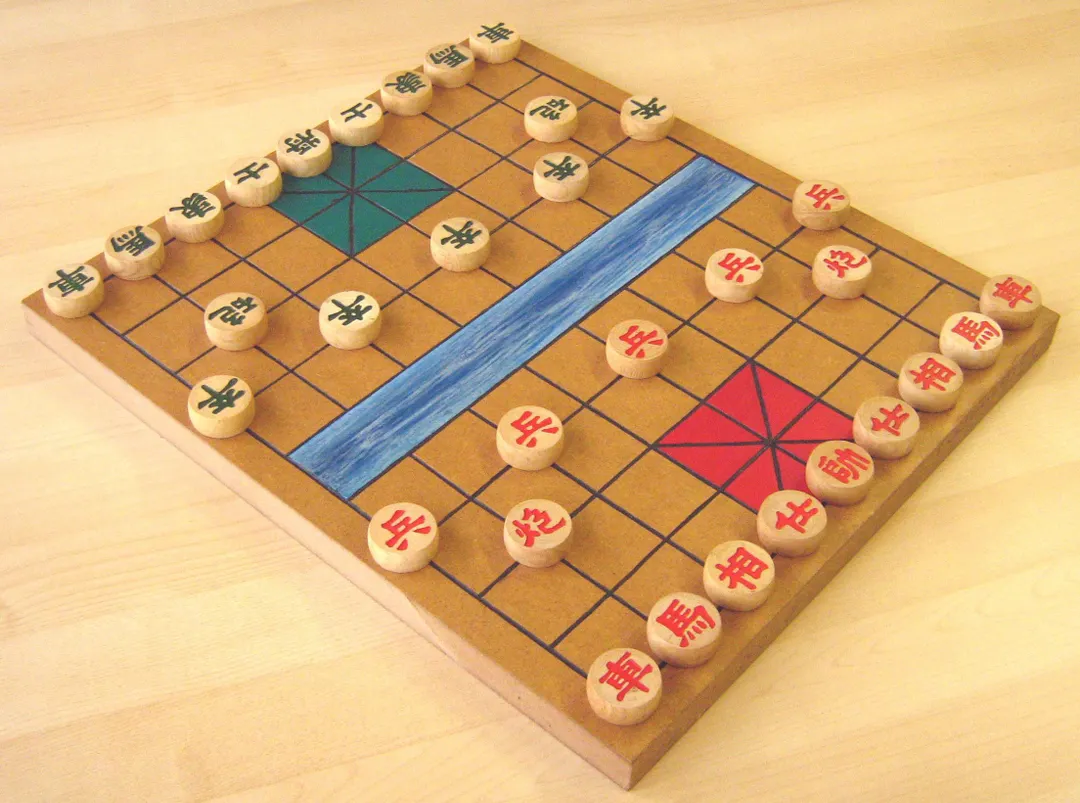
Xiangqi
- 2 jugadores
- 60 min
- Complejidad 3,6/5
- 762
2025
Ayuda con las reglas de IYE
Explicaciones claras de turnos, efectos de cartas y situaciones dudosas, con referencias a fuentes oficiales e historial de preguntas guardado.
Para 2 jugadores
¿Qué quieres saber?
Las respuestas salen del reglamento oficial, con la página para comprobarlo.
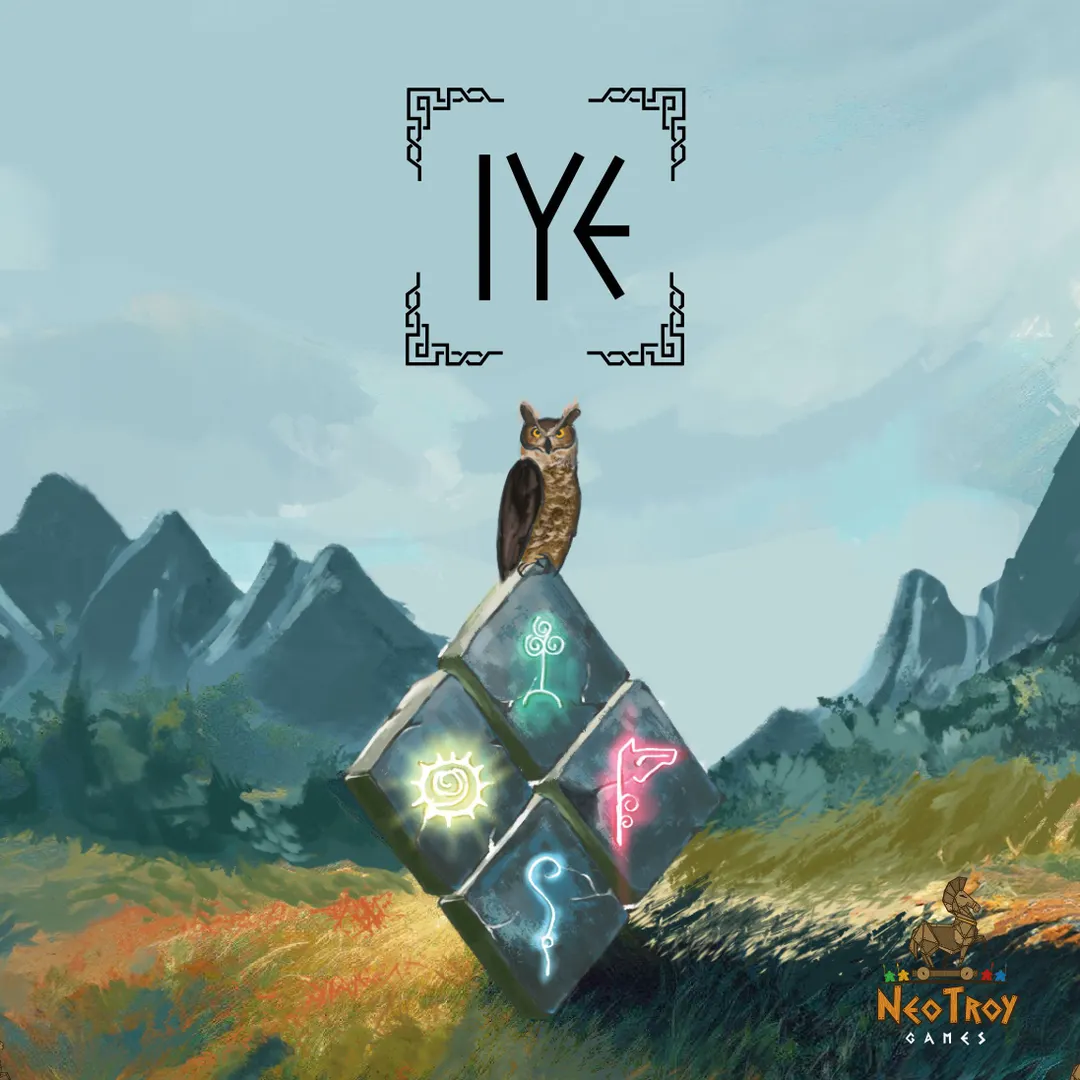
IYE es un juego de mesa publicado en 2025 para 2 jugadores, con partidas de 15 a 30 minutos y a partir de 8 años. Fue diseñado por Onur Şencan y sus mecánicas principales son Set Collection, Square Grid y Grid Movement.



En inglés
The clan’s Shaman has gotten long in the tooth; it is time for him to pass on his drum. The drum shall be passed down to either one of his apprentices. The successor shall be chosen not through a competition nor a contest, but through a traditional ritual of calling and gathering the İye. The Shaman candidates, raised through apprenticeship, shall prove themselves capable of being the clan’s new spiritual leader. Albeit they are in a way competing against one another, cooperation is still a necessity. For such is the way to build a bridge between men and İye. In this game, the two Shaman candidates endeavour to gather the İyes through the beat of the Shaman’s drum. The candidates need to calculate which İye shall be left to their opponent; moreover,they need to make the most logical choice on when to ask the İye to lend a hand and to let them go. The one who proves to be the most skilful in gathering the İye and utilising their abilities shall be appointed as the clan’s next Shaman. İye (pronounced EE-yeah): Belonging to the animist mythologies of Central Asia, İye are nature spirits that inhabit various things. It is believed that they are the protectors of whatever object or part of nature they inhabit, and hold extraordinary powers. Kam (pronounced like English word ‘come’): A shaman in the Altaic, Mongol and Turkic cultures. They serve as the sages and spiritual leaders of their clans. They handcraft their own drums with which they contact the İyes. Utilising the power of an İye is described as “asking the İye to lend a hand”. GAME STRUCTURE AND RULES The first player is the one who is most interested in Shamanism. You can also use any other method to determine the first player. On their turn, a player chooses to perform a A: “Natural Movement” or an B: “İye Tile Movement” to move the Shaman’s drum. Whichever İye Tile the drum moves onto is given to the opponent along with the turn. When there is but a single İye Tile left on the game board, the cycle ends and scoring begins. Natural Movement: The players can move the Shaman’s drum for 1 or 2 spaces on a vertical or horizontal axis. The drum cannot be moved diagonally through a Natural Movement, only vertically or horizontally. The drum cannot be placed on an empty tile, but it can move over them. Moving over an empty tile still counts as moving 2 spaces. İye Tile Movement: The İye Tiles that have been gathered on previous turns can be utilised by the players to move the Shaman’s drum beyond what is naturally possible. In such an instance, whichever İye Tile the drum lands on is still given to the opponent. An İye Tile that has been utilised thusly is spent and ‘discarded’ next to the game board. It will not be included in scoring. The number and types of discarded İye Tiles musty always be visible to both players. The Premature End Of A Cycle If a player is unable to execute any legal moves during their turn, the cycle ends then and there. The player who was last able to execute a movement, becomes the winner. This can only occur if a player has no possible “Natural Movement” to execute and no applicable İye Tiles that can be used for an “İye Tile Movement”. End of a cycle and scoring If a cycle ends because a player was not able to move, the player who played the last move wins the cycle. In this case, there is no need for scoring. If a cycle ends because there is a single İye Tile left on the game board, scoring ensues. Each type of İye is scored separately. Whoever holds the greatest count of a particular type of İye, receives all the points for that type. If both players hold an equal number of tiles regarding a type of İye, neither player wins any points. Moreover, any İye Tile that was used for an “İye Tile Movement” is not counted during scoring; it has been spent and ‘discarded’.
Según el catálogo, IYE admite 2 jugadores. Es el número de jugadores indicado por la editorial, así que el juego está diseñado exactamente para esa cantidad de participantes. Las variantes para otros tamaños de grupo, si existen, se describen en el reglamento de tu edición; consúltalo antes de preparar otra configuración.
La duración indicada para IYE es de 15 a 30 minutos, la estimación de la editorial para una partida completa. El tiempo real depende del grupo, del número de jugadores y del conocimiento de las reglas: las primeras partidas suelen alargarse y los grupos con experiencia terminan antes. La preparación y la explicación de las reglas no están incluidas.
El catálogo indica IYE a partir de 8 años. Es la recomendación de la editorial y refleja la lectura necesaria, la complejidad de las reglas y las piezas pequeñas, no solo el tema. Los más pequeños a menudo pueden jugar con ayuda de un adulto: comprueba la edad recomendada en tu edición y la experiencia de tu grupo.
IYE tiene una puntuación de complejidad de 1,7 sobre 5 según los jugadores de BoardGameGeek, lo que lo convierte en un juego ligero. La puntuación refleja cuánto conocimiento de reglas, planificación y toma de decisiones exige una partida típica. Los juegos exigentes requieren una explicación inicial más larga, así que conviene usar una guía de preparación.
IYE pertenece a estas categorías: Abstract Strategy. Sus mecánicas principales son Set Collection, Square Grid y Grid Movement. Las categorías describen el tema y la ambientación de un juego, mientras que las mecánicas describen lo que los jugadores hacen realmente en su turno. Cada mecánica lleva a una página del catálogo con juegos similares.
Los autores acreditados de IYE son: Onur Şencan. Estos créditos proceden de los datos publicados del juego y nombran a las personas responsables de su diseño, no a ilustradores ni editoriales. Las páginas de autor de MeepleRules reúnen otros títulos de los mismos autores, algo útil cuando un juego te gusta y buscas otros parecidos.
El catálogo clasifica IYE como juego base. Se juega por sí solo con los componentes de la caja y no requiere ningún otro título. Las expansiones, si existen, añaden contenido o reglas nuevas y aparecen por separado en el catálogo con un enlace a este juego base.