

- Puesto en BGG
- BGG #10.576
- Puntuación BGG
- 6,8
Master of Economy
- 2–4 jugadores
- 120 min
- Complejidad 4,1/5
- 2010
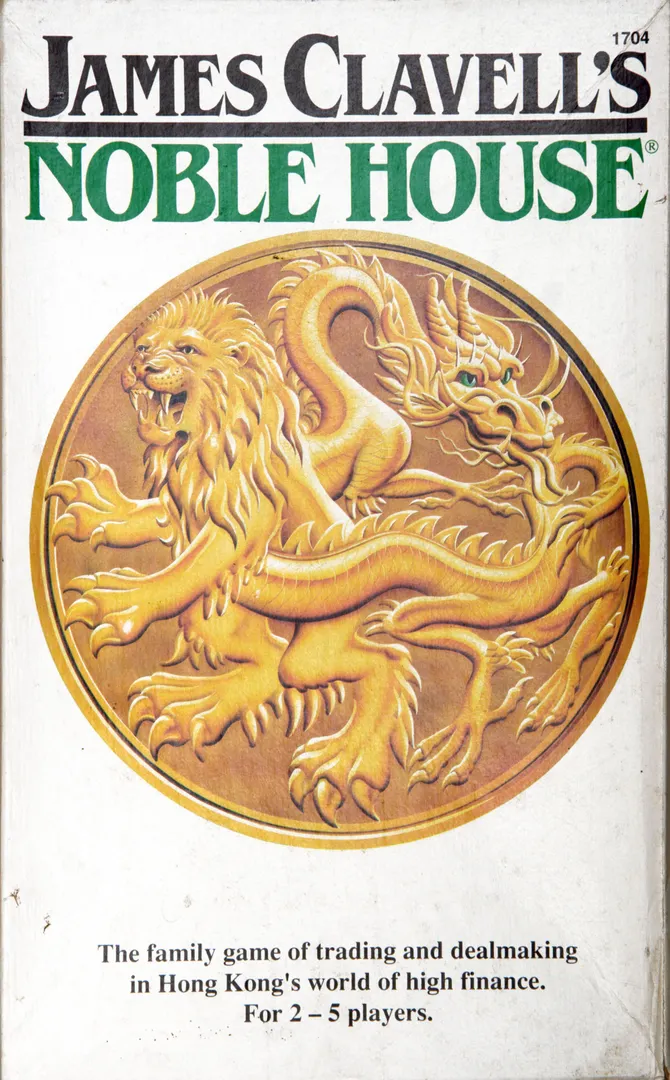
1988
Ayuda con las reglas de James Clavell's Noble House
Explicaciones claras de turnos, efectos de cartas y situaciones dudosas, con referencias a fuentes oficiales e historial de preguntas guardado.
¿Qué quieres saber?
Las respuestas salen del reglamento oficial, con la página para comprobarlo.
James Clavell's Noble House es un juego de mesa publicado en 1988 para 2–5 jugadores, con partidas de 180 minutos y a partir de 12 años. Fue diseñado por L. Ross Babcock, III y sus mecánicas principales son Trading, Auction / Bidding y Commodity Speculation.





En inglés
From the Publisher: Noble House is a game based on the novel by James Clavell. In this game, players take the part of the Tai-Pans of major corporations doing business in Hong Kong in the early 1960's, as portrayed in the Clavell book. Each player is head of a large business conglomerate and is striving to be the most influential and powerful leader in the Hong Kong business community. The route to power lies in the manipulations of the stock market, banks, and holding companies, and other typical corporate skull duggery. Synopsis of play: During a turn, players draw event cards, which can be used in many ways to affect one's own future, or the future of an opponent. Players then buy and sell stocks on a volatile stock market, which can fluctuate due to purchase and sale of stocks, failed contracts, or even loss of face (bad faith deals). Contracts are then announced, and if a player has sufficient assets, and can maintain those assets, lots of money can be made. Unfulfilled contracts go up for a general bid amongst the players. Players can then attempt to acquire loans from 3 Hong Kong banks, but, if the Bank Directors, or their proxies, so vote, a player can simply be denied a loan. Furthermore, bank directors, in the person of voting cards held by players, can call in outstanding loans, which must be immediately paid. Players now purchase various assets, such as airlines, railroads, shipping lines, industry, land, and human services, which the player must have to fulfill contractual obligations. Players can buy their own assets, or even lease them from other players. All possible wheeling and dealing is allowed, and no one is ever required to keep his or her end of a bargain. Lastly, if a player's stock falls far enough, and they have been unfortunate enough to lose enough of their own "voting" stock, they can be voted out of the game, which will end the game at the end of that phase. Otherwise, the game ends on the turn when the last event card is drawn.
Según el catálogo, James Clavell's Noble House admite de 2 a 5 jugadores. Este intervalo corresponde al número de jugadores indicado por la editorial, así que el juego puede prepararse para cualquier grupo dentro de ese margen. La preparación, algunas reglas y la puntuación pueden variar según el número de jugadores; consulta la configuración exacta en el reglamento de tu edición.
La duración indicada para James Clavell's Noble House es de 180 minutos, la estimación de la editorial para una partida completa. El tiempo real depende del grupo, del número de jugadores y del conocimiento de las reglas: las primeras partidas suelen alargarse y los grupos con experiencia terminan antes. La preparación y la explicación de las reglas no están incluidas.
El catálogo indica James Clavell's Noble House a partir de 12 años. Es la recomendación de la editorial y refleja la lectura necesaria, la complejidad de las reglas y las piezas pequeñas, no solo el tema. Los más pequeños a menudo pueden jugar con ayuda de un adulto: comprueba la edad recomendada en tu edición y la experiencia de tu grupo.
James Clavell's Noble House tiene una puntuación de complejidad de 2,7 sobre 5 según los jugadores de BoardGameGeek, lo que lo convierte en un juego algo ligero. La puntuación refleja cuánto conocimiento de reglas, planificación y toma de decisiones exige una partida típica. Los juegos exigentes requieren una explicación inicial más larga, así que conviene usar una guía de preparación.
James Clavell's Noble House pertenece a estas categorías: Economic, Negotiation y Novel-based. Sus mecánicas principales son Trading, Auction / Bidding y Commodity Speculation. Las categorías describen el tema y la ambientación de un juego, mientras que las mecánicas describen lo que los jugadores hacen realmente en su turno. Cada mecánica lleva a una página del catálogo con juegos similares.
Los autores acreditados de James Clavell's Noble House son: L. Ross Babcock, III. Estos créditos proceden de los datos publicados del juego y nombran a las personas responsables de su diseño, no a ilustradores ni editoriales. Las páginas de autor de MeepleRules reúnen otros títulos de los mismos autores, algo útil cuando un juego te gusta y buscas otros parecidos.
El catálogo clasifica James Clavell's Noble House como juego base. Se juega por sí solo con los componentes de la caja y no requiere ningún otro título. Las expansiones, si existen, añaden contenido o reglas nuevas y aparecen por separado en el catálogo con un enlace a este juego base.