
- Puesto en BGG
- BGG #1178
- Puntuación BGG
- 7,1
Maharaja: The Game of Palace Building in India
- 2–5 jugadores
- 90 min
- Complejidad 3,2/5
- 2004

1998
Ayuda con las reglas de Jump!
Explicaciones claras de turnos, efectos de cartas y situaciones dudosas, con referencias a fuentes oficiales e historial de preguntas guardado.
¿Qué quieres saber?
Las respuestas salen del reglamento oficial, con la página para comprobarlo.
Jump! es un juego de mesa publicado en 1998 para 2–5 jugadores, con partidas de 45 minutos y a partir de 10 años. Fue diseñado por Wolfgang Kramer y Michael Kiesling y sus mecánicas principales son Simultaneous Action Selection.



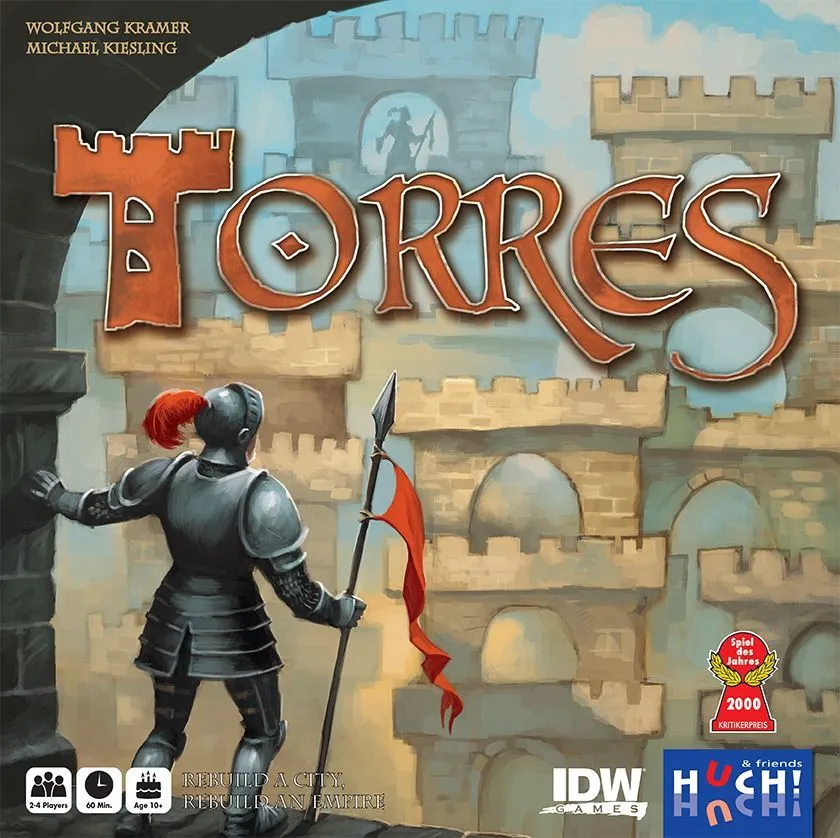

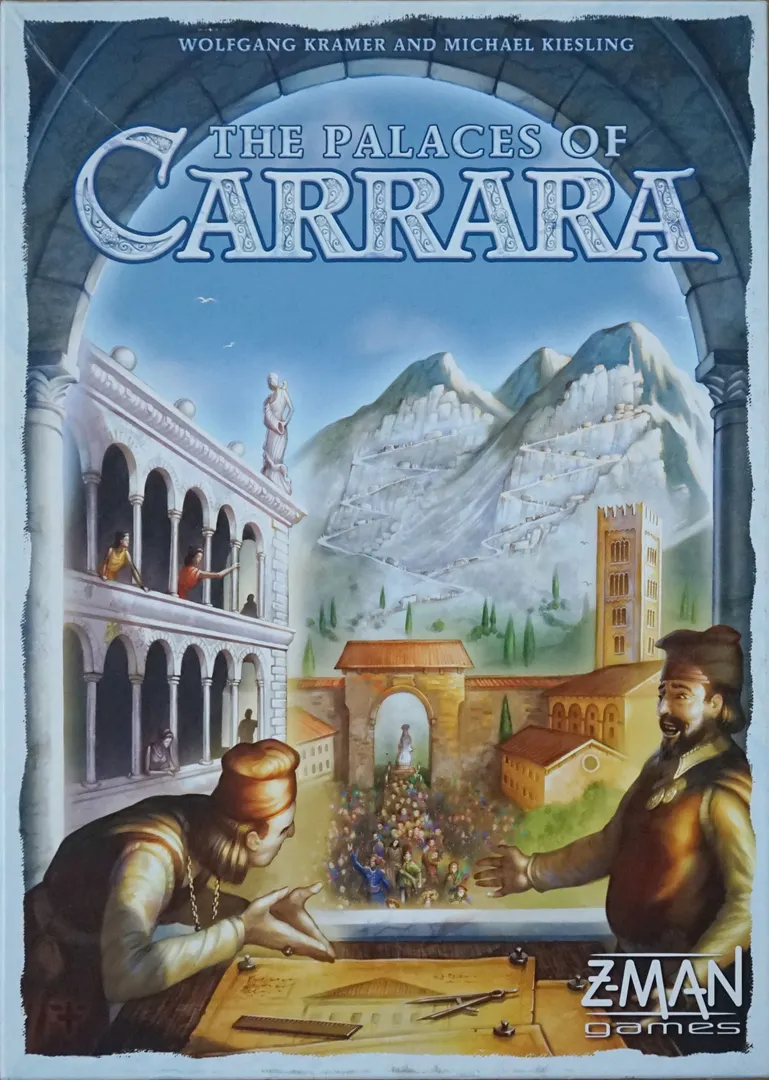

En inglés
The premise is quite simple: jump out of airplanes and get your guys to land as close to the coast as possible. The closer you are to the coast, the more points you score. If you splash down into the water, however, you will score negative points. The further from the shore you are in the water, the more negative points you will suffer. The board depicts a section of land, followed by a beach and ocean. There is a lake on one space of the land section, and a one-space island in the ocean. The board also has two 'landing' tracks running parallel to each other. The tokens are placed on these tracks once they have leapt from the planes. Finally, the board also has a scoring track to tabulate the points ultimately scored following a round, as well as a cumulative scoring track which runs the perimeter of the board. Each player loads his or her tokens (which vary with the number of players) into the two airplanes. There are four rows of seats in the airplanes, and where your tokens are positioned will be important when considering the timing of your jumps. Players then each receive six cards plus one 'jump' card. These cards dictate the actions that will occur during the turn. Most of the cards move one of the planes (red or yellow) forward or backward a certain number of spaces. Other cards allow a player to switch seats in or between the planes, cancel any jump attempts that round or blow a jumper off course a space. Finally, the jump card causes one of the player's token to leap from the plane and land on the space directly below where he was seated. The mechanics are quite simple. Each player lays a card face down, and then all reveal their cards simultaneously. Beginning with the start player (which rotates each round), each player carries out the action his card depicts. However, if a player reveals a 'jump' card, then opponents who played a 'wind' or 'cancel jump' card must reveal them, taking the appropriate action. The 'wind' card can be disastrous, as that player gets to bump the jumper one space up or down. This may have the effect of landing the jumper in the water. Cards played are discarded, with the exception of the 'jump' card, which is retrieved back into the player's hand. When a token leaps from a plane (due to the play of a 'jump' card), he is placed on the outside track of the landing track. If another token leaps into the same space, it is placed along the inside track. Any other tokens that land on that same space are shoved back to the next empty space on the landing track. This can result in a scoring reduction if the token is being moved further from the coast, but can also be a positive occurrence if this causes the token to be moved onto the land as opposed to falling into the water. Play continues until all tokens have jumped from the planes. They are then moved one-by-one to the scoring track, beginning with the token furthest from the shore. There is a positive scoring track for those tokens that were fortunate enough to land on solid ground, and a negative scoring track for those jumpers who splashed into the water. The more tokens that successfully landed on the ground, the more points the players closest to the shore will score. The converse is also true! Once all tokens have been repositioned onto the scoring tracks, each player tallies his final results and these are marked on the cumulative scoring track. This entire process is then repeated two more times and the player with the most cumulative points following the third round is victorious.
Según el catálogo, Jump! admite de 2 a 5 jugadores. Este intervalo corresponde al número de jugadores indicado por la editorial, así que el juego puede prepararse para cualquier grupo dentro de ese margen. La preparación, algunas reglas y la puntuación pueden variar según el número de jugadores; consulta la configuración exacta en el reglamento de tu edición.
La duración indicada para Jump! es de 45 minutos, la estimación de la editorial para una partida completa. El tiempo real depende del grupo, del número de jugadores y del conocimiento de las reglas: las primeras partidas suelen alargarse y los grupos con experiencia terminan antes. La preparación y la explicación de las reglas no están incluidas.
El catálogo indica Jump! a partir de 10 años. Es la recomendación de la editorial y refleja la lectura necesaria, la complejidad de las reglas y las piezas pequeñas, no solo el tema. Los más pequeños a menudo pueden jugar con ayuda de un adulto: comprueba la edad recomendada en tu edición y la experiencia de tu grupo.
Jump! tiene una puntuación de complejidad de 1,7 sobre 5 según los jugadores de BoardGameGeek, lo que lo convierte en un juego ligero. La puntuación refleja cuánto conocimiento de reglas, planificación y toma de decisiones exige una partida típica. Los juegos exigentes requieren una explicación inicial más larga, así que conviene usar una guía de preparación.
Jump! pertenece a estas categorías: Aviation / Flight. Sus mecánicas principales son Simultaneous Action Selection. Las categorías describen el tema y la ambientación de un juego, mientras que las mecánicas describen lo que los jugadores hacen realmente en su turno. Cada mecánica lleva a una página del catálogo con juegos similares.
Los autores acreditados de Jump! son: Wolfgang Kramer y Michael Kiesling. Estos créditos proceden de los datos publicados del juego y nombran a las personas responsables de su diseño, no a ilustradores ni editoriales. Las páginas de autor de MeepleRules reúnen otros títulos de los mismos autores, algo útil cuando un juego te gusta y buscas otros parecidos.
El catálogo clasifica Jump! como juego base. Se juega por sí solo con los componentes de la caja y no requiere ningún otro título. Las expansiones, si existen, añaden contenido o reglas nuevas y aparecen por separado en el catálogo con un enlace a este juego base.