
- Puesto en BGG
- BGG #3305
- Puntuación BGG
- 6,5
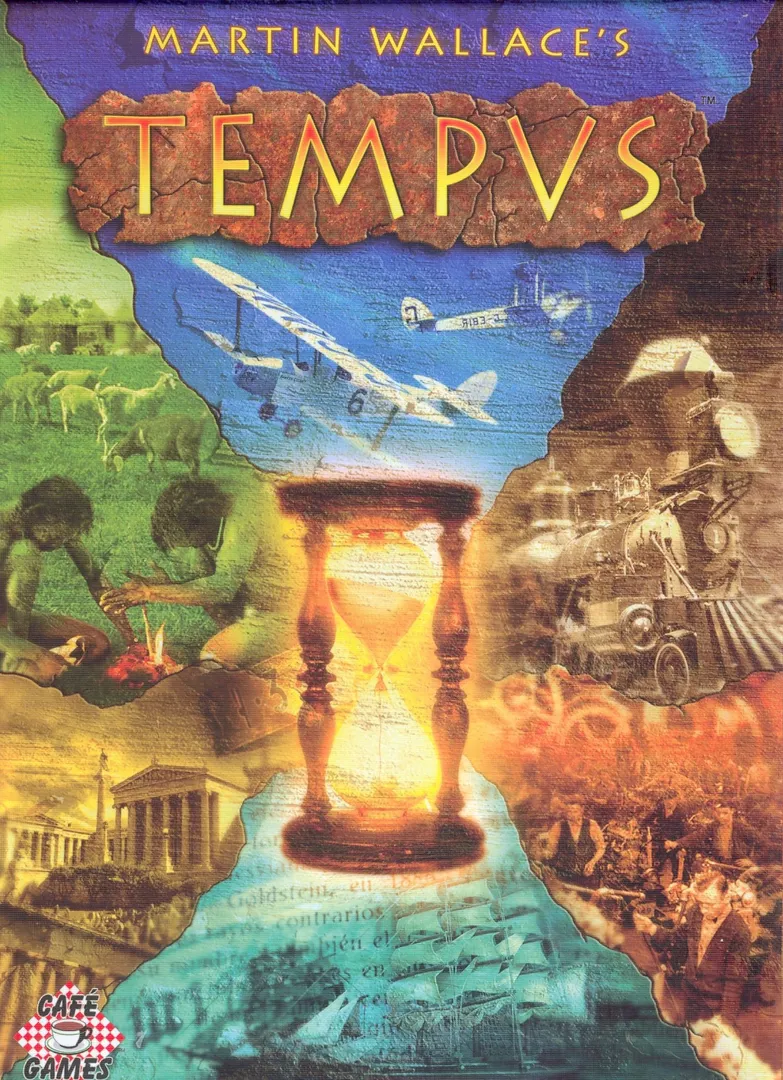
Tempus
- 3–5 jugadores
- 60–120 min
- Complejidad 2,8/5
- 2006
2004
Ayuda con las reglas de La Strada
Explicaciones claras de turnos, efectos de cartas y situaciones dudosas, con referencias a fuentes oficiales e historial de preguntas guardado.
Para 2 jugadores
¿Qué quieres saber?
Las respuestas salen del reglamento oficial, con la página para comprobarlo.
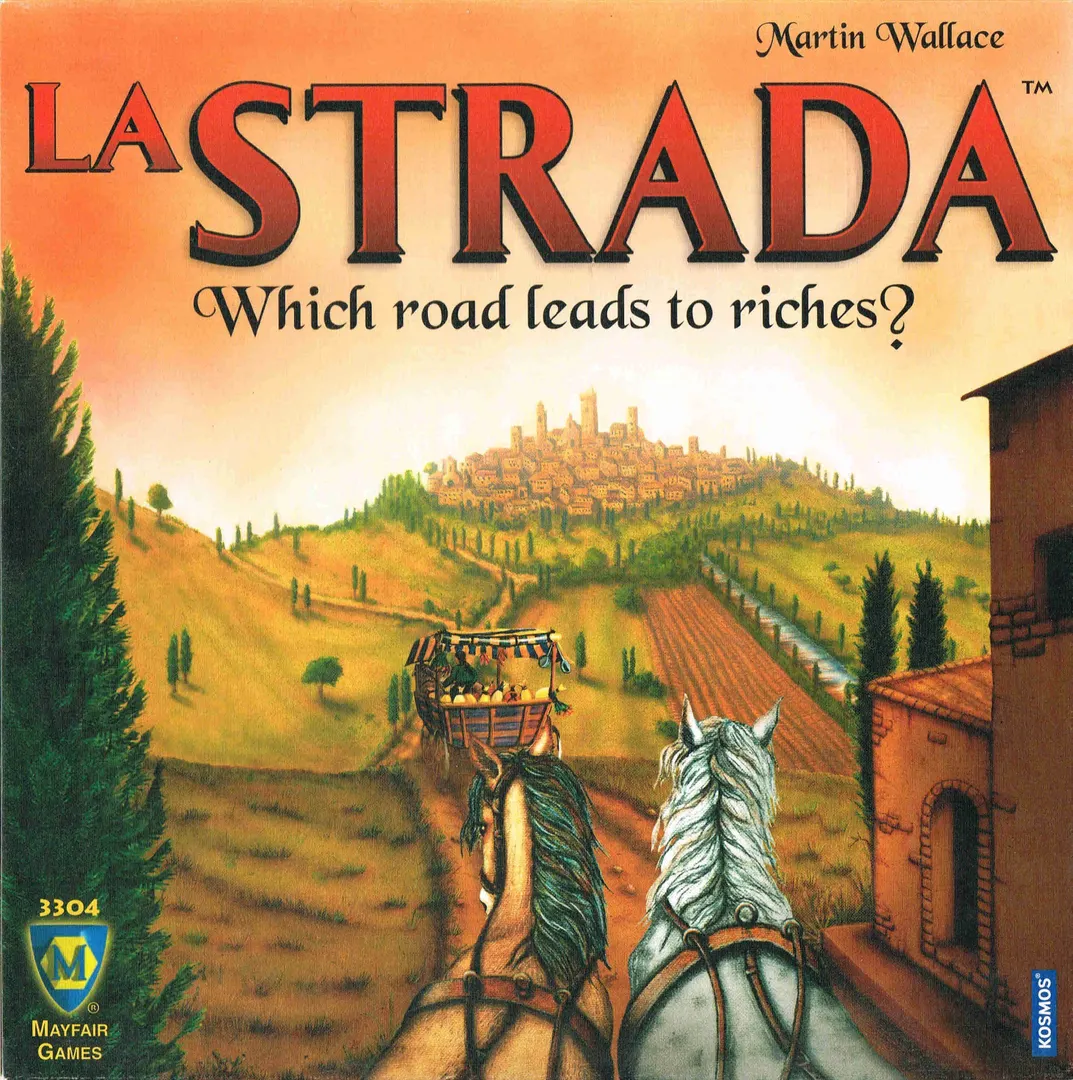
La Strada es un juego de mesa publicado en 2004 para 2–4 jugadores, con partidas de 30 minutos y a partir de 10 años. Fue diseñado por Martin Wallace y sus mecánicas principales son Hand Management, Area Majority / Influence y Variable Set-up.


En inglés
The route-building game genre can be counted as the greatest passion of English game designer and history teacher Martin Wallace. And with La Strada, he has come up with a particularly clever road-building game. Everything – from the rules to the game play – is devilishly simple. The game lets players claim successes throughout the game, and turn-by-turn one reaches one or even multiple goals. But at the end, someone else wins? How did that happen? The game features a variable game board, built up out of hex tiles that depict easily traveled flatland, forests, or hills. Before the start of the game, nineteen different settlements (ranging from cities to tiny villages) with varying victory point values are randomly placed onto those spaces featuring a gray symbol. Each player then places his or her starting marker onto a chosen flatland tile. The object here is of course to try to put your starting marker near as many high-value cities as possible. The object of the game is to connect together as many settlements with your roads as possible, in order to get as many victory points as possible. The catch is that settlements award fewer and fewer victory points the more players connect to them. The cities are like pies: the more people want a slice, the smaller the slices have to be. Building streets is very simple. One a player’s turn, he receives six gold pieces. Each street segment costs two gold to build over flatland, three over forest, and four over hills. Players can build as many segments as they can afford on their turn, provided that they end at a settlement and don’t intersect any other streets on the way. Put simply: players can’t end a street in the middle of nowhere and then keep building next turn. Streets have to reach their destination at the end of each turn. Once a settlement has been reached, and then the player gets to put one of their trade markers on it. Note that streets can intersect each other only at the settlement locations. If a player doesn’t use up all of his gold on his turn, then he can save it for the next turn (where he will also get another six gold to play with again). Players aren’t allowed to spend more than ten gold pieces on their turn, though, so you can’t save forever. The game ends when one player can’t build any more roads or doesn’t have any trade markers left. Scoring then occurs. A scoring example for a city: The city is worth five victory points, but only if it was connected to by a single player. A doubly connected city is worth four points for each player, while a triply connected city is only worth three each. Cities connected to by four players are only worth two points. This decreasing point system also counts for smaller settlements, worth between four and two victory points. A nicely thought out sorting system ensures that the end game scoring doesn’t turn into a math exercise. Naturally, the player with the most victory points is the winner. In the case of a tie, then the tied player with the most gold left is the winner. La Strada is a very simple game: build roads and connect cities. But it’s not that easy to get ahead with the scores. It’s every player’s dream to claim a fat five point city all to themselves – but a player who spends too much energy trying to protect an investment will find that his other road-building options become tighter. [Text is from a preview by Spielbox]
Según el catálogo, La Strada admite de 2 a 4 jugadores. Este intervalo corresponde al número de jugadores indicado por la editorial, así que el juego puede prepararse para cualquier grupo dentro de ese margen. La preparación, algunas reglas y la puntuación pueden variar según el número de jugadores; consulta la configuración exacta en el reglamento de tu edición.
La duración indicada para La Strada es de 30 minutos, la estimación de la editorial para una partida completa. El tiempo real depende del grupo, del número de jugadores y del conocimiento de las reglas: las primeras partidas suelen alargarse y los grupos con experiencia terminan antes. La preparación y la explicación de las reglas no están incluidas.
El catálogo indica La Strada a partir de 10 años. Es la recomendación de la editorial y refleja la lectura necesaria, la complejidad de las reglas y las piezas pequeñas, no solo el tema. Los más pequeños a menudo pueden jugar con ayuda de un adulto: comprueba la edad recomendada en tu edición y la experiencia de tu grupo.
La Strada tiene una puntuación de complejidad de 1,8 sobre 5 según los jugadores de BoardGameGeek, lo que lo convierte en un juego ligero. La puntuación refleja cuánto conocimiento de reglas, planificación y toma de decisiones exige una partida típica. Los juegos exigentes requieren una explicación inicial más larga, así que conviene usar una guía de preparación.
La Strada pertenece a estas categorías: Abstract Strategy y Transportation. Sus mecánicas principales son Hand Management, Area Majority / Influence y Variable Set-up. Las categorías describen el tema y la ambientación de un juego, mientras que las mecánicas describen lo que los jugadores hacen realmente en su turno. Cada mecánica lleva a una página del catálogo con juegos similares.
Los autores acreditados de La Strada son: Martin Wallace. Estos créditos proceden de los datos publicados del juego y nombran a las personas responsables de su diseño, no a ilustradores ni editoriales. Las páginas de autor de MeepleRules reúnen otros títulos de los mismos autores, algo útil cuando un juego te gusta y buscas otros parecidos.
El catálogo clasifica La Strada como juego base. Se juega por sí solo con los componentes de la caja y no requiere ningún otro título. Las expansiones, si existen, añaden contenido o reglas nuevas y aparecen por separado en el catálogo con un enlace a este juego base.