
- Puesto en BGG
- BGG #2253
- Puntuación BGG
- 6,7
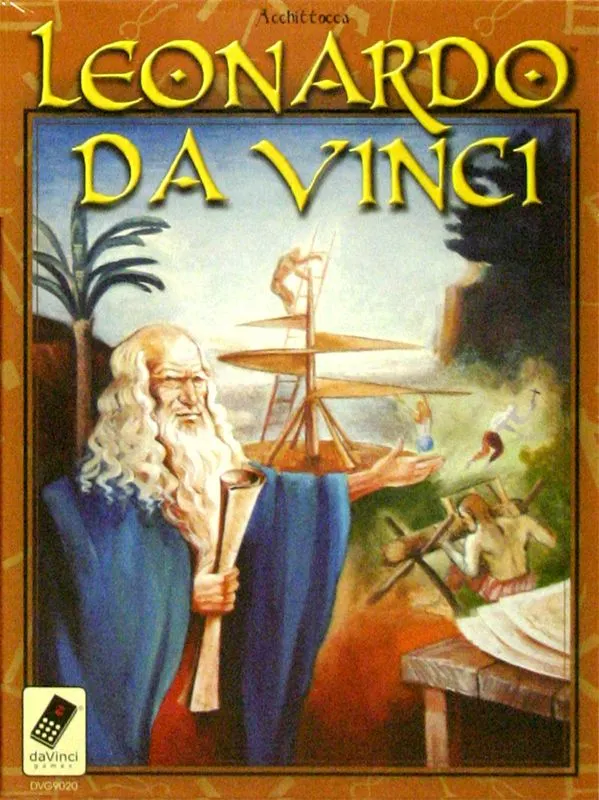
Leonardo da Vinci
- 2–5 jugadores
- 90 min
- Complejidad 3,2/5
- 2006
2023
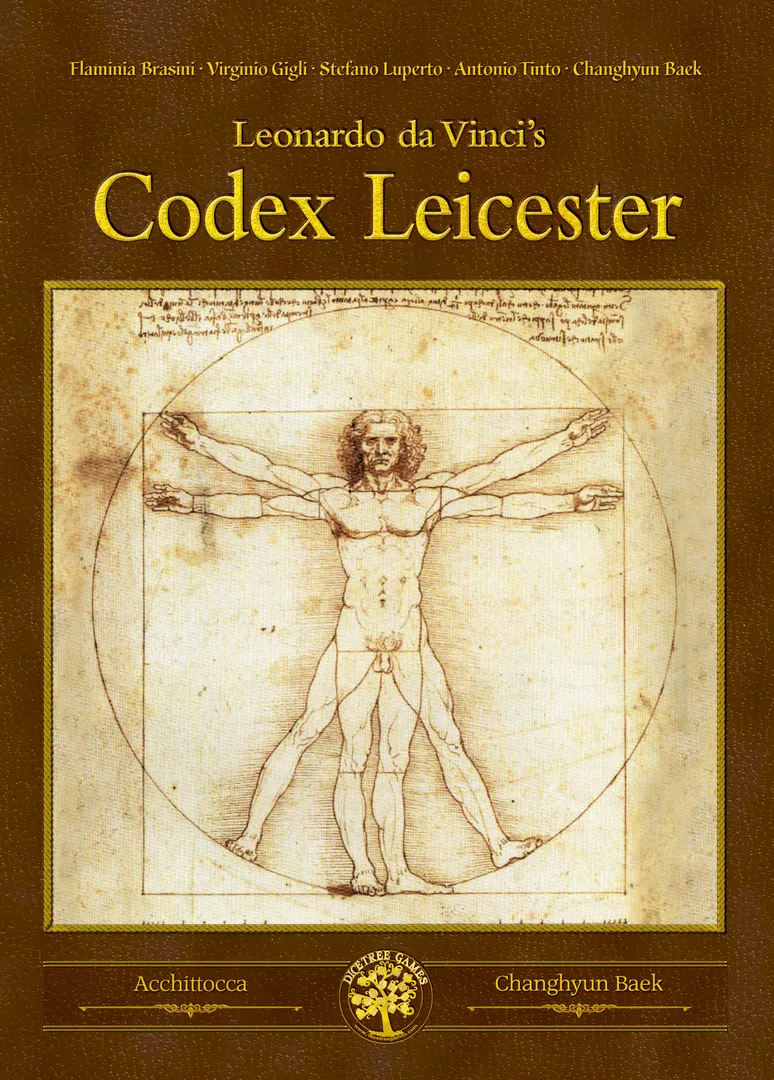
Ayuda con las reglas de Leonardo da Vinci's Codex Leicester
Explicaciones claras de turnos, efectos de cartas y situaciones dudosas, con referencias a fuentes oficiales e historial de preguntas guardado.
Para 1 jugador
¿Qué quieres saber?
Las respuestas salen del reglamento oficial, con la página para comprobarlo.
Leonardo da Vinci's Codex Leicester es un juego de mesa publicado en 2023 para 1–5 jugadores, con partidas de 30 a 150 minutos y a partir de 14 años. Fue diseñado por Stefano Luperto, Antonio Tinto, Virginio Gigli, Flaminia Brasini y Changhyun Baek y sus mecánicas principales son Area Majority / Influence y Worker Placement.









En inglés
Codex Leicester is the reimplementation of Leonardo da Vinci (2006) by Acchittocca (Flaminia Brasini, Virginio Gigli, Stefano Luperto, Antonio Tinto) in collaboration with the founder of DiceTree Games, Changhyun Baek. It is a new game using the original’s system and theme. This is a worker placement game for 1 to 5 players, featuring strong player interaction. Playtime lasts approximately 30 minutes per player. Summary: Players find themselves as inventors trying to breathe life into their designs, all of which draw their inspiration from the notes of the master himself: the Codex Leicester of Leonardo da Vinci. Ranging from relatively simple to epic, all these inventions require materials and time to bring them to fruition. Of course, genius alone won’t get the job done. Get support from the Council and sponsors. You will need to expand your workshops and procure Automata designed by Leonardo himself – all this to increase your work efficiency. Hire apprentices straight out of the academy to nab highly coveted materials from the market before your rivals. Time is of the essence. Race to be the foremost in completing inventions. You will unlock rewards and special abilities if you are the first player to complete the inventions. Otherwise, you will get less rewards without special abilities. After 7 rounds, the player who has amassed the largest fortune will be awarded victory! Who among you will be the most ingenious Renaissance inventor? -description from publisher = Changes from Leonardo da Vinci (2006): - The allocation of start game resources has changed. 4 resource selection cards are distributed, of which 2 are kept, and their corresponding resources are collected. Receive additional resources according to to turn order. - Competitive elements have been strengthened for a 2 or 3 players game, allowing enjoyment of a similar tension at any player count. - More invention cards! An increase from 25 to 40 cards, with each card having special effects that players can use instantly, once in a round, and permanently. - More enticing Council options! An increase from four to eight options, with florins piling up on tiles that no one has chosen each time a new tile is placed. - Card resources have been replaced with meeples, and player screens have been added. - Invention card completion has been modified so that everyone knows what inventions are being worked on at any given time. - Invention cards are now divided into current and future spaces, adding a new dimension for strategic play. - The 15-week inventions are now only revealed at the start of the game, allowing players to prepare in advance. - Restrictions of the workshops have been lifted so that you can upgrade them, as well as add automata, in the middle of working on an invention. - Each player now gets six objectives, all of which yield rewards upon fulfillment. So if you find yourself falling behind in completing inventions, these objectives will help you catch up. - New effects have been added to the Laboratory and Academy. You can buy 1 work from the Laboratory and 1 resource from the Academy. Now there’s a reason to use the Laboratory and Academy in the later of the game. - The game consists of 7 rounds. Players pay salaries to hired assistants at the end of rounds 3, 5, and 7. Some effects of the Laboratory and Academy change in rounds 4 and 6. In round 7, players can sell resources instead of buying them. - The game comes with a double-sided game board; double-layered player boards; premium wooden, glass, and plastic resource tokens; and 12 transparent containers for storing components.
Según el catálogo, Leonardo da Vinci's Codex Leicester admite de 1 a 5 jugadores. Este intervalo corresponde al número de jugadores indicado por la editorial, así que el juego puede prepararse para cualquier grupo dentro de ese margen. La preparación, algunas reglas y la puntuación pueden variar según el número de jugadores; consulta la configuración exacta en el reglamento de tu edición.
La duración indicada para Leonardo da Vinci's Codex Leicester es de 30 a 150 minutos, la estimación de la editorial para una partida completa. El tiempo real depende del grupo, del número de jugadores y del conocimiento de las reglas: las primeras partidas suelen alargarse y los grupos con experiencia terminan antes. La preparación y la explicación de las reglas no están incluidas.
El catálogo indica Leonardo da Vinci's Codex Leicester a partir de 14 años. Es la recomendación de la editorial y refleja la lectura necesaria, la complejidad de las reglas y las piezas pequeñas, no solo el tema. Los más pequeños a menudo pueden jugar con ayuda de un adulto: comprueba la edad recomendada en tu edición y la experiencia de tu grupo.
Leonardo da Vinci's Codex Leicester tiene una puntuación de complejidad de 3,2 sobre 5 según los jugadores de BoardGameGeek, lo que lo convierte en un juego de complejidad media. La puntuación refleja cuánto conocimiento de reglas, planificación y toma de decisiones exige una partida típica. Los juegos exigentes requieren una explicación inicial más larga, así que conviene usar una guía de preparación.
Leonardo da Vinci's Codex Leicester pertenece a estas categorías: Industry / Manufacturing, Renaissance y Book. Sus mecánicas principales son Area Majority / Influence y Worker Placement. Las categorías describen el tema y la ambientación de un juego, mientras que las mecánicas describen lo que los jugadores hacen realmente en su turno. Cada mecánica lleva a una página del catálogo con juegos similares.
Los autores acreditados de Leonardo da Vinci's Codex Leicester son: Stefano Luperto, Antonio Tinto, Virginio Gigli, Flaminia Brasini y Changhyun Baek. Estos créditos proceden de los datos publicados del juego y nombran a las personas responsables de su diseño, no a ilustradores ni editoriales. Las páginas de autor de MeepleRules reúnen otros títulos de los mismos autores, algo útil cuando un juego te gusta y buscas otros parecidos.
El catálogo clasifica Leonardo da Vinci's Codex Leicester como juego base. Se juega por sí solo con los componentes de la caja y no requiere ningún otro título. Las expansiones, si existen, añaden contenido o reglas nuevas y aparecen por separado en el catálogo con un enlace a este juego base.