
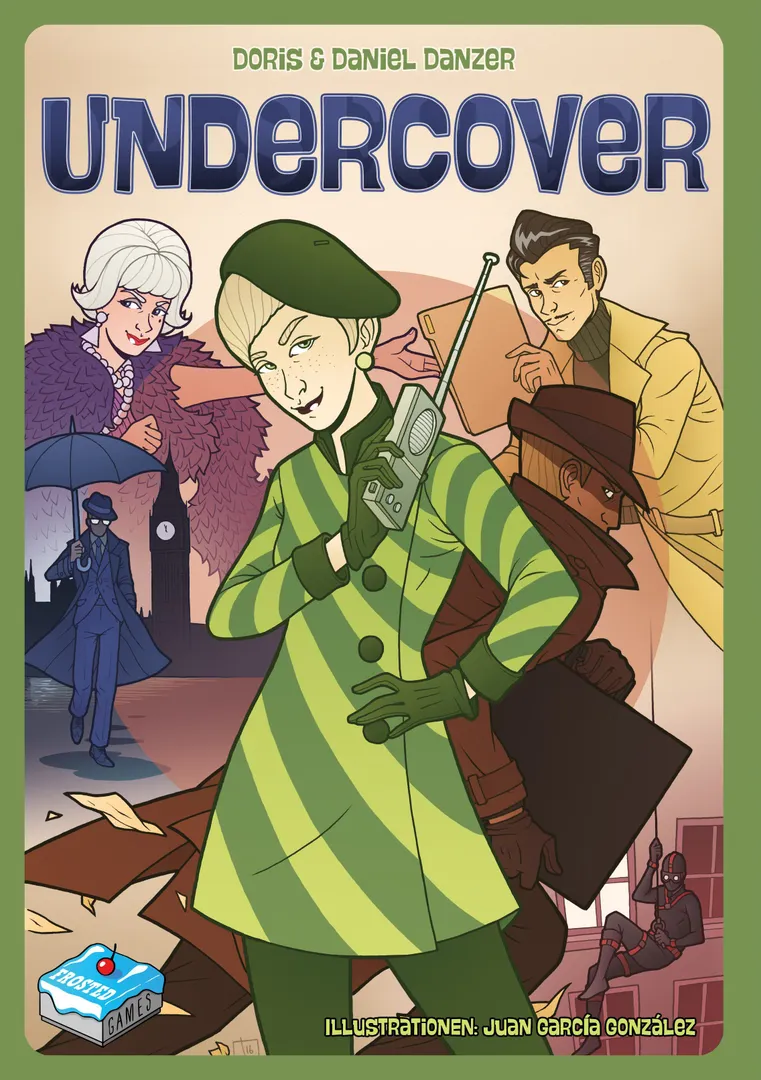
- Puesto en BGG
- BGG #22.445
- Puntuación BGG
- 5,8
Undercover
- 2–4 jugadores
- 20–40 min
- Complejidad 2,0/5
- 2016
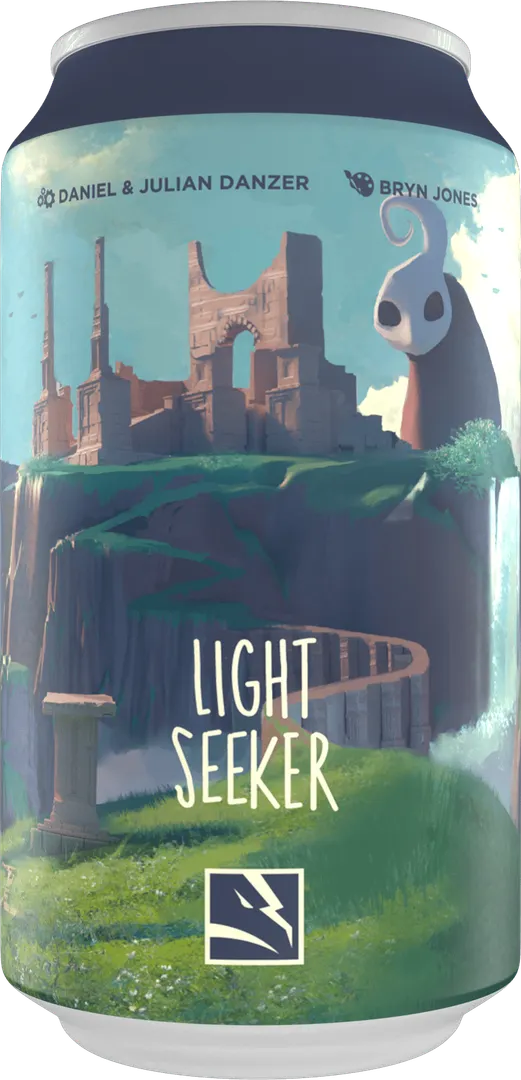
2024
Ayuda con las reglas de Light Seeker
Explicaciones claras de turnos, efectos de cartas y situaciones dudosas, con referencias a fuentes oficiales e historial de preguntas guardado.
Para 2 jugadores
¿Qué quieres saber?
Las respuestas salen del reglamento oficial, con la página para comprobarlo.
Light Seeker es un juego de mesa publicado en 2024 para 2 jugadores, con partidas de 5 a 15 minutos y a partir de 14 años. Fue diseñado por Daniel Danzer y Julian Danzer y sus mecánicas principales son Variable Set-up, Grid Movement y Three Dimensional Movement.






En inglés
In Light Seeker, both players must increase the amount of light in the world on their turn — but can you bring the light together to win? To set up, place the nine cubes in a 3x3 grid with space between the cubes and with dark sides on top, then put the blocking token onto the central cube. Each cube has two sides that are all dark, two sides that are half-light (diagonally separated into a dark and a light triangle, marked with a white dot), and two sides being fully light (with a white dot on each triangle). Each light triangle counts as 1 light, so a fully light side counts as 2 light. The starting player tilts one cube into an open space and places Buh, the blocking token, onto any other cube, then the second player starts with the first normal turn. On a turn, you take two actions. An action can be to (1) slide a cube into an orthogonally adjacent open space, not changing its orientation, or (2) tilt a cube into an orthogonally adjacent open space. You cannot take an action where Buh is located, and after taking your actions, you must move Buh onto any other cube. At the end of your turn, all cubes must be orthogonally or diagonally adjacent to at least one other cube and the total amount of light on the top faces of the cubes must have increased. A "light area" is created by one or more cubes that have orthogonally (edge to edge) adjacent half or full Bright faces. Multiple light areas can exist on top of the cubes, and they will shift and change over time. If at the end of your turn, you have created a light area that contains at least 7 light, you win.
Según el catálogo, Light Seeker admite 2 jugadores. Es el número de jugadores indicado por la editorial, así que el juego está diseñado exactamente para esa cantidad de participantes. Las variantes para otros tamaños de grupo, si existen, se describen en el reglamento de tu edición; consúltalo antes de preparar otra configuración.
La duración indicada para Light Seeker es de 5 a 15 minutos, la estimación de la editorial para una partida completa. El tiempo real depende del grupo, del número de jugadores y del conocimiento de las reglas: las primeras partidas suelen alargarse y los grupos con experiencia terminan antes. La preparación y la explicación de las reglas no están incluidas.
El catálogo indica Light Seeker a partir de 14 años. Es la recomendación de la editorial y refleja la lectura necesaria, la complejidad de las reglas y las piezas pequeñas, no solo el tema. Los más pequeños a menudo pueden jugar con ayuda de un adulto: comprueba la edad recomendada en tu edición y la experiencia de tu grupo.
Light Seeker tiene una puntuación de complejidad de 1,5 sobre 5 según los jugadores de BoardGameGeek, lo que lo convierte en un juego ligero. La puntuación refleja cuánto conocimiento de reglas, planificación y toma de decisiones exige una partida típica. Los juegos exigentes requieren una explicación inicial más larga, así que conviene usar una guía de preparación.
Light Seeker pertenece a estas categorías: Abstract Strategy. Sus mecánicas principales son Variable Set-up, Grid Movement y Three Dimensional Movement. Las categorías describen el tema y la ambientación de un juego, mientras que las mecánicas describen lo que los jugadores hacen realmente en su turno. Cada mecánica lleva a una página del catálogo con juegos similares.
Los autores acreditados de Light Seeker son: Daniel Danzer y Julian Danzer. Estos créditos proceden de los datos publicados del juego y nombran a las personas responsables de su diseño, no a ilustradores ni editoriales. Las páginas de autor de MeepleRules reúnen otros títulos de los mismos autores, algo útil cuando un juego te gusta y buscas otros parecidos.
El catálogo clasifica Light Seeker como juego base. Se juega por sí solo con los componentes de la caja y no requiere ningún otro título. Las expansiones, si existen, añaden contenido o reglas nuevas y aparecen por separado en el catálogo con un enlace a este juego base.