
- Puesto en BGG
- BGG #807
- Puntuación BGG
- 6,9
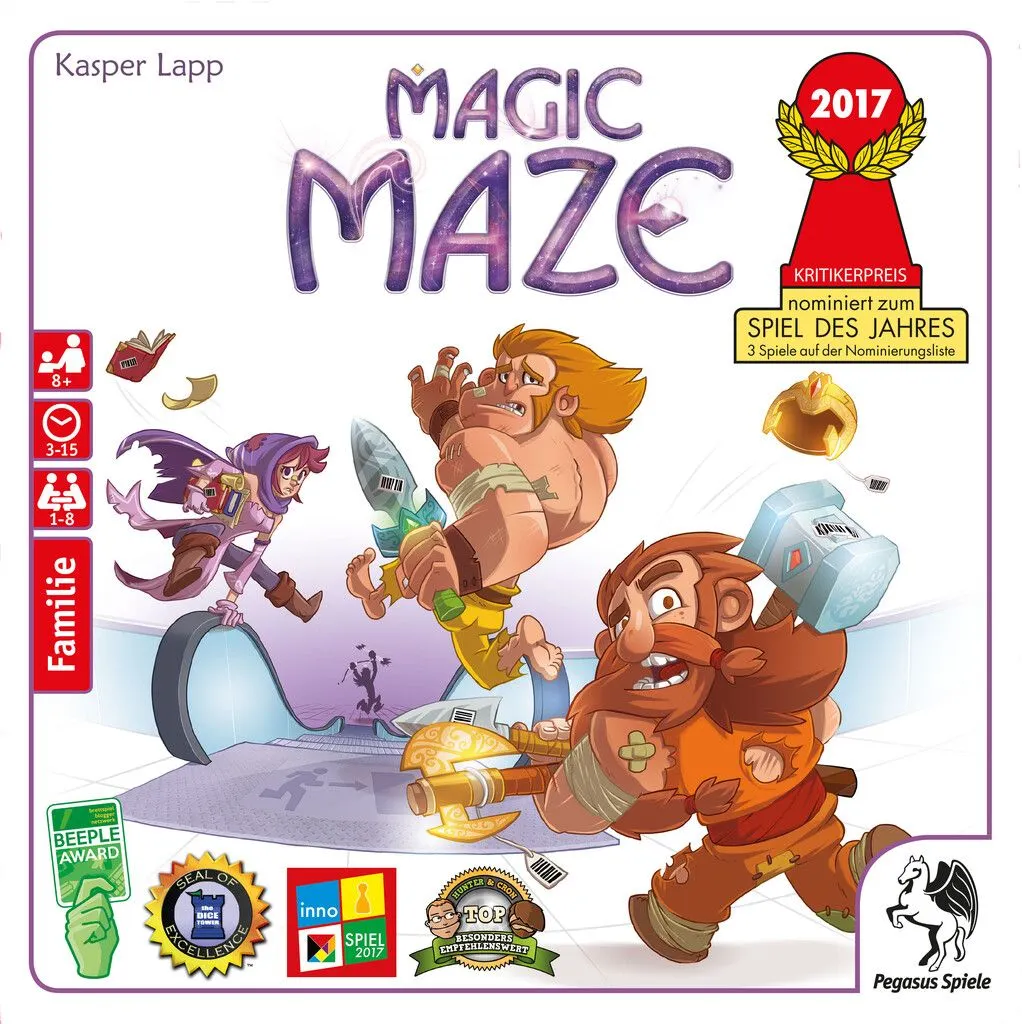
Magic Maze
- 1–8 jugadores
- 15 min
- Complejidad 1,8/5
- 2017
2019
Ayuda con las reglas de Magic Maze on Mars
Explicaciones claras de turnos, efectos de cartas y situaciones dudosas, con referencias a fuentes oficiales e historial de preguntas guardado.
Para 1 jugador
¿Qué quieres saber?
Las respuestas salen del reglamento oficial, con la página para comprobarlo.
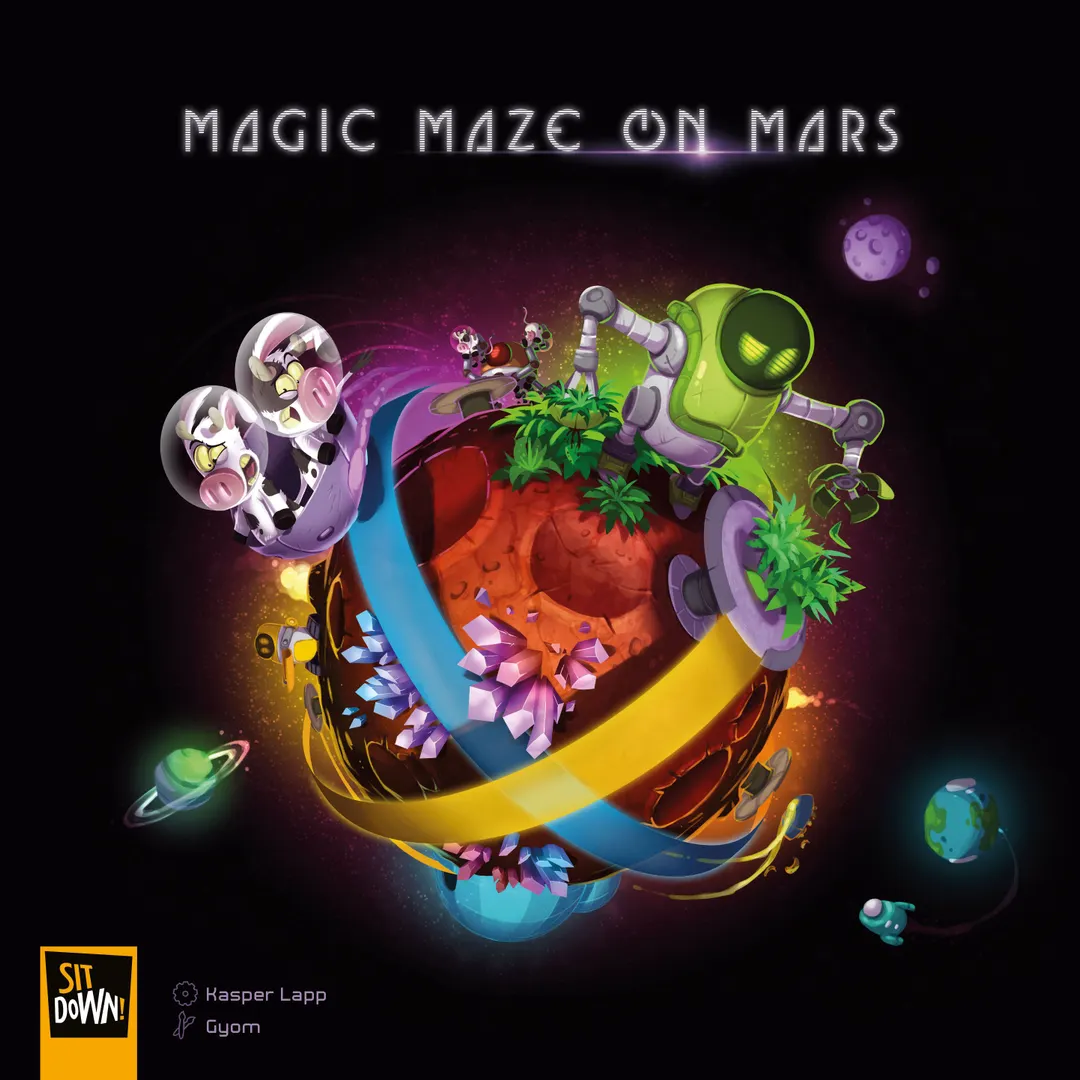
Magic Maze on Mars es un juego de mesa publicado en 2019 para 1–6 jugadores, con partidas de 15 minutos y a partir de 8 años. Fue diseñado por Kasper Lapp y sus mecánicas principales son Grid Movement, Modular Board y Cooperative Game.

En inglés
The first settlers of mars are arriving soon, but the colony is not ready yet! You are the robots that are trying to build the colony before the settlers arrive. The goal in Magic Maze on Mars is to build "domes" where the settlers can live, then to guide them to their domes when they arrive. When time runs out, they are out of oxygen. To begin, place the starting tile in the middle of the table. Deal out the appropriate action tiles and shuffle the four A tiles in a pile face down. Creating resources: A player with blue on their action tile can always create blue resources at the blue factory so long as a resource is not already there. The player simply takes a blue resource from the bank and places it on the resource station next to the factory. The resources of other colors are built on the factories of their color, with these factories becoming available when you build new tiles. Moving resources: Players can move resources along the roads with a color that they have on their action tile. A player might have an action tile that shows red and orange, so they can move resources along red and orange roads. You move resources from one "station" to another, but each station can hold only one resource, and resources cannot move through a station that holds another resource. Note: When moving resources, you must physically move the resource all the way, so the other players can see what is happening. Even if there is a long stretch of road that you are able to move on, you cannot move the resource directly. Building new tiles: To do this, you need to have a resource of the station's color on the station, e.g., a blue resource on a blue station. Once the resource is there, a player with this color on their action tile can remove the resource and place the top tile face up at the position. Place the tile with the small arrow pointing from where it was build. Watching the time: As in Magic Maze, players have a time limit in Magic Maze on Mars. To flip the sand timer, you must move any resource onto a timer space. Return the resource to the bank and place a timer token on the timer space to show that it cannot be used again. By doing this, you send a signal to the settlers that the colony is not ready yet; they will then orbit Mars once more before landing, but they can't do this indefinitely. Building domes: Some tiles have spaces available for domes. In order to build a dome, you need to place the depicted resources on the dome spot, e.g., green, yellow, and red. When all the necessary resources are placed on the dome, any player can put all the resources back in the bank and place a dome (taken from the communication board). When you have built all the domes, the settlers arrive. Place all the settlers on the rocket. Then move the settlers just like you move resources. You have won as soon as one settler inhabits each dome. There cannot be more than one settler on each station, and they cannot walk through resources. Once the settlers arrive, you can no longer flip the sand timer! (It does not help to send them messages about orbiting Mars since they are already here.) If time runs out, you have lost. —description from publisher
Según el catálogo, Magic Maze on Mars admite de 1 a 6 jugadores. Este intervalo corresponde al número de jugadores indicado por la editorial, así que el juego puede prepararse para cualquier grupo dentro de ese margen. La preparación, algunas reglas y la puntuación pueden variar según el número de jugadores; consulta la configuración exacta en el reglamento de tu edición.
La duración indicada para Magic Maze on Mars es de 15 minutos, la estimación de la editorial para una partida completa. El tiempo real depende del grupo, del número de jugadores y del conocimiento de las reglas: las primeras partidas suelen alargarse y los grupos con experiencia terminan antes. La preparación y la explicación de las reglas no están incluidas.
El catálogo indica Magic Maze on Mars a partir de 8 años. Es la recomendación de la editorial y refleja la lectura necesaria, la complejidad de las reglas y las piezas pequeñas, no solo el tema. Los más pequeños a menudo pueden jugar con ayuda de un adulto: comprueba la edad recomendada en tu edición y la experiencia de tu grupo.
Magic Maze on Mars tiene una puntuación de complejidad de 2,1 sobre 5 según los jugadores de BoardGameGeek, lo que lo convierte en un juego algo ligero. La puntuación refleja cuánto conocimiento de reglas, planificación y toma de decisiones exige una partida típica. Los juegos exigentes requieren una explicación inicial más larga, así que conviene usar una guía de preparación.
Magic Maze on Mars pertenece a estas categorías: Exploration, Maze y Real-time. Sus mecánicas principales son Grid Movement, Modular Board y Cooperative Game. Las categorías describen el tema y la ambientación de un juego, mientras que las mecánicas describen lo que los jugadores hacen realmente en su turno. Cada mecánica lleva a una página del catálogo con juegos similares.
Los autores acreditados de Magic Maze on Mars son: Kasper Lapp. Estos créditos proceden de los datos publicados del juego y nombran a las personas responsables de su diseño, no a ilustradores ni editoriales. Las páginas de autor de MeepleRules reúnen otros títulos de los mismos autores, algo útil cuando un juego te gusta y buscas otros parecidos.
El catálogo clasifica Magic Maze on Mars como juego base. Se juega por sí solo con los componentes de la caja y no requiere ningún otro título. Las expansiones, si existen, añaden contenido o reglas nuevas y aparecen por separado en el catálogo con un enlace a este juego base.