
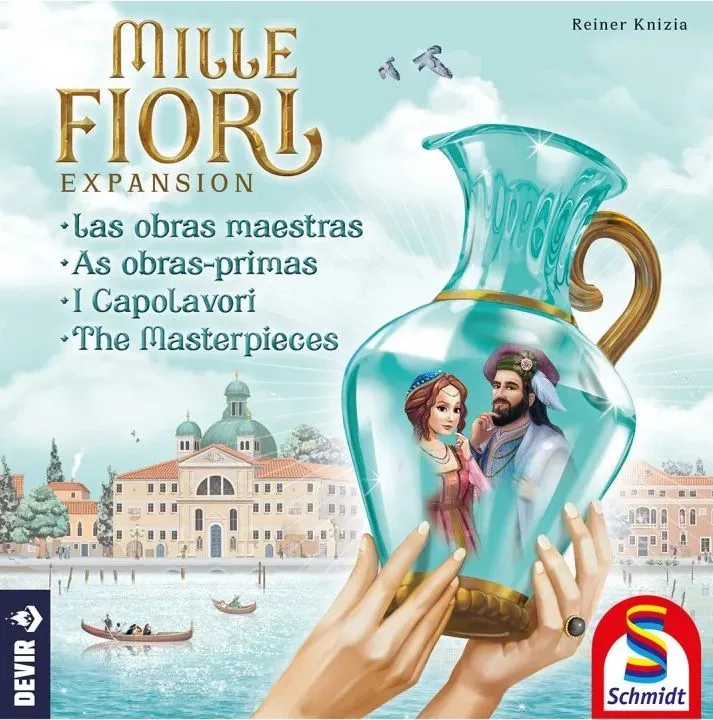
- Puntuación BGG
- 7,7
Mille Fiori: The Masterpieces
- 2–4 jugadores
- 60–90 min
- Complejidad 2,7/5
- 2023
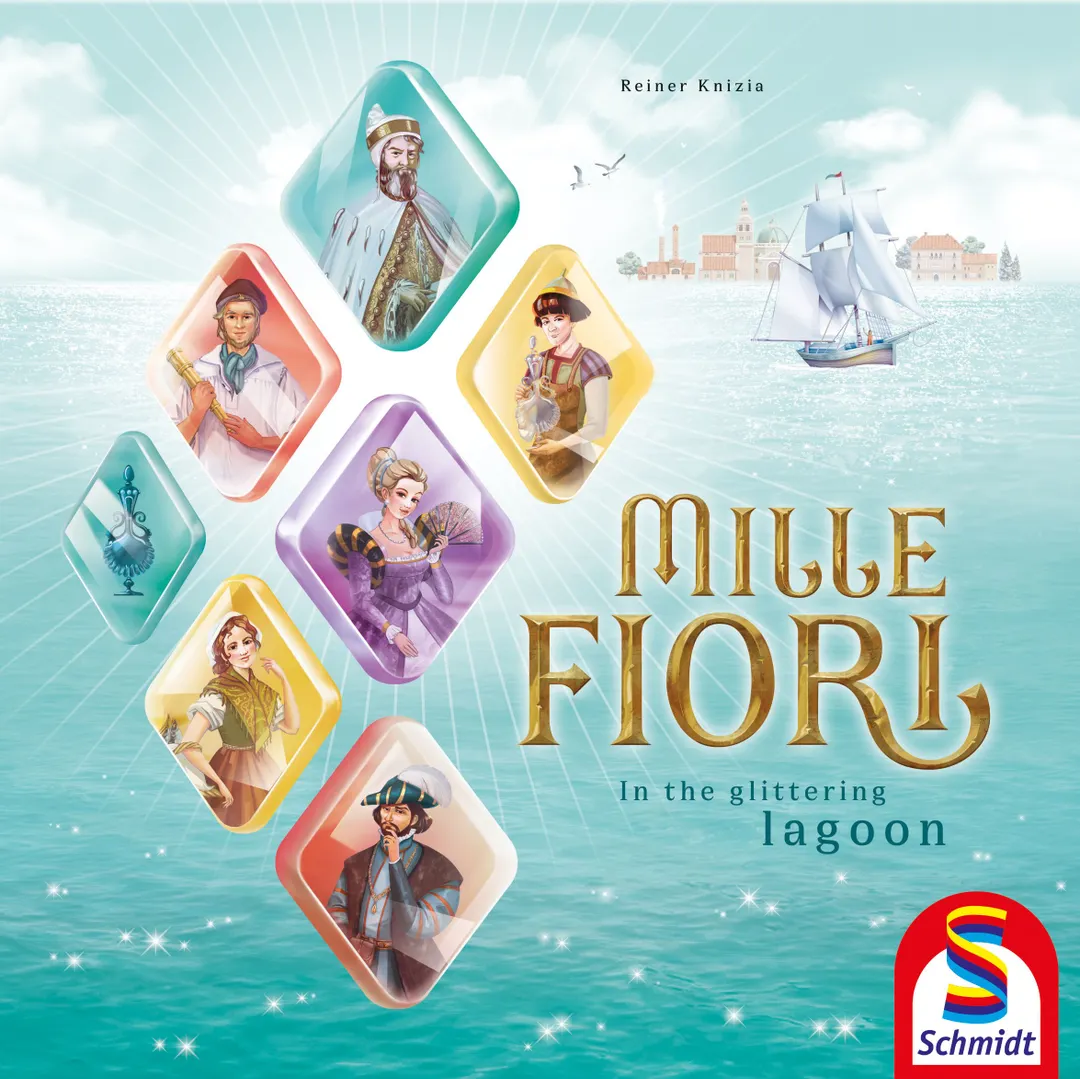
2021
Ayuda con las reglas de Mille Fiori
Explicaciones claras de turnos, efectos de cartas y situaciones dudosas, con referencias a fuentes oficiales e historial de preguntas guardado.
Para 2 jugadores
¿Qué quieres saber?
Las respuestas salen del reglamento oficial, con la página para comprobarlo.
Mille Fiori es un juego de mesa publicado en 2021 para 2–4 jugadores, con partidas de 60 a 90 minutos y a partir de 10 años. Fue diseñado por Reiner Knizia y sus mecánicas principales son Area Majority / Influence, Pattern Building y Closed Drafting.



En inglés
In Reiner Knizia's Mille Fiori (millefiori is a glasswork technique for decorative patterns, the name means Thousand Flowers), you take the role of glass manufacturers and traders who want to profit as much as they can from their role in the production of fine glass art. The game board features different aspects of the glass production cycle: workshops where the glass is created, houses where it's installed, people who support your work, trade shops where it's sold, and the harbor where ships take the glass to faraway locations. You want to be present in all of these areas, preferably at just the right time to maximize your earnings. The gameboard features 109 spaces, with one card in the deck for each of those spaces. At the start of a round, each player receives a hand of five cards. Each player chooses a card from hand, then passes the remaining cards to the next player, then each player plays their card in turn, beginning with the round's start player and typically placing a diamond-shaped token of their color in the location depicted on that card: In the Workshops, you score 1 point for each of your tokens in a connected group with the newly placed token, doubling that score if you played on a pigment field. In the Residences, you score the listed number of points, and if your token is preceded in the line by one or more tokens of your color, you score those previously played tokens again. In the Townspeople area, you score 1, 3 or 6 points based on the height of your token in the pyramids, but you can only place at higher levels if the lower spaces are filled. Double your points if the card symbol matches the space your filled. Supporting tokens score again as higher tokens are placed. In the Trade shops, four types of goods are present, and when you place a token, each token on that goods type scores for its owner points equal to the number of goods of that type now covered. In the Harbor, you move your ship equal to the number on the played card, scoring points based on the space where you land, then place a token in one of the five rows. When that row is filled with three ships, each token in that row scores for its owner 1/3/6/10 points depending on the number of trade goods in that row. Alternatively, you can play a card for ship movement points and not place a token on the game board. Each player plays four cards in a round (in a 3 or 4 player game), then adds the last card in hand to those displayed beside the game board, then the start player marker rotates and you begin a new round. For each of the five areas, you can meet a certain condition that allows you to play a bonus card from those beside the game board, e.g., in the Workshops when you place the third card that surrounds a bonus card symbol, or in the Trade shops when you score a goods type that gives someone else more points than you. When you play a bonus card, you might trigger another bonus card... and then another! Additionally, there are five different ways to score substantial bonus points for the areas, e.g., in the Residences you need to place tokens on houses of four different values, and in the Townspeople area you need to place tokens on all three types in a pyramid. You can only score each area's bonus once, and importantly each time a bonus is claimed then the value available for later players is reduced. When someone has placed their final diamond token or when you can't deal a new hand of five cards to each player, then the game ends and the player with the most successful glass dynasty (most points) is declared the winner.
Según el catálogo, Mille Fiori admite de 2 a 4 jugadores. Este intervalo corresponde al número de jugadores indicado por la editorial, así que el juego puede prepararse para cualquier grupo dentro de ese margen. La preparación, algunas reglas y la puntuación pueden variar según el número de jugadores; consulta la configuración exacta en el reglamento de tu edición.
La duración indicada para Mille Fiori es de 60 a 90 minutos, la estimación de la editorial para una partida completa. El tiempo real depende del grupo, del número de jugadores y del conocimiento de las reglas: las primeras partidas suelen alargarse y los grupos con experiencia terminan antes. La preparación y la explicación de las reglas no están incluidas.
El catálogo indica Mille Fiori a partir de 10 años. Es la recomendación de la editorial y refleja la lectura necesaria, la complejidad de las reglas y las piezas pequeñas, no solo el tema. Los más pequeños a menudo pueden jugar con ayuda de un adulto: comprueba la edad recomendada en tu edición y la experiencia de tu grupo.
Mille Fiori tiene una puntuación de complejidad de 2,2 sobre 5 según los jugadores de BoardGameGeek, lo que lo convierte en un juego algo ligero. La puntuación refleja cuánto conocimiento de reglas, planificación y toma de decisiones exige una partida típica. Los juegos exigentes requieren una explicación inicial más larga, así que conviene usar una guía de preparación.
Mille Fiori pertenece a estas categorías: Card Game e Industry / Manufacturing. Sus mecánicas principales son Area Majority / Influence, Pattern Building y Closed Drafting. Las categorías describen el tema y la ambientación de un juego, mientras que las mecánicas describen lo que los jugadores hacen realmente en su turno. Cada mecánica lleva a una página del catálogo con juegos similares.
Los autores acreditados de Mille Fiori son: Reiner Knizia. Estos créditos proceden de los datos publicados del juego y nombran a las personas responsables de su diseño, no a ilustradores ni editoriales. Las páginas de autor de MeepleRules reúnen otros títulos de los mismos autores, algo útil cuando un juego te gusta y buscas otros parecidos.
El catálogo clasifica Mille Fiori como juego base. Se juega por sí solo con los componentes de la caja y no requiere ningún otro título. Las expansiones, si existen, añaden contenido o reglas nuevas y aparecen por separado en el catálogo con un enlace a este juego base.