

- Puesto en BGG
- BGG #724
- Puntuación BGG
- 7,3
Archipelago
- 2–5 jugadores
- 30–240 min
- Complejidad 3,7/5
- 2012
2015
Ayuda con las reglas de M.U.L.E. The Board Game
Explicaciones claras de turnos, efectos de cartas y situaciones dudosas, con referencias a fuentes oficiales e historial de preguntas guardado.
Para 3 jugadores
¿Qué quieres saber?
Las respuestas salen del reglamento oficial, con la página para comprobarlo.
M.U.L.E. The Board Game es un juego de mesa publicado en 2015 para 3–4 jugadores, con partidas de 90 a 120 minutos y a partir de 14 años. Fue diseñado por Heikki Harju y sus mecánicas principales son Variable Player Powers, Trading y Auction / Bidding.




En inglés
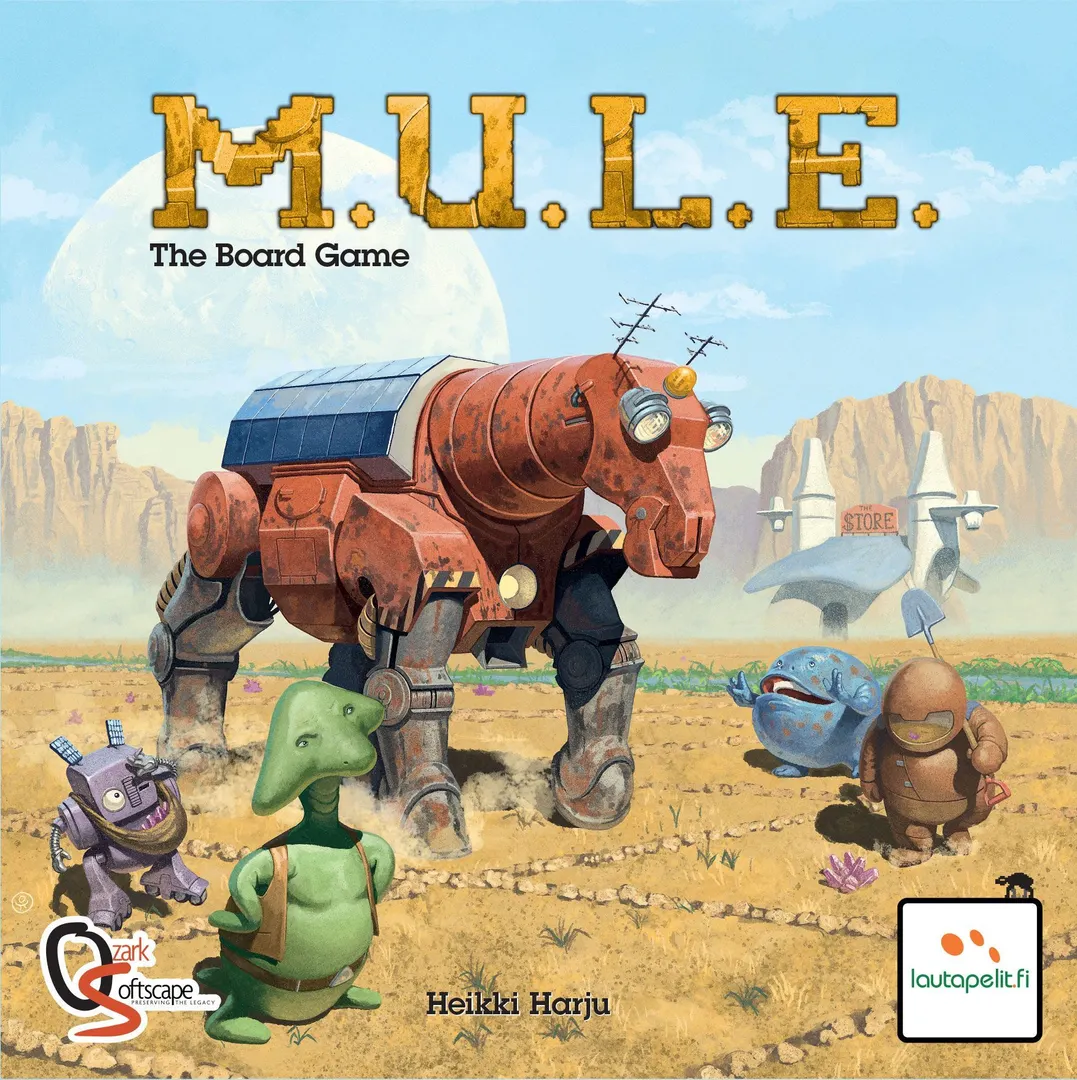
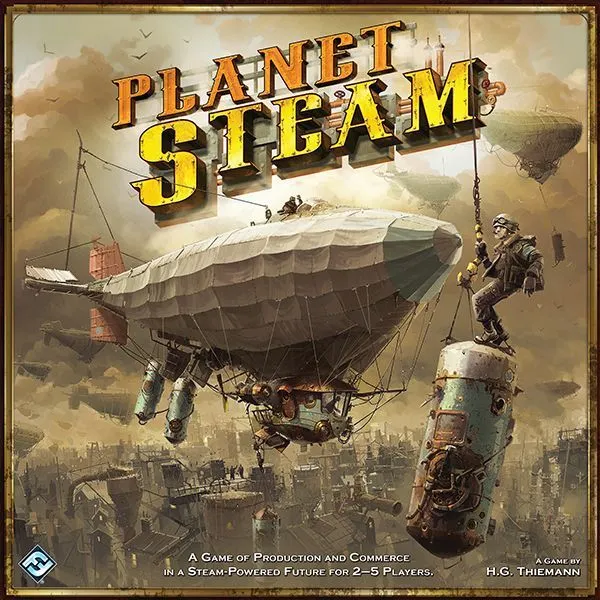
M.U.L.E. was first published as a computer game in 1983. Inspired by board games, it became a breakthrough, then a classic. Now this warm-hearted game of cut-throat capitalism is finally available as a board game! In M.U.L.E. The Board Game, you are one of the pioneering and industrious species of a Galactic Federation. Together with your fellow colonists, you attempt to settle the distant Planet Irata with the so-called help of a mule-like machine you all learn to hate. But for now, he's all you've got. Well, him and your fellow colonists. I wouldn't count on their help, though — not unless there's profit. Good luck. You'll need it. In M.U.L.E. (abbreviated from “Multiple Use Labor Element”), players claim plots of land and install mechanical robots (M.U.L.E.s) to work on them. M.U.L.E.s produce goods that colonists can use, sell for profit, or stockpile for (hopefully) even more profit: - Smithore is a metal that cannot be used by players directly, but can be sold to The Store. The Store uses Smithore to manufacture M.U.L.E.s. Since players need M.U.L.E.s to produce their Goods, they must sell Smithore to increase their production. - Crystite is a luxury mineral with a highly volatile price. It is not needed for anything on Planet Irata, but can be exported to other worlds for great profits (unless stolen by Pirates – you have been warned!) - Food is needed by players to take Development Actions, such as Assaying Lands or Installing/Refitting M.U.L.E.s. - Energy is needed to power M.U.L.E.s. You'll know the value of Energy when you lack it. There will be unexpected surpluses and shortages of different goods, causing market prices to fluctuate. Players must plan ahead while maintaining flexibility to change their plans as all kinds of ”fun” planetary disasters hit them. Interaction between colonists is highly opportunistic: they will gladly help you if there's profit in it for them. Or maybe not. You'll get to see the true colors of your friends by playing M.U.L.E. with them. The most cunning settler and trader receives fame, fortune, and the honorary title of First Founder! There is also an overall Colony Retirement score, describing how your colony succeeded (or failed) as a whole.
Según el catálogo, M.U.L.E. The Board Game admite de 3 a 4 jugadores. Este intervalo corresponde al número de jugadores indicado por la editorial, así que el juego puede prepararse para cualquier grupo dentro de ese margen. La preparación, algunas reglas y la puntuación pueden variar según el número de jugadores; consulta la configuración exacta en el reglamento de tu edición.
La duración indicada para M.U.L.E. The Board Game es de 90 a 120 minutos, la estimación de la editorial para una partida completa. El tiempo real depende del grupo, del número de jugadores y del conocimiento de las reglas: las primeras partidas suelen alargarse y los grupos con experiencia terminan antes. La preparación y la explicación de las reglas no están incluidas.
El catálogo indica M.U.L.E. The Board Game a partir de 14 años. Es la recomendación de la editorial y refleja la lectura necesaria, la complejidad de las reglas y las piezas pequeñas, no solo el tema. Los más pequeños a menudo pueden jugar con ayuda de un adulto: comprueba la edad recomendada en tu edición y la experiencia de tu grupo.
M.U.L.E. The Board Game tiene una puntuación de complejidad de 2,6 sobre 5 según los jugadores de BoardGameGeek, lo que lo convierte en un juego algo ligero. La puntuación refleja cuánto conocimiento de reglas, planificación y toma de decisiones exige una partida típica. Los juegos exigentes requieren una explicación inicial más larga, así que conviene usar una guía de preparación.
M.U.L.E. The Board Game pertenece a estas categorías: Economic, Video Game Theme y Exploration. Sus mecánicas principales son Variable Player Powers, Trading y Auction / Bidding. Las categorías describen el tema y la ambientación de un juego, mientras que las mecánicas describen lo que los jugadores hacen realmente en su turno. Cada mecánica lleva a una página del catálogo con juegos similares.
Los autores acreditados de M.U.L.E. The Board Game son: Heikki Harju. Estos créditos proceden de los datos publicados del juego y nombran a las personas responsables de su diseño, no a ilustradores ni editoriales. Las páginas de autor de MeepleRules reúnen otros títulos de los mismos autores, algo útil cuando un juego te gusta y buscas otros parecidos.
El catálogo clasifica M.U.L.E. The Board Game como juego base. Se juega por sí solo con los componentes de la caja y no requiere ningún otro título. Las expansiones, si existen, añaden contenido o reglas nuevas y aparecen por separado en el catálogo con un enlace a este juego base.