- Puesto en BGG
- BGG #52
- Puntuación BGG
- 8,0
Harmonies
1–4 jugadores30–45 min2024
Complejidad 2,0/5
- Preguntar sobre las reglas

Ayuda con las reglas de Nim
Explicaciones claras de turnos, efectos de cartas y situaciones dudosas, con historial de preguntas guardado.
Para 2 jugadores
¿Qué quieres saber?
Las respuestas salen del reglamento oficial, con la página para comprobarlo.
Nim es un juego de mesa para 2 jugadores.
1–4 jugadores30–45 min2024
2–4 jugadores30–45 min2017
2–4 jugadores60–120 min1997
2 jugadores15–30 min2014
2–4 jugadores30 min2018
1–4 jugadores45 min2017
2 jugadores30–180 min-2200

2–4 jugadores30–45 min2019

2 jugadores30–60 min2003

1–4 jugadores30–45 min2020
2–4 jugadores30–60 min1998

2–4 jugadores20 min2016
En inglés
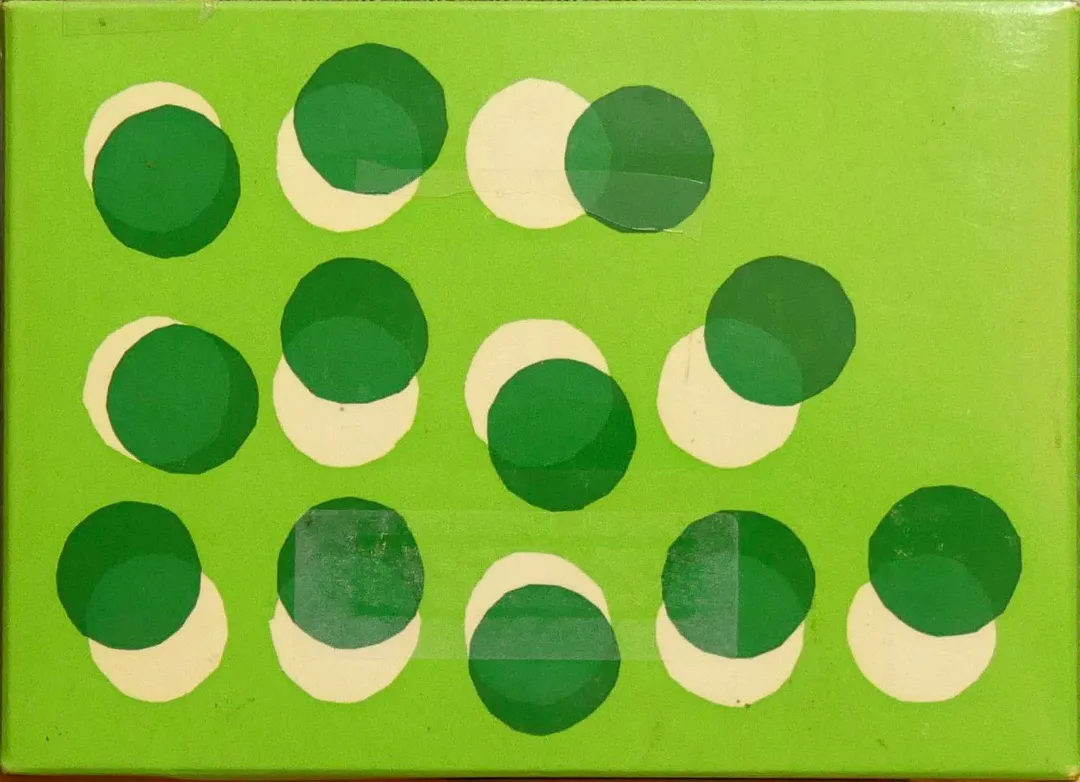
Generally, the game of Nim is a two-player game of perfect information in which there are some number of rows or "heaps" of objects, and a legal move consists of removing any number of objects from a single heap. (For a non-trivial game, we should start with at least three heaps.) In "standard play", the player who cannot make a move on his turn (because no objects remain) is the loser. A very general and far-reaching theory of such games is developed in Berlekamp, Conway, and Guy's Winning Ways for Your Mathematical Plays. In the commercial version pictured, the players take turns removing 1, 2, 3, or 4 pegs together in a row. It would appear from the picture that "rows" can run in any direction, which means that the "heaps" intersect. This is not what most people know as Nim. Also, according to the original description, in this version the loser is the player who has to remove the last peg. This is so-called "misere play", rather than the standard winning condition. Many combinatorial games allow misère play as a variation. Nim is solved, which means that from any initial configuration, one can readily determine whether the next player or the previous player has a winning strategy, and identify a good next move in the former case. For Nim, this can be determined surprisingly readily no matter the size of the heaps, but you're not going to get the secret from me. As most who would be interested in Nim know the solution, there isn't much of a game here. But Nim plays a central role in the theory of combinatorial games, as any two-player finite impartial game is in some sense Nim in disguise: any position in such a game corresponds to a unique Nim-heap, and one can play the disguised game perfectly by making the moves that correspond to winning moves in Nim. Sprouts is one example. This however does not mean that Sprouts itself is solved, as the "disguise" is only partially revealed.
Según el catálogo, Nim admite 2 jugadores. Es el número de jugadores indicado por la editorial, así que el juego está diseñado exactamente para esa cantidad de participantes. Las variantes para otros tamaños de grupo, si existen, se describen en el reglamento de tu edición; consúltalo antes de preparar otra configuración.
Nim tiene una puntuación de complejidad de 1,5 sobre 5 según los jugadores de BoardGameGeek, lo que lo convierte en un juego ligero. La puntuación refleja cuánto conocimiento de reglas, planificación y toma de decisiones exige una partida típica. Los juegos exigentes requieren una explicación inicial más larga, así que conviene usar una guía de preparación.
Nim pertenece a estas categorías: Abstract Strategy. Las categorías describen el tema, la ambientación y el estilo de un juego, no sus reglas. Filtra el catálogo por la misma categoría para encontrar juegos similares si te gustó Nim y buscas algo parecido para tu próxima noche de juegos.
El catálogo clasifica Nim como juego base. Se juega por sí solo con los componentes de la caja y no requiere ningún otro título. Las expansiones, si existen, añaden contenido o reglas nuevas y aparecen por separado en el catálogo con un enlace a este juego base.
