
- Puesto en BGG
- BGG #2281
- Puntuación BGG
- 7,5
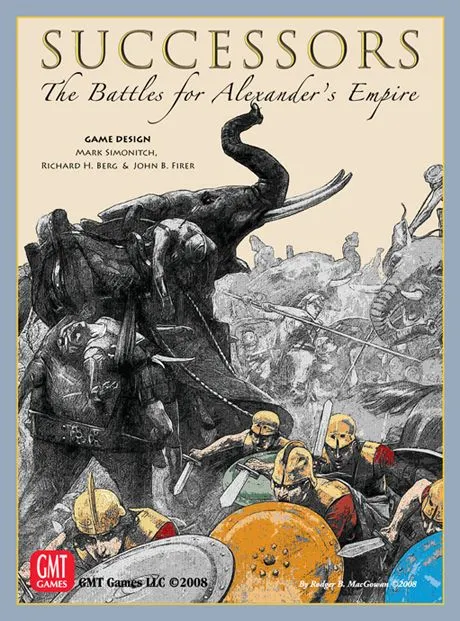
Successors: The Battles for Alexander's Empire
- 3–4 jugadores
- 60–300 min
- Complejidad 3,3/5
- 2008
2006
Ayuda con las reglas de Onward Christian Soldiers: The Crusades
Explicaciones claras de turnos, efectos de cartas y situaciones dudosas, con referencias a fuentes oficiales e historial de preguntas guardado.
Para 1 jugador
¿Qué quieres saber?
Las respuestas salen del reglamento oficial, con la página para comprobarlo.
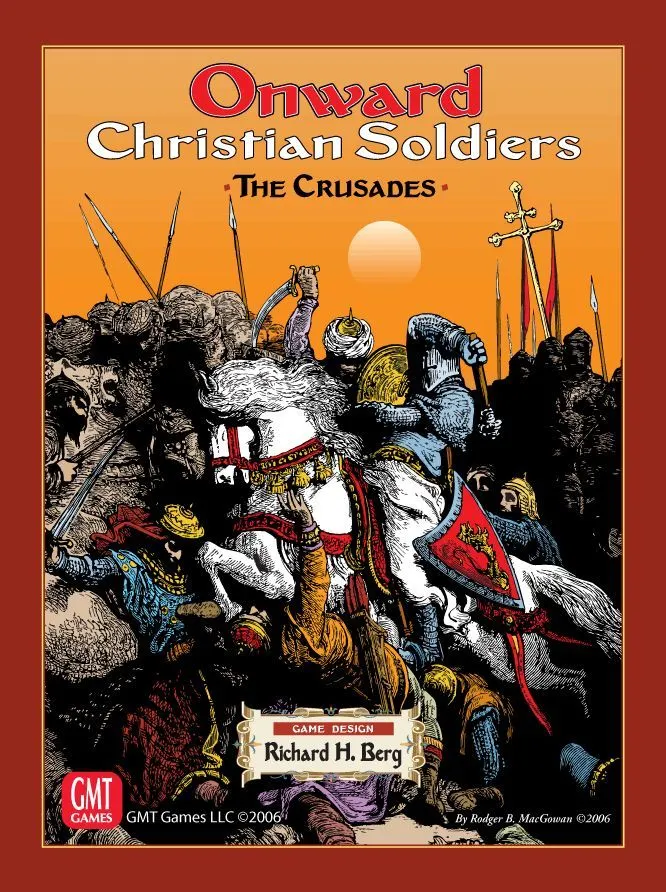
Onward Christian Soldiers: The Crusades es un juego de mesa publicado en 2006 para 1–7 jugadores, con partidas de 300 minutos y a partir de 12 años. Fue diseñado por Richard H. Berg y sus mecánicas principales son Dice Rolling y Point to Point Movement.



En inglés
(from GMT website:) Onward Christian Soldiers is Richard Berg's newest strategic level game, this one focused on one of, if not THE, central events in the Middle Ages - The Crusades. It will allow gamers to replay not only the first three Crusades - the only 3 that focused on what we call The Middle East - but with scenarios that range from a 7-player version of the 1st Crusade to a 3rd Crusade scenario that supposes Frederick Barbarossa didn't drown in Turkey and his immense army reached the Kingdom of Jerusalem pretty much intact. Onward Christian Soldiers uses numerous innovative mechanics, including: an Activation system that allows players to choose which leaders/armies they want to use most in a given turn, but not know when they will be available for such use. a Movement system with no Movement Allowances or Costs, but a heavy emphasis on Attrition and the ability of commanders to "keep going". Shop 'til ya Drop . . . Combat mechanics that put a major, detailed emphasis on sieges and ravaging the surrounding areas, but still allow for the predilections of the various armies in field battles (such as the famous Frankish Heavy Cavalry Charge), as well as the abilities of their commanders . . . men like the great initial Crusaders, such as Raymond, Bohemond, Godfrey and Tancred, King Louis VII of France (and his troublesome wife, the famous Eleanor of Aquitaine), Frederick Barbarossa (if he stays away from the pool), the dangerous Nur ad-Din, the magnificent Saladin, and the one Christian the Muslims feared more than anyone, Richard Lionheart. Movement and attrition go hand in hand in this game. Leaders may move as far as they want The game uses three sets of cards (110 cards total). Each of the four Crusader factions -- Northern Franks, Southern Franks, Sicilian Normans, Germans -- and three Muslim factions -- Northern Syrians, Southern Syrians, Mosul Turks -- has three or four Leader cards, which the players secretly "purchase" at the beginning of the Game-Turn to create the Activation Deck that determines which leader goes next. In addition, there are two Event Decks - one for the Crusaders and one for the Muslims -- through which a variety of random events occur, ranging from taking cities via treachery to suffering added attrition through oppressive heat. Normally, each Leader controls armies only from its own faction. However, a simple set of multi-faction rules controls situations in which either side wishes to combine their armies into larger forces, mostly for the sake of sieges against major cities. The Siege of Antioch, which usually happens early in the game, often requires such an army. The multi-faction rules particularly come into their own during multi-player games; here you can expect to see players bickering over who controls the combined forces, an important point considering that whoever is in charge when the city falls gains control over the city. If attacked while combined, the players of a multi-faction force have 30 seconds to decide who's in charge: if they don't, they defend using a mediocre formation. COUNTERS: 876 full color counters MAP: One 22"x34" full-color map CARDS: 110 Cards OTHER: Two six-sided dice First Crusade Rule book Second and Third Crusade Rule book Playbook 4 Player Aid cards DESIGNER Richard Berg DEVELOPER Neil Randall ART DIRECTOR Rodger B. MacGowan CARD ART Mark Simonitch MAP ART Mark Simonitch & Wayne Highland COUNTERS Rodger B. MacGowan, Mark Simonitch, & Mike Lemick
Según el catálogo, Onward Christian Soldiers: The Crusades admite de 1 a 7 jugadores. Este intervalo corresponde al número de jugadores indicado por la editorial, así que el juego puede prepararse para cualquier grupo dentro de ese margen. La preparación, algunas reglas y la puntuación pueden variar según el número de jugadores; consulta la configuración exacta en el reglamento de tu edición.
La duración indicada para Onward Christian Soldiers: The Crusades es de 300 minutos, la estimación de la editorial para una partida completa. El tiempo real depende del grupo, del número de jugadores y del conocimiento de las reglas: las primeras partidas suelen alargarse y los grupos con experiencia terminan antes. La preparación y la explicación de las reglas no están incluidas.
El catálogo indica Onward Christian Soldiers: The Crusades a partir de 12 años. Es la recomendación de la editorial y refleja la lectura necesaria, la complejidad de las reglas y las piezas pequeñas, no solo el tema. Los más pequeños a menudo pueden jugar con ayuda de un adulto: comprueba la edad recomendada en tu edición y la experiencia de tu grupo.
Onward Christian Soldiers: The Crusades tiene una puntuación de complejidad de 3,6 sobre 5 según los jugadores de BoardGameGeek, lo que lo convierte en un juego de complejidad media. La puntuación refleja cuánto conocimiento de reglas, planificación y toma de decisiones exige una partida típica. Los juegos exigentes requieren una explicación inicial más larga, así que conviene usar una guía de preparación.
Onward Christian Soldiers: The Crusades pertenece a estas categorías: Wargame y Medieval. Sus mecánicas principales son Dice Rolling y Point to Point Movement. Las categorías describen el tema y la ambientación de un juego, mientras que las mecánicas describen lo que los jugadores hacen realmente en su turno. Cada mecánica lleva a una página del catálogo con juegos similares.
Los autores acreditados de Onward Christian Soldiers: The Crusades son: Richard H. Berg. Estos créditos proceden de los datos publicados del juego y nombran a las personas responsables de su diseño, no a ilustradores ni editoriales. Las páginas de autor de MeepleRules reúnen otros títulos de los mismos autores, algo útil cuando un juego te gusta y buscas otros parecidos.
El catálogo clasifica Onward Christian Soldiers: The Crusades como juego base. Se juega por sí solo con los componentes de la caja y no requiere ningún otro título. Las expansiones, si existen, añaden contenido o reglas nuevas y aparecen por separado en el catálogo con un enlace a este juego base.