
- Puesto en BGG
- BGG #52
- Puntuación BGG
- 8,0
Harmonies
1–4 jugadores30–45 min2024
Complejidad 2,0/5
- Preguntar sobre las reglas
1978
Ayuda con las reglas de Outwit
Explicaciones claras de turnos, efectos de cartas y situaciones dudosas, con historial de preguntas guardado.
Para 2 jugadores
¿Qué quieres saber?
Las respuestas salen del reglamento oficial, con la página para comprobarlo.
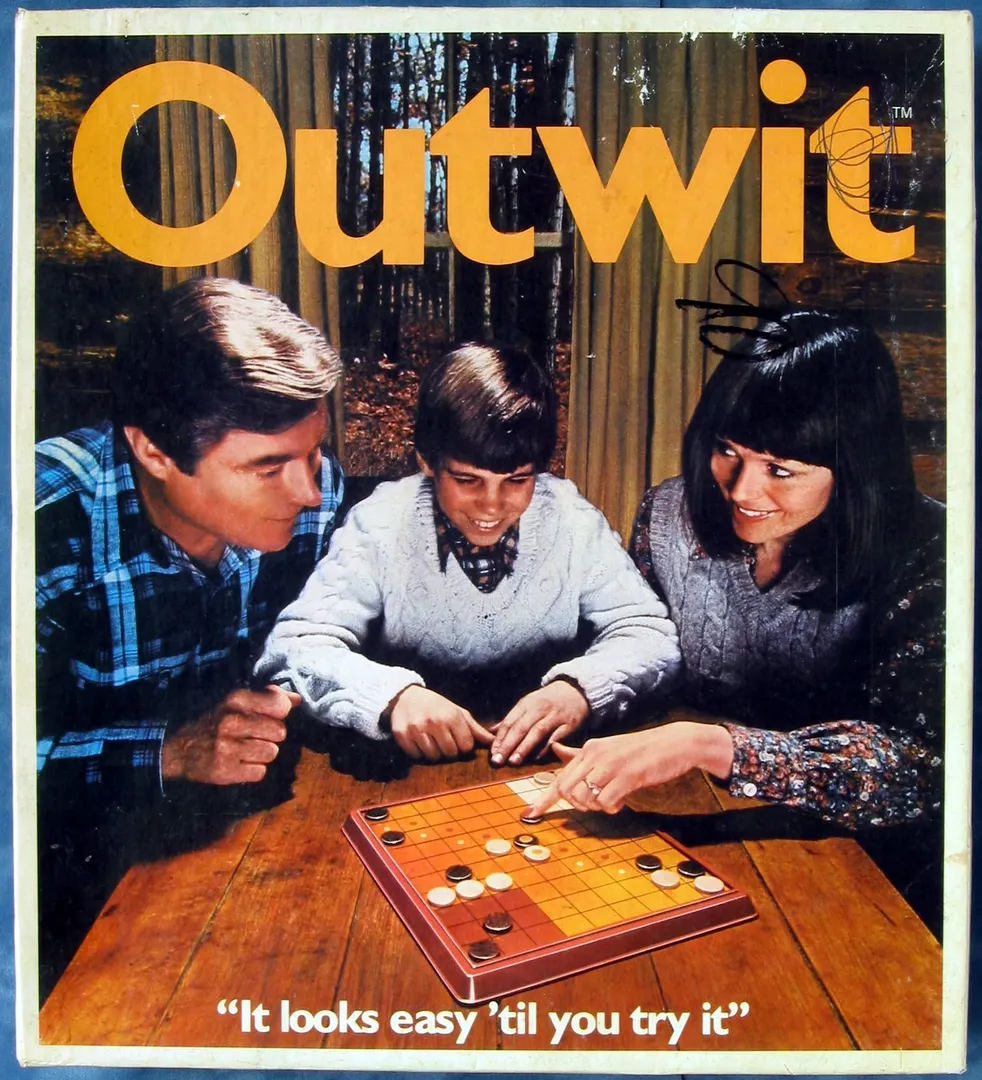
Outwit es un juego de mesa publicado en 1978 para 2 jugadores, con partidas de 15 minutos y a partir de 8 años.
1–4 jugadores30–45 min2024
2–4 jugadores30–45 min2017

2–4 jugadores60–120 min1997
2 jugadores15–30 min2014
2–4 jugadores30 min2018
1–4 jugadores45 min2017
2 jugadores30–180 min-2200

2–4 jugadores30–45 min2019

2 jugadores30–60 min2003

1–4 jugadores30–45 min2020
2–4 jugadores30–60 min1998

2–4 jugadores20 min2016
En inglés
From the instruction sheet: "EQUIPMENT: 1 playing board with 90 squares, including two corners of 9 squares each. 18 chips (9 dark and 9 light), one chip on each side has a dot on it, called the "power chip". OBJECT: To be the first to slide all nine of your chips into your own corner of the board." The chips are setup in the middle of the board at start. Each player plays alternately one chip in one direction only. a regular chip may move horizontally or vertically only. A power chip may move also diagonally. A regular chip must slide as far as it can go. Stopped only by reaching the edge of the board, another chip or the opponent's corner. A power chip can stop whenever it wants, but must stop for the same reasons as a regular chip. Once inside its own corner, no chip can move back into the playing area. A regular chip must move horizontally or vertically as far as it can within the corner, a power chip may move any number of squares, within the corner. Similar to Aztec Conquest, but in those versions, pieces can only move horizontally or vertically. No power chips to allow diagonal movement or stopping early. Aztec Conquest also allows you to move in and out of your corner freely, while Outwit has a rule that you may not leave your corner once you enter it.
Según el catálogo, Outwit admite 2 jugadores. Es el número de jugadores indicado por la editorial, así que el juego está diseñado exactamente para esa cantidad de participantes. Las variantes para otros tamaños de grupo, si existen, se describen en el reglamento de tu edición; consúltalo antes de preparar otra configuración.
La duración indicada para Outwit es de 15 minutos, la estimación de la editorial para una partida completa. El tiempo real depende del grupo, del número de jugadores y del conocimiento de las reglas: las primeras partidas suelen alargarse y los grupos con experiencia terminan antes. La preparación y la explicación de las reglas no están incluidas.
El catálogo indica Outwit a partir de 8 años. Es la recomendación de la editorial y refleja la lectura necesaria, la complejidad de las reglas y las piezas pequeñas, no solo el tema. Los más pequeños a menudo pueden jugar con ayuda de un adulto: comprueba la edad recomendada en tu edición y la experiencia de tu grupo.
Outwit tiene una puntuación de complejidad de 1,7 sobre 5 según los jugadores de BoardGameGeek, lo que lo convierte en un juego ligero. La puntuación refleja cuánto conocimiento de reglas, planificación y toma de decisiones exige una partida típica. Los juegos exigentes requieren una explicación inicial más larga, así que conviene usar una guía de preparación.
Outwit pertenece a estas categorías: Abstract Strategy. Las categorías describen el tema, la ambientación y el estilo de un juego, no sus reglas. Filtra el catálogo por la misma categoría para encontrar juegos similares si te gustó Outwit y buscas algo parecido para tu próxima noche de juegos.
El catálogo clasifica Outwit como juego base. Se juega por sí solo con los componentes de la caja y no requiere ningún otro título. Las expansiones, si existen, añaden contenido o reglas nuevas y aparecen por separado en el catálogo con un enlace a este juego base.


