
- Puesto en BGG
- BGG #6483
- Puntuación BGG
- 8,0
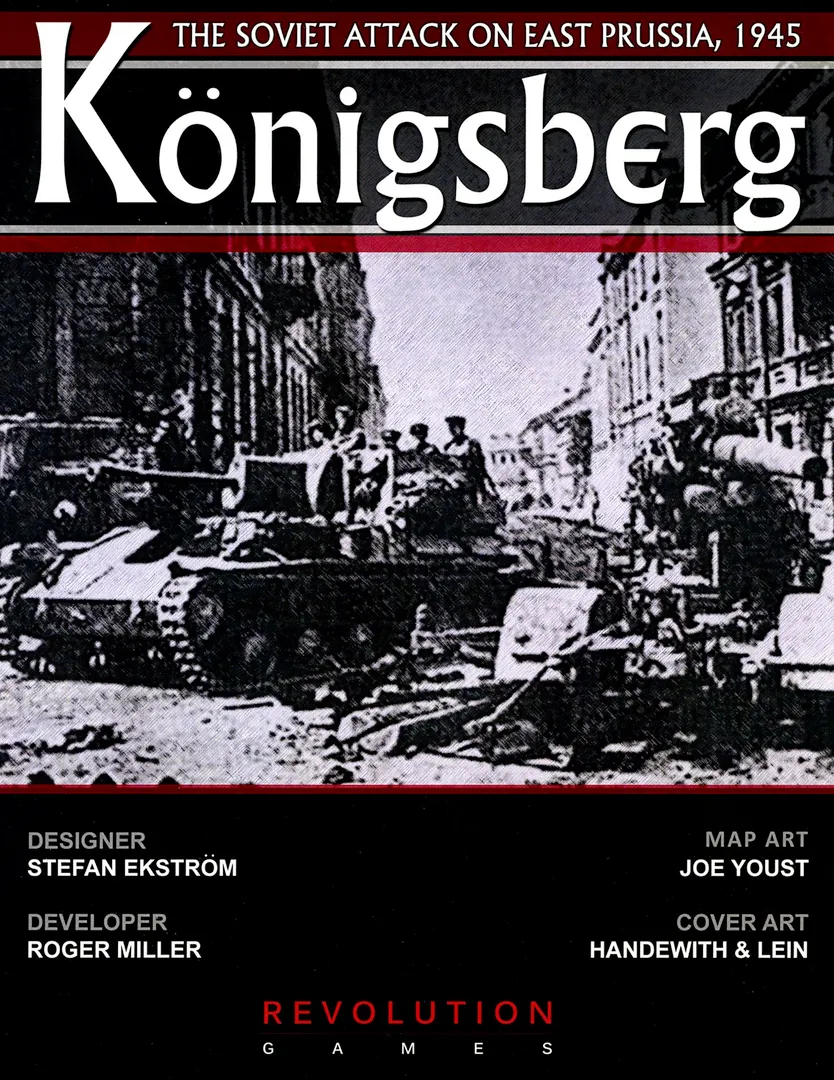
Königsberg: The Soviet Attack on East Prussia, 1945
- 1–3 jugadores
- 240–480 min
- Complejidad 2,3/5
- 2018
2009
Ayuda con las reglas de Pax Baltica: Great Northern War 1700-1721
Explicaciones claras de turnos, efectos de cartas y situaciones dudosas, con referencias a fuentes oficiales e historial de preguntas guardado.
Para 2 jugadores
¿Qué quieres saber?
Las respuestas salen del reglamento oficial, con la página para comprobarlo.
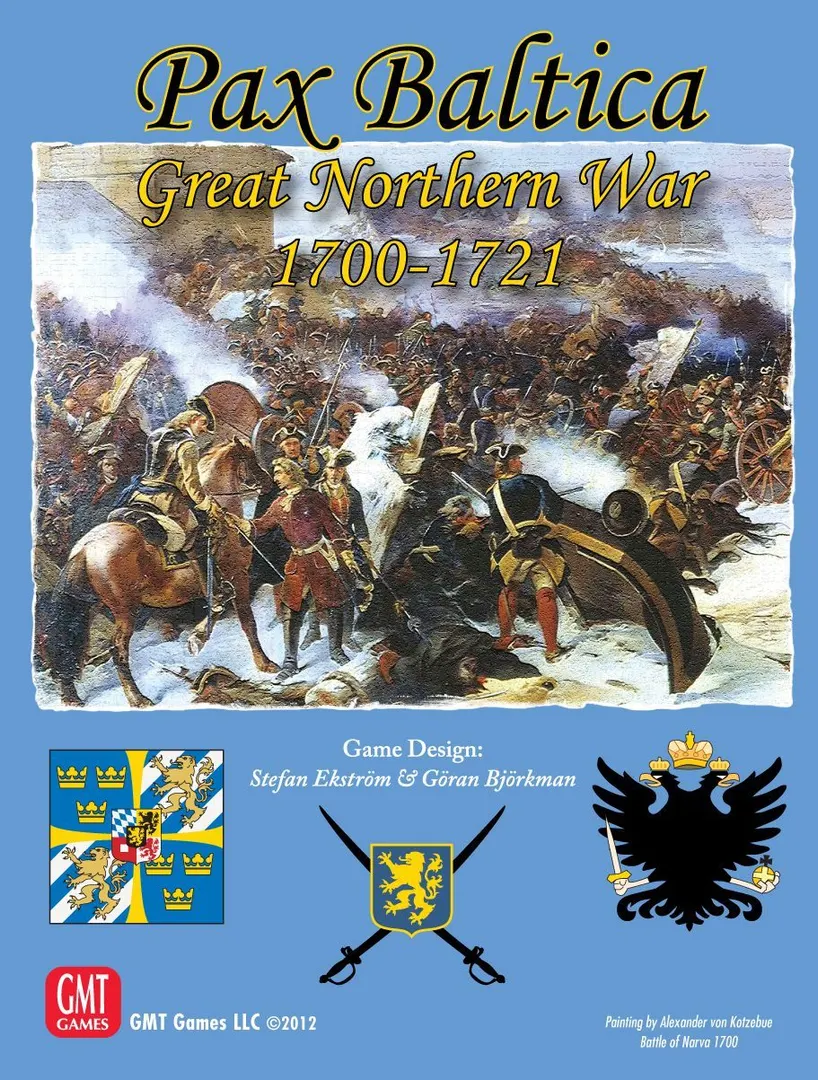
Pax Baltica: Great Northern War 1700-1721 es un juego de mesa publicado en 2009 para 2 jugadores, con partidas de 60 a 840 minutos y a partir de 12 años. Fue diseñado por Stefan Ekström y Göran Björkman y sus mecánicas principales son Area Movement, Dice Rolling y Secret Unit Deployment.

En inglés
It is 1700, and a youthful Karl XII has recently come to power as King of Sweden. Rivals around the Baltic Sea seize the opportunity to get their hands on Swedish territory. An alliance is struck between Denmark, Saxony-Poland, and Russia, the last under the vibrant leadership of Tsar Pyotr. This coalition mobilizes to take advantage of the untried King, and break Swedish dominance in the Baltics forever... Thus opened the Great Northern War, ravaging Northern and Eastern Europe for over two decades at the beginning of the eighteenth century. By the end of the war, one nation would lose its status as a Great Power, while another would rise to dominate the region for centuries onward. PAX BALTICA is a two-player wargame covering the entire Great Northern War (1700-1721). Published first as a limited “guerilla” edition in 2009 by Three Crowns Game Productions of Sweden, this new enhanced edition has been revised and upgraded by GMT Games in conjunction with the original designers. Over twenty years of fighting span the map from Norway to Turkey, Saxony to Finland. Units are represented by labeled wooden blocks, which are stood upright to conceal their identity and strength from the enemy, allowing players to dupe and outfox each other on campaign. Action points are spent to maneuver on the map, but also for reconnaissance, replacements, or a roll on the treacherous but lucrative National Politics Table. Straightforward rules account for lines of communication and forage, as well as time-consuming sieges, adding to the period flavor. The fast-paced and exciting combat system captures the aggressive "charge with cold steel" tactics that Sweden used to defeat her enemies in succession at the start of the war. Players are subject to a host of influences and distractions that will hinder their plans at every turn. An elaborate plan will be at the mercy of a poor action roll or sudden plague, while other events shape strategy with historical motivations and deterrents. Players must prepare for the worst, but be open to fleeting opportunities. Special rules capture simply the unique events and circumstances of the Great Northern War, including: • Russian army reforms • Ukrainian Cossack uprisings • Intervention by the Ottoman Empire • Polish royal politics • Attrition of Swedish manpower • Founding of Sankt-Peterburg Four scenarios are included with the game: a short tournament scenario covering the Swedish invasion of Russia that led to the Battle of Poltáva; two scenarios that simulate the first and last half of the war; and a “grand campaign” scenario that refights the entirety of the Great Northern War, a first in wargame publishing. Turns typically take no more than a couple of minutes, ensuring a fast pace of play. Swings of fortune ensure that no two games will turn out the same. Can you save Sweden’s empire? Or ensure Russia’s rise to prominence? You make the choices that will determine who reigns over the PAX BALTICA. Components: • 1 Map (22” x 34”) • 1 Rulebook (16 pages) • 1 Playbook (32 pages) • 65 wooden blocks (units) in five colors • 1 sticker sheet for mounting on blocks • 51 wooden cubes (control markers, etc.) in six colors • 8 dice, 4 blue and 4 green Game Design: Stefan Ekström and Göran Björkman Development for GMT: Scott Muldoon Complexity: 4 Solitaire Suitability: 3 Scale: Strategic. 1 turn = one season; units are armies, regiments, and fleets; 1 strength step = approx. 1500 troops or 6-8 fighting ships Players: 2 Time to Play: 1-2 hours for the shortest scenario, 7-14 hours for the grand campaign Original Three Crowns edition: Great Northern war, a 21-year long war lasted from 1700 to 1721 and ended Sweden’s period as a major power in northern Europe and started Russia’s domination of Eastern Europe. An intriguing conflict that is often considered a side-show of the War of Spanish succession. Nevertheless the former had probably greater impact of the developments in Europe during the 100 years to come than the latter. The effects of the war are in fact still seen today. Pax Baltica. Probably the first board game ever covering the entire Great Northern War. The game includes five different scenarios with a varying playtime between two hours and a day. The units in the game are blocks which give a great flexibility in taking steps and differentiate the quality and strength of the troops. The high quality map is divided into provinces which you have to conquer in order to take control over a country. This dynamic conflict covers large parts of northern and eastern Europe. From Bremen in the West to Smolensk in the East. From Trondheim in the North to Bender in the South. Playable nations are Sweden, Russia, Turkey, Denmark and Saxony. Other countries represented as minors are: Great Britain, Poland, Ukraine, Prussia and Hanover. The game, packed in a book case, includes a A2 full color map, 60 high quality wooden blocks, 4 dice, various markers and rules including 5 scenarios.
Según el catálogo, Pax Baltica: Great Northern War 1700-1721 admite 2 jugadores. Es el número de jugadores indicado por la editorial, así que el juego está diseñado exactamente para esa cantidad de participantes. Las variantes para otros tamaños de grupo, si existen, se describen en el reglamento de tu edición; consúltalo antes de preparar otra configuración.
La duración indicada para Pax Baltica: Great Northern War 1700-1721 es de 60 a 840 minutos, la estimación de la editorial para una partida completa. El tiempo real depende del grupo, del número de jugadores y del conocimiento de las reglas: las primeras partidas suelen alargarse y los grupos con experiencia terminan antes. La preparación y la explicación de las reglas no están incluidas.
El catálogo indica Pax Baltica: Great Northern War 1700-1721 a partir de 12 años. Es la recomendación de la editorial y refleja la lectura necesaria, la complejidad de las reglas y las piezas pequeñas, no solo el tema. Los más pequeños a menudo pueden jugar con ayuda de un adulto: comprueba la edad recomendada en tu edición y la experiencia de tu grupo.
Pax Baltica: Great Northern War 1700-1721 tiene una puntuación de complejidad de 2,9 sobre 5 según los jugadores de BoardGameGeek, lo que lo convierte en un juego algo ligero. La puntuación refleja cuánto conocimiento de reglas, planificación y toma de decisiones exige una partida típica. Los juegos exigentes requieren una explicación inicial más larga, así que conviene usar una guía de preparación.
Pax Baltica: Great Northern War 1700-1721 pertenece a estas categorías: Wargame y Age of Reason. Sus mecánicas principales son Area Movement, Dice Rolling y Secret Unit Deployment. Las categorías describen el tema y la ambientación de un juego, mientras que las mecánicas describen lo que los jugadores hacen realmente en su turno. Cada mecánica lleva a una página del catálogo con juegos similares.
Los autores acreditados de Pax Baltica: Great Northern War 1700-1721 son: Stefan Ekström y Göran Björkman. Estos créditos proceden de los datos publicados del juego y nombran a las personas responsables de su diseño, no a ilustradores ni editoriales. Las páginas de autor de MeepleRules reúnen otros títulos de los mismos autores, algo útil cuando un juego te gusta y buscas otros parecidos.
El catálogo clasifica Pax Baltica: Great Northern War 1700-1721 como juego base. Se juega por sí solo con los componentes de la caja y no requiere ningún otro título. Las expansiones, si existen, añaden contenido o reglas nuevas y aparecen por separado en el catálogo con un enlace a este juego base.