
- Puesto en BGG
- BGG #1143
- Puntuación BGG
- 7,4
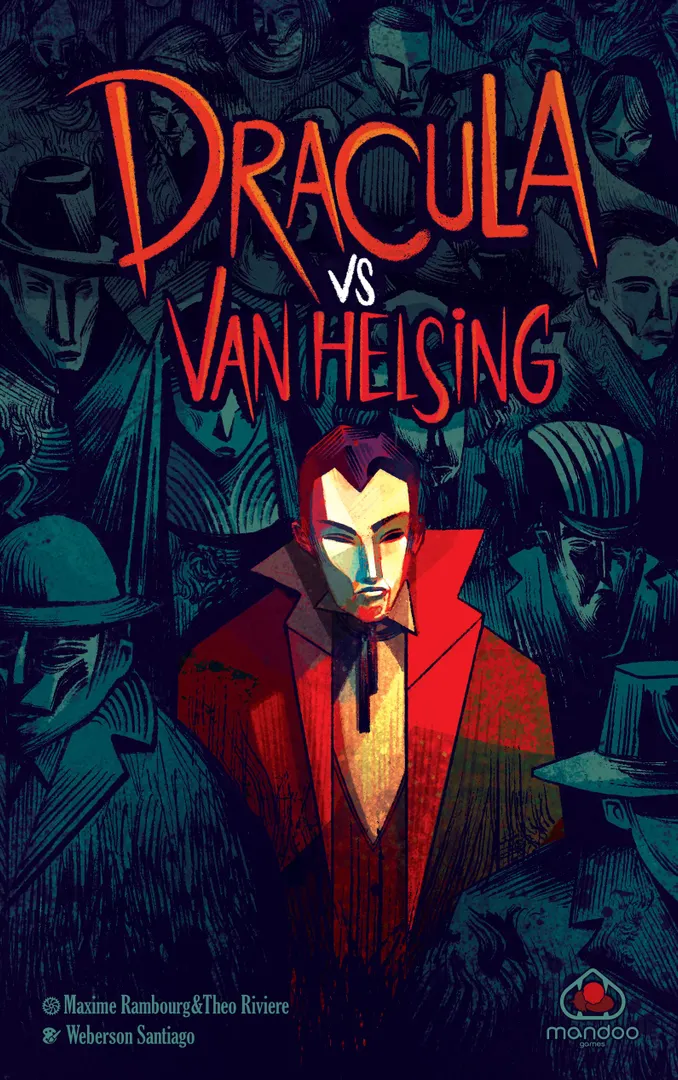
Dracula vs Van Helsing
- 2 jugadores
- 20–45 min
- Complejidad 1,7/5
- 2023
2012
Ayuda con las reglas de Phantom
Explicaciones claras de turnos, efectos de cartas y situaciones dudosas, con referencias a fuentes oficiales e historial de preguntas guardado.
Para 2 jugadores
¿Qué quieres saber?
Las respuestas salen del reglamento oficial, con la página para comprobarlo.
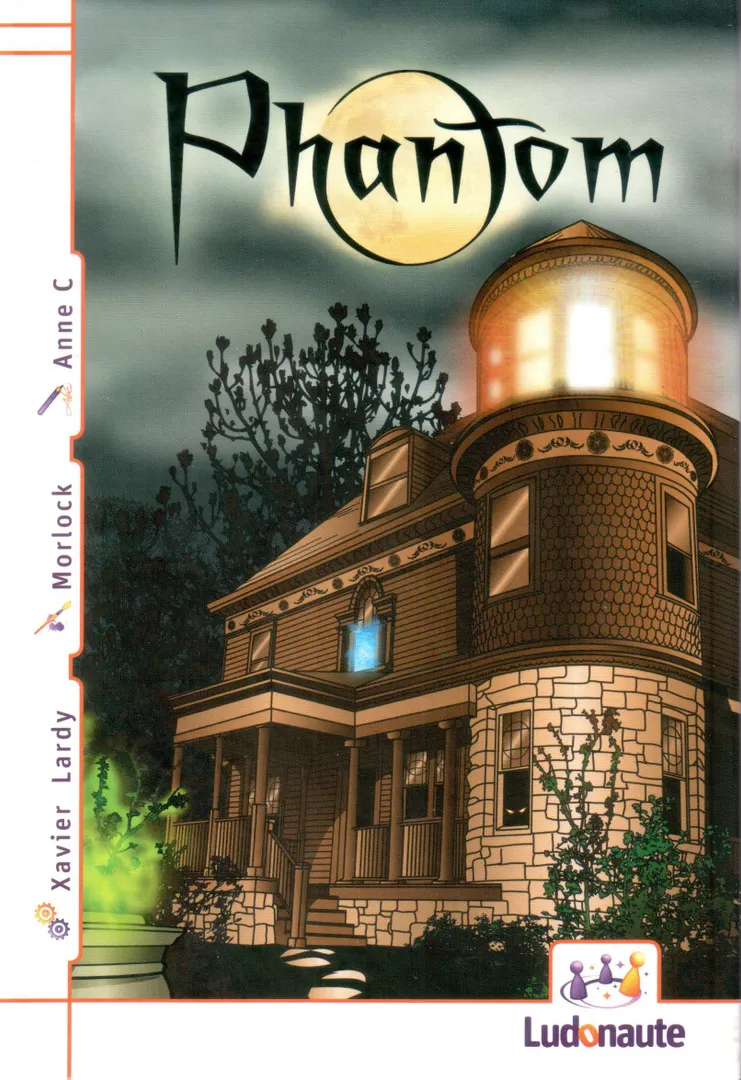
Phantom es un juego de mesa publicado en 2012 para 2 jugadores, con partidas de 30 minutos y a partir de 10 años. Fue diseñado por Xavier Lardy y sus mecánicas principales son Hand Management y Area Majority / Influence.



En inglés
Jamestown, Virginia, at the end of the year 1907 – a tercentenary house welcomes new owners, a peaceful family. But the place is already occupied by lost souls which have been in confrontation for ages. The Standish cannot escape from this haunted house and will be the collateral damage of the conflict. In Phantom, the four areas of the house – Garden, Basement, Ground Floor and First Floor – are placed in a line, with the areas divided into two sides. Each player controls Ghosts in half of the house, and he must make Spectres, Souls and other Spirits appear in front of the different areas of the house in order to frighten the Occupants before the other player. Each turn, a player can play a card – Ghost or Place – in order to increase the Scare level of his corresponding apparition; each Place card must be played in front of its corresponding area(s); for example, the Attic must be played in the First Floor,while the Stairs can be played either in the First Floor or in the Ground Floor. (Note: In Europe, the first floor is customarily the initial floor above ground level, while in the U.S. the floor at ground level is the first floor.) The Ghost cards can be played in front of any areas. Each of them creates a special effect: The Squatter takes a Place from the opponent's apparition. The Charmer makes an Occupant come in the area. The Howler puts Occupants off the area. The Knocker discards a Ghost from the opponent's apparition. The Queen takes a Ghost of his family from the opponent's apparitions. The Invoker gets a Ghost back from the discard pile. Unfortunately for you, the adults of the family can kill off some vulnerable Ghosts, and a family of Ghosts is vulnerable to each of the adults. Some Places protect the Ghosts from the adults. At the end of a player's turn, the Scare level of the apparitions in the different areas are compared to the Fear threshold of any Occupants located there. When a player's Scare level is higher or equal to the Fear threshold of an Occupant who is alone in the corresponding area, this player takes this Occupant and wins the corresponding Victory points. After his turn, the player draws Ghost/Place cards until he has five cards in hand. Each adult is worth 3 victory points (VPs), each child 2 VPs, the baby 4 VPs, and the Priest adds 1 VP to the last Occupant of the house. As soon as a player has collected 11 VPs, the game ends, with him as the winner.
Según el catálogo, Phantom admite 2 jugadores. Es el número de jugadores indicado por la editorial, así que el juego está diseñado exactamente para esa cantidad de participantes. Las variantes para otros tamaños de grupo, si existen, se describen en el reglamento de tu edición; consúltalo antes de preparar otra configuración.
La duración indicada para Phantom es de 30 minutos, la estimación de la editorial para una partida completa. El tiempo real depende del grupo, del número de jugadores y del conocimiento de las reglas: las primeras partidas suelen alargarse y los grupos con experiencia terminan antes. La preparación y la explicación de las reglas no están incluidas.
El catálogo indica Phantom a partir de 10 años. Es la recomendación de la editorial y refleja la lectura necesaria, la complejidad de las reglas y las piezas pequeñas, no solo el tema. Los más pequeños a menudo pueden jugar con ayuda de un adulto: comprueba la edad recomendada en tu edición y la experiencia de tu grupo.
Phantom tiene una puntuación de complejidad de 2,3 sobre 5 según los jugadores de BoardGameGeek, lo que lo convierte en un juego algo ligero. La puntuación refleja cuánto conocimiento de reglas, planificación y toma de decisiones exige una partida típica. Los juegos exigentes requieren una explicación inicial más larga, así que conviene usar una guía de preparación.
Phantom pertenece a estas categorías: Card Game, Horror y Novel-based. Sus mecánicas principales son Hand Management y Area Majority / Influence. Las categorías describen el tema y la ambientación de un juego, mientras que las mecánicas describen lo que los jugadores hacen realmente en su turno. Cada mecánica lleva a una página del catálogo con juegos similares.
Los autores acreditados de Phantom son: Xavier Lardy. Estos créditos proceden de los datos publicados del juego y nombran a las personas responsables de su diseño, no a ilustradores ni editoriales. Las páginas de autor de MeepleRules reúnen otros títulos de los mismos autores, algo útil cuando un juego te gusta y buscas otros parecidos.
El catálogo clasifica Phantom como juego base. Se juega por sí solo con los componentes de la caja y no requiere ningún otro título. Las expansiones, si existen, añaden contenido o reglas nuevas y aparecen por separado en el catálogo con un enlace a este juego base.