

- Puesto en BGG
- BGG #3904
- Puntuación BGG
- 6,9
Windward
- 1–5 jugadores
- 30–90 min
- Complejidad 2,4/5
- 2020
2019
Ayuda con las reglas de Portolano
Explicaciones claras de turnos, efectos de cartas y situaciones dudosas, con referencias a fuentes oficiales e historial de preguntas guardado.
¿Qué quieres saber?
Las respuestas salen del reglamento oficial, con la página para comprobarlo.
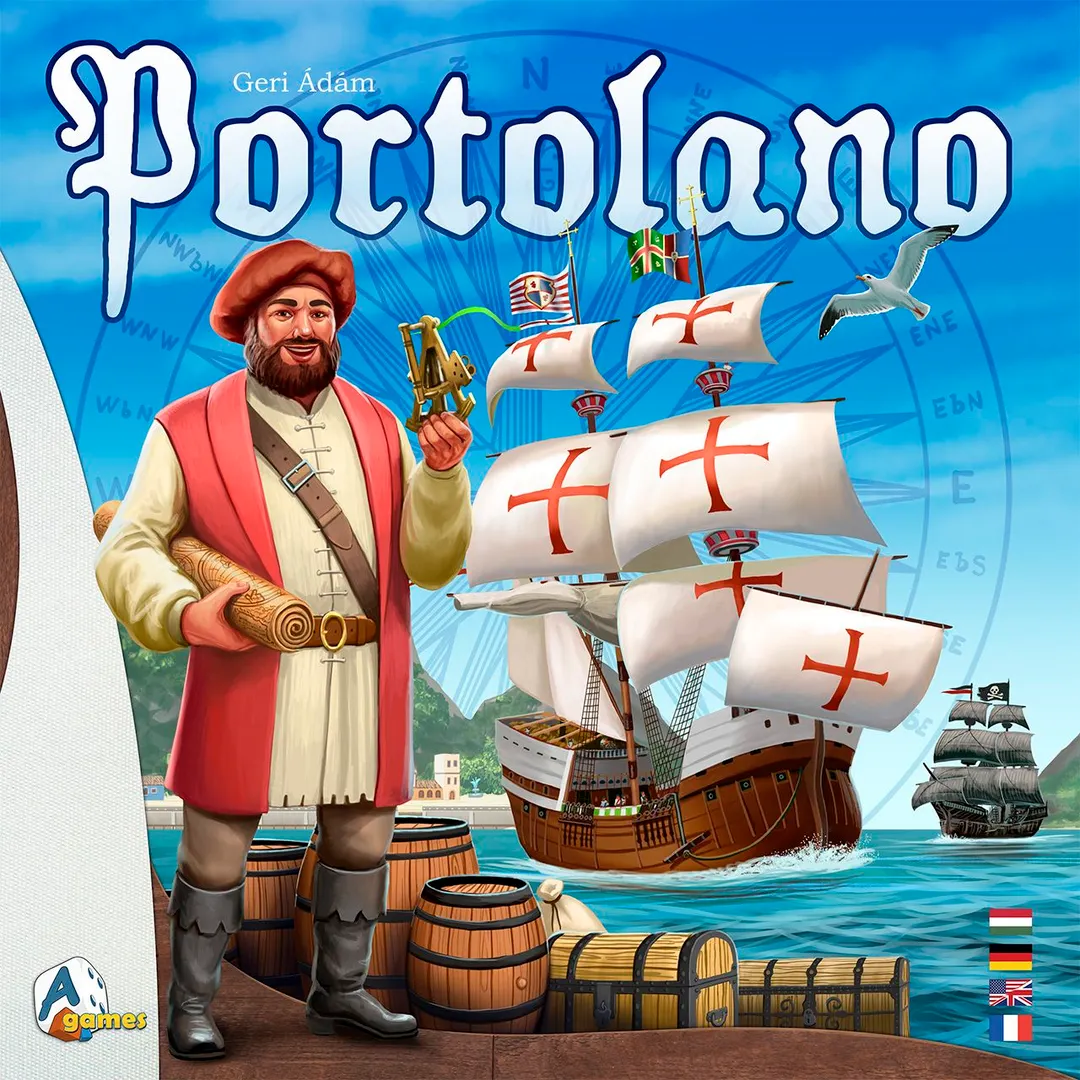
Portolano es un juego de mesa publicado en 2019 para 2–5 jugadores, con partidas de 40 a 60 minutos y a partir de 10 años. Fue diseñado por Adam Geri y sus mecánicas principales son Set Collection, Trading y Area Movement.






En inglés
The 16th century, the age of renaissance. Sailing and maritime trade are flourishing, vast fleets belonging to shipping companies are crossing the seas around the world. There is fierce competition for the available commodities which must be delivered to harbors. The shortest sea route may not be the easiest one. To achieve your goal in becoming the best captain, you need to find the best routes, deliver your goods to the harbor at the right moment and should not think twice to go raiding a little at times. Your portolan chart, a navigation map lies already in front of you, the crew is awaiting your order, and the race is just about to begin. In Portolano, each players controls a ship at sea. With each step you move your ship to the next map tile (map consists of tiles randomly drawn at the beginning of the game). If this is a sea tile, the player can pick one resource (3 different goods or cannons) available on the island. Each sea tile allows for one additional special action. The most important one is ship building, letting players upgrade their ships, extend their cargo bay, increase their speed, or attacking power in battle. Other possible actions include e.g. trading goods (change them to other goods or rum). Once you move to a harbor, you sell the goods collected on the islands to get coins (each harbor has differing needs for products). The more goods you can sell in one go, the more coins you will get. The players plan their next moves simultaneously, without knowing the plans of others. Therefore it may happen that a player moves to sea tile, where the goods are already taken by other players or to a harbor, where the demands have already been satisfied. Once everybody has moved their ships in the round, the wind indicator will be spun, the new wind direction determines the next move of the pirates, who are also on the prowl at sea. After this, the movement phase ends. There is a battle after the movement phase if players and/or the pirate are positioned on the same/adjacent tiles. The fights use dice rolling, the winner steals goods/coins/rum from the loser. Rum is considered to be an important commodity as well, it "fuels” the crew to sail the ship according to your orders. If any player runs out of rum, the crew rebels and the ship can move only in the direction that the wind takes it until the rum stock is refilled. The costs of moving the ship in terms of rum depends on your movement compared with the wind direction (upwind, tailwind, crosswind). The game ends as soon as any of the goods run out. The player who has the most coins wins the game (coins can be collected even at the end of the game by unlocking bonuses).
Según el catálogo, Portolano admite de 2 a 5 jugadores. Este intervalo corresponde al número de jugadores indicado por la editorial, así que el juego puede prepararse para cualquier grupo dentro de ese margen. La preparación, algunas reglas y la puntuación pueden variar según el número de jugadores; consulta la configuración exacta en el reglamento de tu edición.
La duración indicada para Portolano es de 40 a 60 minutos, la estimación de la editorial para una partida completa. El tiempo real depende del grupo, del número de jugadores y del conocimiento de las reglas: las primeras partidas suelen alargarse y los grupos con experiencia terminan antes. La preparación y la explicación de las reglas no están incluidas.
El catálogo indica Portolano a partir de 10 años. Es la recomendación de la editorial y refleja la lectura necesaria, la complejidad de las reglas y las piezas pequeñas, no solo el tema. Los más pequeños a menudo pueden jugar con ayuda de un adulto: comprueba la edad recomendada en tu edición y la experiencia de tu grupo.
Portolano tiene una puntuación de complejidad de 2,3 sobre 5 según los jugadores de BoardGameGeek, lo que lo convierte en un juego algo ligero. La puntuación refleja cuánto conocimiento de reglas, planificación y toma de decisiones exige una partida típica. Los juegos exigentes requieren una explicación inicial más larga, así que conviene usar una guía de preparación.
Portolano pertenece a estas categorías: Travel, Exploration y Nautical. Sus mecánicas principales son Set Collection, Trading y Area Movement. Las categorías describen el tema y la ambientación de un juego, mientras que las mecánicas describen lo que los jugadores hacen realmente en su turno. Cada mecánica lleva a una página del catálogo con juegos similares.
Los autores acreditados de Portolano son: Adam Geri. Estos créditos proceden de los datos publicados del juego y nombran a las personas responsables de su diseño, no a ilustradores ni editoriales. Las páginas de autor de MeepleRules reúnen otros títulos de los mismos autores, algo útil cuando un juego te gusta y buscas otros parecidos.
El catálogo clasifica Portolano como juego base. Se juega por sí solo con los componentes de la caja y no requiere ningún otro título. Las expansiones, si existen, añaden contenido o reglas nuevas y aparecen por separado en el catálogo con un enlace a este juego base.