

- Puesto en BGG
- BGG #15.571
- Puntuación BGG
- 5,8
Flying Carpet
- 3–6 jugadores
- 20 min
- Complejidad 1,5/5
- 1987
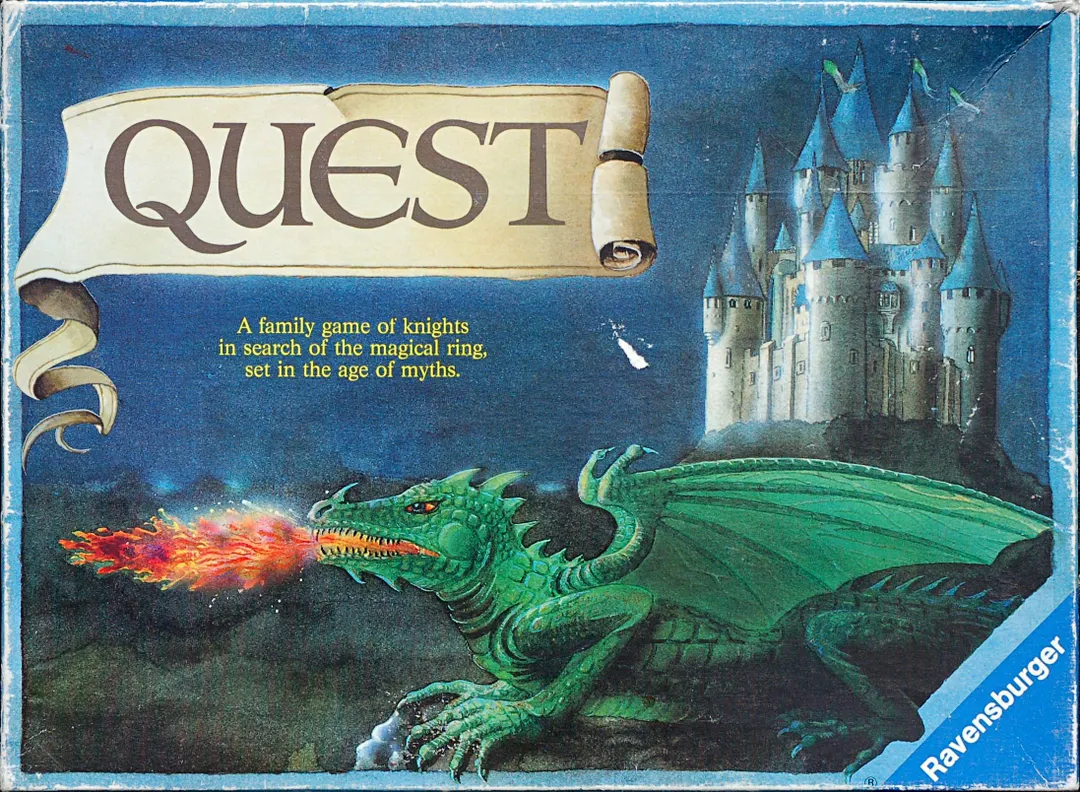
1984
Ayuda con las reglas de Quest
Explicaciones claras de turnos, efectos de cartas y situaciones dudosas, con referencias a fuentes oficiales e historial de preguntas guardado.
¿Qué quieres saber?
Las respuestas salen del reglamento oficial, con la página para comprobarlo.
Quest es un juego de mesa publicado en 1984 para 3–6 jugadores, con partidas de 50 minutos y a partir de 12 años. Fue diseñado por Kurt Feyerabend y Tom Ring y sus mecánicas principales son Point to Point Movement y Pick-up and Deliver.






En inglés
"A family game of knights in search of the magical ring, set in the age of myths." Each of the four states of Tirad, Urgad, Galad and Elgad has one large city. Life in a city flourishes for the inhabitants only when the magical ring is there. Unfortunately, the ring never stays long in one place. A band of brave knights is gathered together in Galad where they hear rumours that the ring has been seen in Tirad. The Quest begins... Each player tries to find the ring and transport it to the cities. As a reward, they receive the seals of these cities. Collect three different seals to win. Many obstacles are to be overcome and dragons slain before a knight's quest is complete. This is a fairly abstract game. Each player has three extra "lives" and loses one when defeated by a dragon or when attacking another player. These lives are replenished by visiting cities. The ring allows its bearer some significant advantages such as passing through obstacles. Special spots on the map allow new obstacles to be placed or existing ones to be moved, so a player can be affected even by other players far from him. The end game can drag a bit as all the other players coordinate their efforts against the leader.
Según el catálogo, Quest admite de 3 a 6 jugadores. Este intervalo corresponde al número de jugadores indicado por la editorial, así que el juego puede prepararse para cualquier grupo dentro de ese margen. La preparación, algunas reglas y la puntuación pueden variar según el número de jugadores; consulta la configuración exacta en el reglamento de tu edición.
La duración indicada para Quest es de 50 minutos, la estimación de la editorial para una partida completa. El tiempo real depende del grupo, del número de jugadores y del conocimiento de las reglas: las primeras partidas suelen alargarse y los grupos con experiencia terminan antes. La preparación y la explicación de las reglas no están incluidas.
El catálogo indica Quest a partir de 12 años. Es la recomendación de la editorial y refleja la lectura necesaria, la complejidad de las reglas y las piezas pequeñas, no solo el tema. Los más pequeños a menudo pueden jugar con ayuda de un adulto: comprueba la edad recomendada en tu edición y la experiencia de tu grupo.
Quest tiene una puntuación de complejidad de 1,8 sobre 5 según los jugadores de BoardGameGeek, lo que lo convierte en un juego ligero. La puntuación refleja cuánto conocimiento de reglas, planificación y toma de decisiones exige una partida típica. Los juegos exigentes requieren una explicación inicial más larga, así que conviene usar una guía de preparación.
Quest pertenece a estas categorías: Fantasy, Adventure y Medieval. Sus mecánicas principales son Point to Point Movement y Pick-up and Deliver. Las categorías describen el tema y la ambientación de un juego, mientras que las mecánicas describen lo que los jugadores hacen realmente en su turno. Cada mecánica lleva a una página del catálogo con juegos similares.
Los autores acreditados de Quest son: Kurt Feyerabend y Tom Ring. Estos créditos proceden de los datos publicados del juego y nombran a las personas responsables de su diseño, no a ilustradores ni editoriales. Las páginas de autor de MeepleRules reúnen otros títulos de los mismos autores, algo útil cuando un juego te gusta y buscas otros parecidos.
El catálogo clasifica Quest como juego base. Se juega por sí solo con los componentes de la caja y no requiere ningún otro título. Las expansiones, si existen, añaden contenido o reglas nuevas y aparecen por separado en el catálogo con un enlace a este juego base.