
- Puesto en BGG
- BGG #20.895
- Puntuación BGG
- 6,3
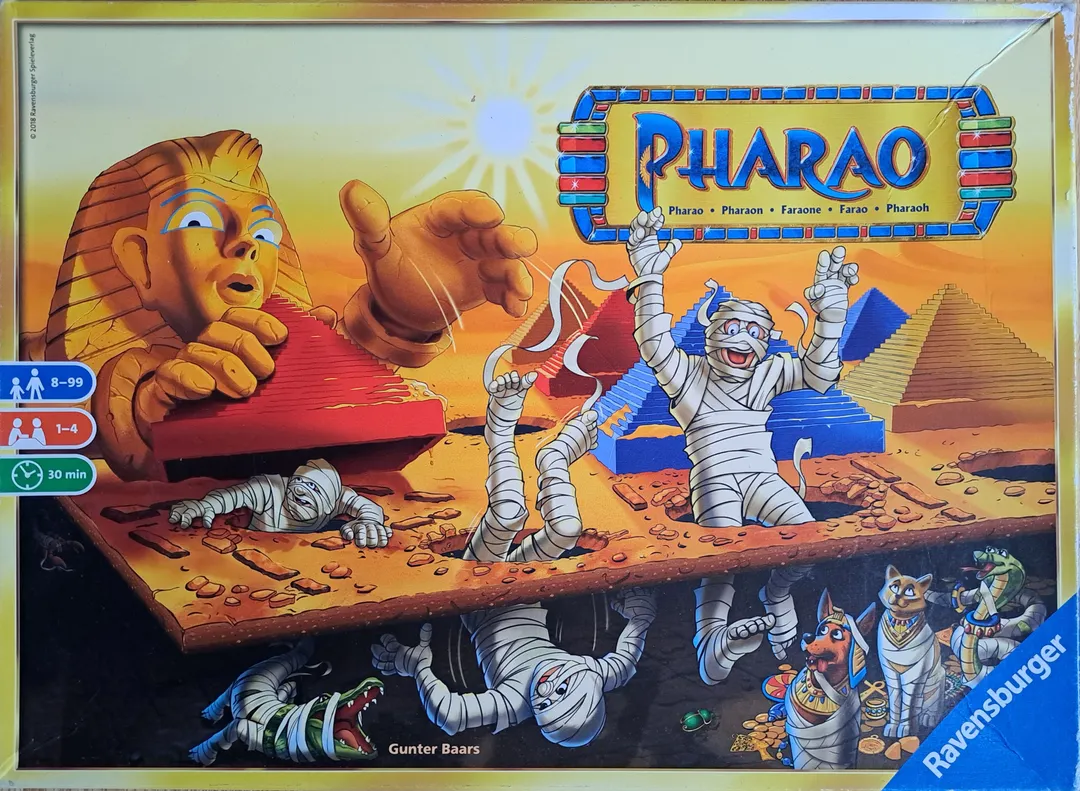
Pharao
- 1–4 jugadores
- 30 min
- Complejidad 1,5/5
- 2017
1997
Ayuda con las reglas de Ramses II
Explicaciones claras de turnos, efectos de cartas y situaciones dudosas, con referencias a fuentes oficiales e historial de preguntas guardado.
Para 1 jugador
¿Qué quieres saber?
Las respuestas salen del reglamento oficial, con la página para comprobarlo.
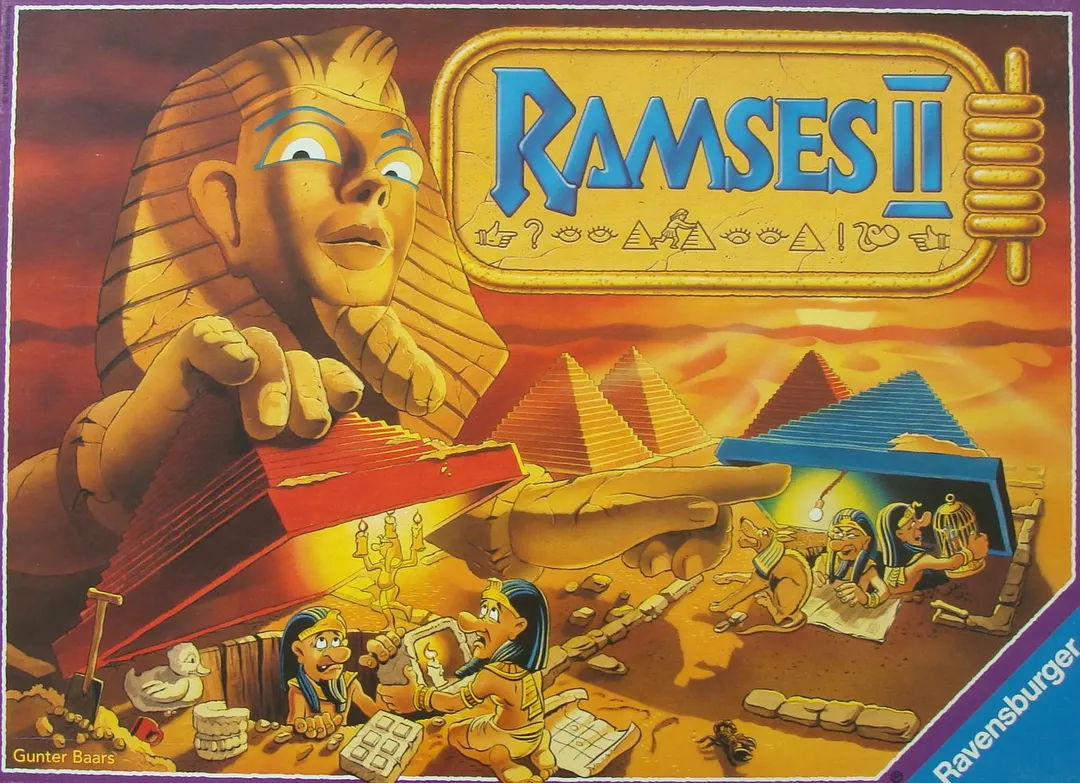
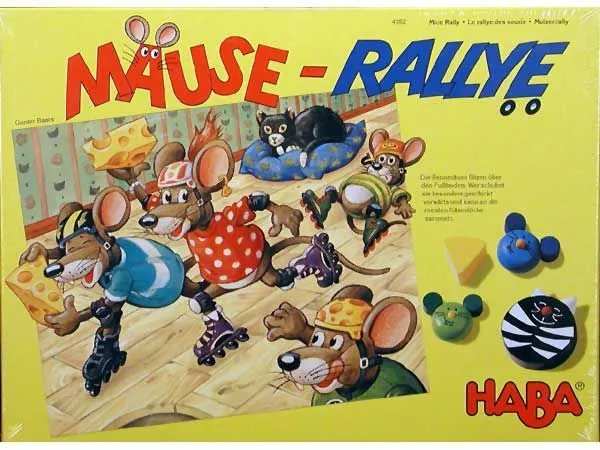
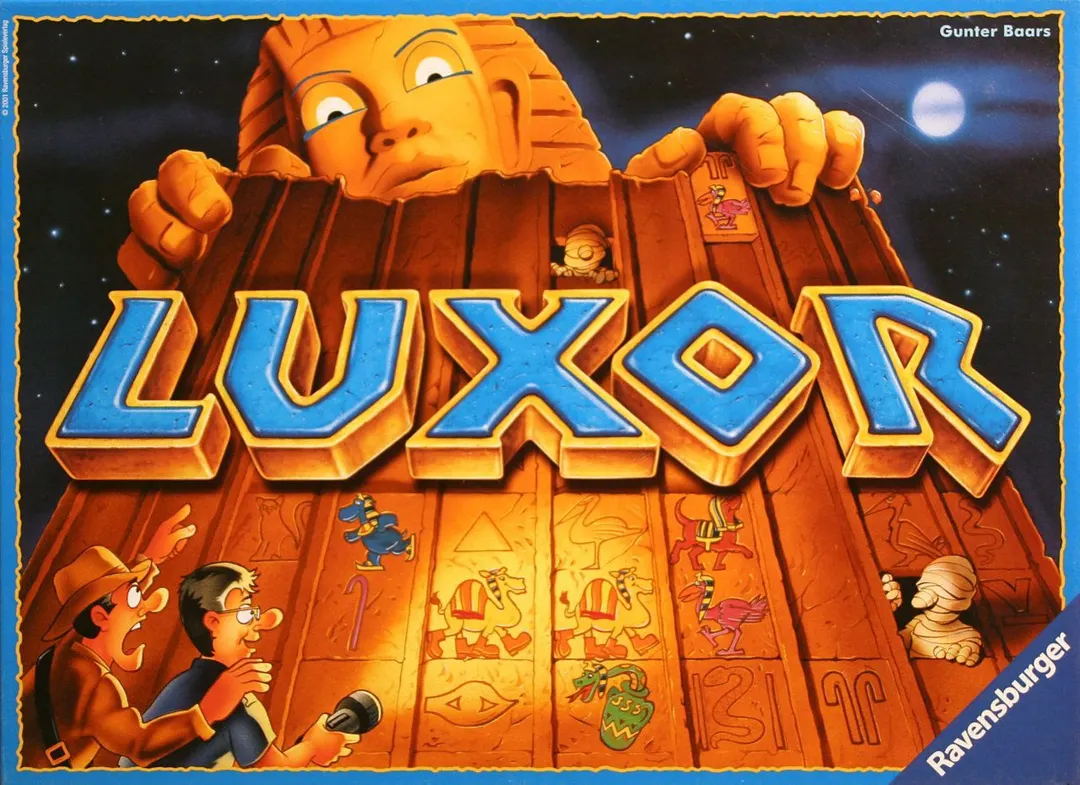
Ramses II es un juego de mesa publicado en 1997 para 1–5 jugadores, con partidas de 30 minutos y a partir de 7 años. Fue diseñado por Gunter Baars y sus mecánicas principales son Variable Set-up, Memory y Grid Movement.




En inglés
The immensely rich but unfortunately somewhat scatter-brained Pharaoh had, during his life, collected treasures from throughout his kingdom. He decided to hide them in his pyramid to prevent then from being stolen. Unfortunately he is no longer sure where he has buried what. With luck you will be able to help him find his treasure again. The player that finds the most of the Pharaoh's treasures and thereby collects the greatest number of search cards is the winner. After chips have placed in the game board, pyramids placed on top and the board spun around a few times in the hopes the players won’t know where treasure chips are located, the first player chooses a treasure card which assigns the number or points that the treasure will be worth would the player find it. The treasure cards have been separated into three piles marked 1, 2 and 3. Once pile 1 is exhausted, game continues with pile 2, etc. Then the player slides a pyramid into an empty space on the board. If no treasure chip is found, the player moves another pyramid. If the chip does not match his card, their turn is over. If the treasure is found, the player keeps the treasure card but the token stays where it is. Mixed in with the treasure cards are event cards as follows: Sandstorm: Turn the board through 180 degrees and take the next pile from the card. Gift: Move to one of the twelve treasures. Each player that has one or more search cards depicting this treasure must give you one of them. Risk: Nominate two treasures that are not currently displayed on the board. Move first to one and then to the other. If you succeed - well done! If you don't then you must give one of your opponents' one of your search cards. Mirage: You draw a search card from your right hand neighbor's collection. If you are able to move to this treasure without making a mistake then you may keep the card. If you do not manage it then you must give your right hand neighbor one of your cards. Desert Poker: A player of you choice must try to find a treasure that you nominate. If he succeeds then he can take one of your search cards. If he fails then you can take one of his. End Game: The Pharaoh is happy because all the treasure has been found. As soon as this (Pile 3 only) card is turned over the game ends and the players total up the points that are shown on their search cards. After each player has found a treasure the board is rotated through 90 degrees in a chosen direction. Once all the search cards from the second pile are used up then pile "3" is used. In this final round all the treasures on the search cards are worth 4 points and anyone who has not yet been particularly successful can, with brains and luck, overtake all the others. When a player finds a treasure chip that is not the one that he was looking for he is out of the game. The remaining players continue. Play continues until all the players are eliminated or the End Game Card is turned over. All the players total up the points that they have showing on the search cards they have collected. The player with the greatest number of points is the winner.
Según el catálogo, Ramses II admite de 1 a 5 jugadores. Este intervalo corresponde al número de jugadores indicado por la editorial, así que el juego puede prepararse para cualquier grupo dentro de ese margen. La preparación, algunas reglas y la puntuación pueden variar según el número de jugadores; consulta la configuración exacta en el reglamento de tu edición.
La duración indicada para Ramses II es de 30 minutos, la estimación de la editorial para una partida completa. El tiempo real depende del grupo, del número de jugadores y del conocimiento de las reglas: las primeras partidas suelen alargarse y los grupos con experiencia terminan antes. La preparación y la explicación de las reglas no están incluidas.
El catálogo indica Ramses II a partir de 7 años. Es la recomendación de la editorial y refleja la lectura necesaria, la complejidad de las reglas y las piezas pequeñas, no solo el tema. Los más pequeños a menudo pueden jugar con ayuda de un adulto: comprueba la edad recomendada en tu edición y la experiencia de tu grupo.
Ramses II tiene una puntuación de complejidad de 1,3 sobre 5 según los jugadores de BoardGameGeek, lo que lo convierte en un juego ligero. La puntuación refleja cuánto conocimiento de reglas, planificación y toma de decisiones exige una partida típica. Los juegos exigentes requieren una explicación inicial más larga, así que conviene usar una guía de preparación.
Ramses II pertenece a estas categorías: Children's Game, Memory y Exploration. Sus mecánicas principales son Variable Set-up, Memory y Grid Movement. Las categorías describen el tema y la ambientación de un juego, mientras que las mecánicas describen lo que los jugadores hacen realmente en su turno. Cada mecánica lleva a una página del catálogo con juegos similares.
Los autores acreditados de Ramses II son: Gunter Baars. Estos créditos proceden de los datos publicados del juego y nombran a las personas responsables de su diseño, no a ilustradores ni editoriales. Las páginas de autor de MeepleRules reúnen otros títulos de los mismos autores, algo útil cuando un juego te gusta y buscas otros parecidos.
El catálogo clasifica Ramses II como juego base. Se juega por sí solo con los componentes de la caja y no requiere ningún otro título. Las expansiones, si existen, añaden contenido o reglas nuevas y aparecen por separado en el catálogo con un enlace a este juego base.