
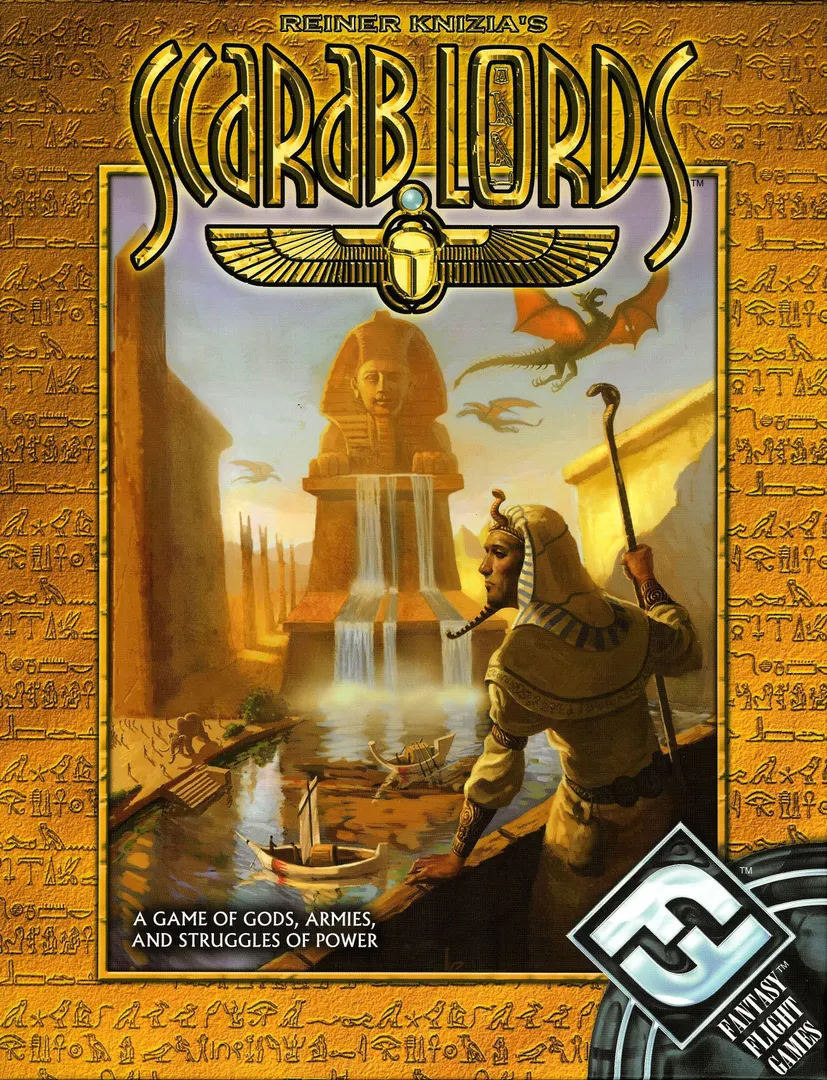
- Puesto en BGG
- BGG #6201
- Puntuación BGG
- 6,0
Scarab Lords
- 2 jugadores
- 20–40 min
- Complejidad 1,9/5
- 2002
2001
Ayuda con las reglas de Rome: Imperium, Circus Maximus, Hannibal vs Rome
Explicaciones claras de turnos, efectos de cartas y situaciones dudosas, con referencias a fuentes oficiales e historial de preguntas guardado.
Para 2 jugadores
¿Qué quieres saber?
Las respuestas salen del reglamento oficial, con la página para comprobarlo.
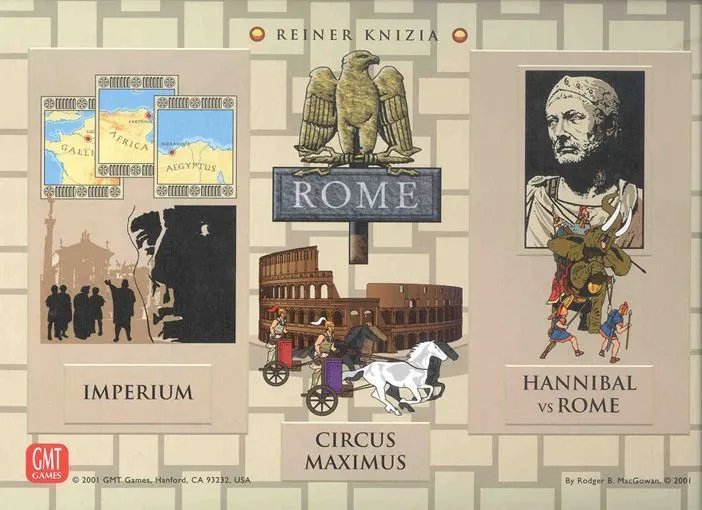
Rome: Imperium, Circus Maximus, Hannibal vs Rome es un juego de mesa publicado en 2001 para 2–5 jugadores, con partidas de 10 a 45 minutos y a partir de 8 años. Fue diseñado por Reiner Knizia y sus mecánicas principales son Hand Management, Area Movement y Area Majority / Influence.



En inglés
Reiner Knizia has designed a number of games set in Ancient Rome. This collection brings together three of the finest, covering three very different aspects of the Roman Empire: Hannibal versus Rome, Imperium and Circus Maximus. Hannibal versus Rome is a 30-minute two-player game depicing the initial struggle for supremacy between Rome and Carthage, which finally established Rome as the leading power in the Mediterranean. It draws on the events of the Second Punic War, during which Hannibal crossed the Alps with his elephants, and defeated Rome in the battle of Cannae. The Roman general Scipio succeeded in moving the fighting away from Italy, into Spain and Africa, where he defeated the Carthaginians at Zama. The map covers the Western Mediterranean. Players move Legions and Fleets, deciding conflicts by the use of cards in order to determine who will be the dominant power in the Mediterranean region. Imperium (a game for two to five players) focuses on Rome's political and territorial expansion during the Imperial period. Powerful families controlled the individual provinces in order to increase their wealth and power in Rome, until the Roman Empire reached its zenith in size in the year 100 under the Emperor Trajan. In each round the two to five players distribute markers onto areas of the Empire, with control of one area being decided each round. The players need to have the right influence at the decisive moment to take control, without neglecting long-term development. It is a game of planning and timing. Circus Maximus leads us into the heart of Rome itself with its renowned public entertainment for the masses; chariot racing. Chariot races were immensely popular in Rome. The Circus Maximus offered room for 200,000 spectators who avidly followed the races, roaring and cheering on their favourites. The courageous charioteers were divided into teams distinguished by different colours. The most successful were worshipped as heroes, but the risks were high and many paid for their fame and daring with their lives. Each of two to five players controls a team of three chariots. In a game of pure tactics, players receive five movement cards that they can assign each turn to individual chariots as they wish. The first to bring all three across the finish line wins the game and the laurel wreath. Note: the 3 games in this were previously released in Neue Spiele im alten Rom.
Según el catálogo, Rome: Imperium, Circus Maximus, Hannibal vs Rome admite de 2 a 5 jugadores. Este intervalo corresponde al número de jugadores indicado por la editorial, así que el juego puede prepararse para cualquier grupo dentro de ese margen. La preparación, algunas reglas y la puntuación pueden variar según el número de jugadores; consulta la configuración exacta en el reglamento de tu edición.
La duración indicada para Rome: Imperium, Circus Maximus, Hannibal vs Rome es de 10 a 45 minutos, la estimación de la editorial para una partida completa. El tiempo real depende del grupo, del número de jugadores y del conocimiento de las reglas: las primeras partidas suelen alargarse y los grupos con experiencia terminan antes. La preparación y la explicación de las reglas no están incluidas.
El catálogo indica Rome: Imperium, Circus Maximus, Hannibal vs Rome a partir de 8 años. Es la recomendación de la editorial y refleja la lectura necesaria, la complejidad de las reglas y las piezas pequeñas, no solo el tema. Los más pequeños a menudo pueden jugar con ayuda de un adulto: comprueba la edad recomendada en tu edición y la experiencia de tu grupo.
Rome: Imperium, Circus Maximus, Hannibal vs Rome tiene una puntuación de complejidad de 1,7 sobre 5 según los jugadores de BoardGameGeek, lo que lo convierte en un juego ligero. La puntuación refleja cuánto conocimiento de reglas, planificación y toma de decisiones exige una partida típica. Los juegos exigentes requieren una explicación inicial más larga, así que conviene usar una guía de preparación.
Rome: Imperium, Circus Maximus, Hannibal vs Rome pertenece a estas categorías: Card Game, Political y Ancient. Sus mecánicas principales son Hand Management, Area Movement y Area Majority / Influence. Las categorías describen el tema y la ambientación de un juego, mientras que las mecánicas describen lo que los jugadores hacen realmente en su turno. Cada mecánica lleva a una página del catálogo con juegos similares.
Los autores acreditados de Rome: Imperium, Circus Maximus, Hannibal vs Rome son: Reiner Knizia. Estos créditos proceden de los datos publicados del juego y nombran a las personas responsables de su diseño, no a ilustradores ni editoriales. Las páginas de autor de MeepleRules reúnen otros títulos de los mismos autores, algo útil cuando un juego te gusta y buscas otros parecidos.
El catálogo clasifica Rome: Imperium, Circus Maximus, Hannibal vs Rome como juego base. Se juega por sí solo con los componentes de la caja y no requiere ningún otro título. Las expansiones, si existen, añaden contenido o reglas nuevas y aparecen por separado en el catálogo con un enlace a este juego base.