
- Puesto en BGG
- BGG #4883
- Puntuación BGG
- 7,1
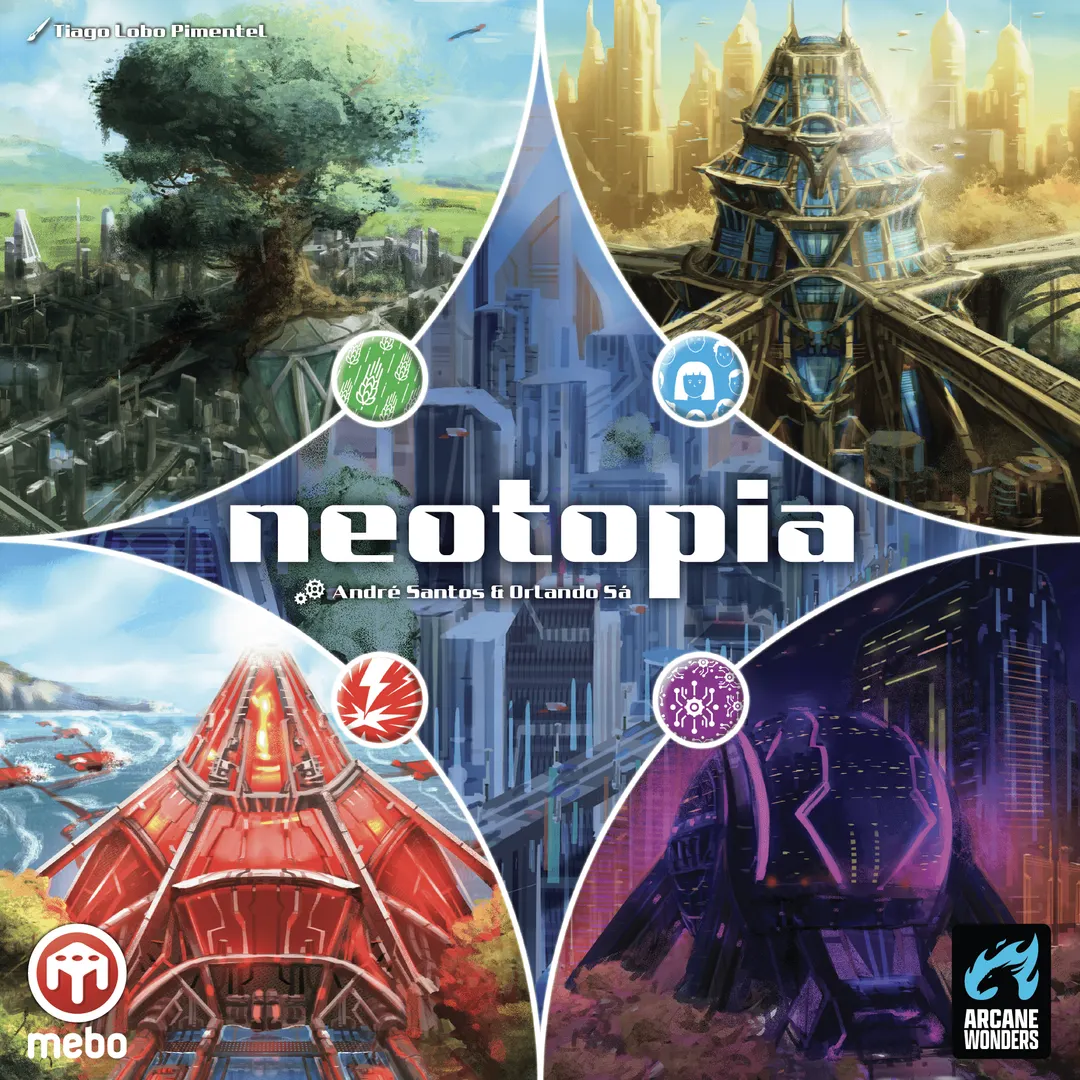
Neotopia
- 2–4 jugadores
- 30–60 min
- Complejidad 2,0/5
- 2023
2020
Ayuda con las reglas de Rossio
Explicaciones claras de turnos, efectos de cartas y situaciones dudosas, con referencias a fuentes oficiales e historial de preguntas guardado.
Para 1 jugador
¿Qué quieres saber?
Las respuestas salen del reglamento oficial, con la página para comprobarlo.
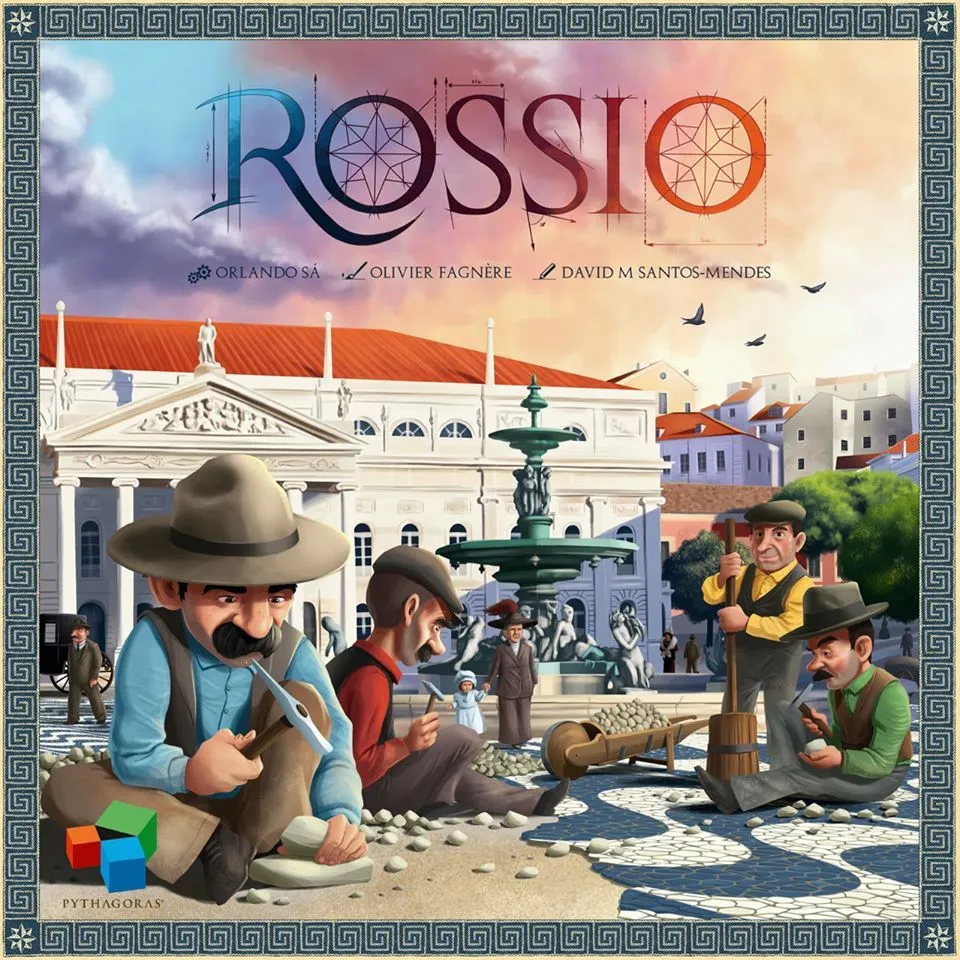
Rossio es un juego de mesa publicado en 2020 para 1–4 jugadores, con partidas de 30 a 45 minutos y a partir de 8 años. Fue diseñado por Orlando Sá y sus mecánicas principales son Hand Management, Area Majority / Influence y Tile Placement.


En inglés
The Portuguese King has called the finest stonemasons of the country to pave one of the most important squares with calçada tiles (worldwide famous black and white tiles that pave several squares in Portugal). But the task is enormous and players will have to count with the aid of helper cards who will help them score points and/or collect money. In Rossio, players start the game by drawing five cards and keeping three of them on their hands. On a player's turn, players will first recruit a card from their hands, placing it on the rightmost space under their player board, sliding to the left all cards previously recruited, discarding the card that slides off their boards (under each player board there are only 3 card slots). If the newly recruited card is played face-up, players must pay its cost in coins. If the card is played face-down, no money needs to be spent. Then, ALL cards under a player board will activate: face-up cards will give the player Points for each time the pattern depicted on the card is found on the square. Face-down cards will provide the player 1 coin each. Then, players must build the leftmost calçada tile of their player boards. Players can never voluntarily change the order of the tiles on their board. At any moment players can, however, spend 1 coin to swap 2 pieces on their board that are orthogonally adjacent. The tile must be built in the square orthogonally adjacent to at least 2 elements: 1 tile and 1 wall, or 2 tiles. And must be built on the leftmost available space of the line it is being built. If the players manage to build orthogonally adjacent to a similar tile, they can as bonus build the next leftmost tile, and so on, until they decide to stop or until they can't build more. Players collect then 1 coin for each coin depicted on the spaces that were left free on their player boards after tiles were built. Finally, players end their turn by drawing 1 card into their hand from the 4 cards available on the market. However, the amount of cards players can choose from depends on the number of tiles that they have built. So, if players build only 1 tile, they must take the 1st card. If they build 3 tiles, for example, they can choose between the 1st, 2nd or 3rd cards. Players end their turns by refilling the empty spaces of their player boards with tiles from the facedown stacks. As the square is being cooperatively built, certain patterns appear more often than others and the scoring of face-up cards becomes exponential. Also, when players complete a column, they collect a bonus, that can be either 1 coin or drawing more cards. Money is very tight in this game, so gaining an extra coin can be crucial to recruiting a card from your hand face-up. The game ends when the square is finished and the player with most points wins the game. Rossio is all about timing: Recruit a card face-up late in the game, and then it will score fewer times than expected. Recruit it too early, and it will score you a few points since there are few tiles built on the square. To many cards recruited face down will give that extra amount of money, but, they won't score any points. Build several tiles and you're probably helping your opponents. Build fewer tiles and you probably won't have money next turn to recruit a face-up card. Rossio is a game with very simple rules, but with high interaction between players and interesting decisions every single turn. —description from the designer
Según el catálogo, Rossio admite de 1 a 4 jugadores. Este intervalo corresponde al número de jugadores indicado por la editorial, así que el juego puede prepararse para cualquier grupo dentro de ese margen. La preparación, algunas reglas y la puntuación pueden variar según el número de jugadores; consulta la configuración exacta en el reglamento de tu edición.
La duración indicada para Rossio es de 30 a 45 minutos, la estimación de la editorial para una partida completa. El tiempo real depende del grupo, del número de jugadores y del conocimiento de las reglas: las primeras partidas suelen alargarse y los grupos con experiencia terminan antes. La preparación y la explicación de las reglas no están incluidas.
El catálogo indica Rossio a partir de 8 años. Es la recomendación de la editorial y refleja la lectura necesaria, la complejidad de las reglas y las piezas pequeñas, no solo el tema. Los más pequeños a menudo pueden jugar con ayuda de un adulto: comprueba la edad recomendada en tu edición y la experiencia de tu grupo.
Rossio tiene una puntuación de complejidad de 1,9 sobre 5 según los jugadores de BoardGameGeek, lo que lo convierte en un juego ligero. La puntuación refleja cuánto conocimiento de reglas, planificación y toma de decisiones exige una partida típica. Los juegos exigentes requieren una explicación inicial más larga, así que conviene usar una guía de preparación.
Rossio pertenece a estas categorías: Card Game. Sus mecánicas principales son Hand Management, Area Majority / Influence y Tile Placement. Las categorías describen el tema y la ambientación de un juego, mientras que las mecánicas describen lo que los jugadores hacen realmente en su turno. Cada mecánica lleva a una página del catálogo con juegos similares.
Los autores acreditados de Rossio son: Orlando Sá. Estos créditos proceden de los datos publicados del juego y nombran a las personas responsables de su diseño, no a ilustradores ni editoriales. Las páginas de autor de MeepleRules reúnen otros títulos de los mismos autores, algo útil cuando un juego te gusta y buscas otros parecidos.
El catálogo clasifica Rossio como juego base. Se juega por sí solo con los componentes de la caja y no requiere ningún otro título. Las expansiones, si existen, añaden contenido o reglas nuevas y aparecen por separado en el catálogo con un enlace a este juego base.