
- Puntuación BGG
- 6,7
Siberia: Warehouse expansion
- 2–4 jugadores
- 60 min
- 2011
2011
Ayuda con las reglas de Siberia
Explicaciones claras de turnos, efectos de cartas y situaciones dudosas, con referencias a fuentes oficiales e historial de preguntas guardado.
Para 2 jugadores
¿Qué quieres saber?
Las respuestas salen del reglamento oficial, con la página para comprobarlo.
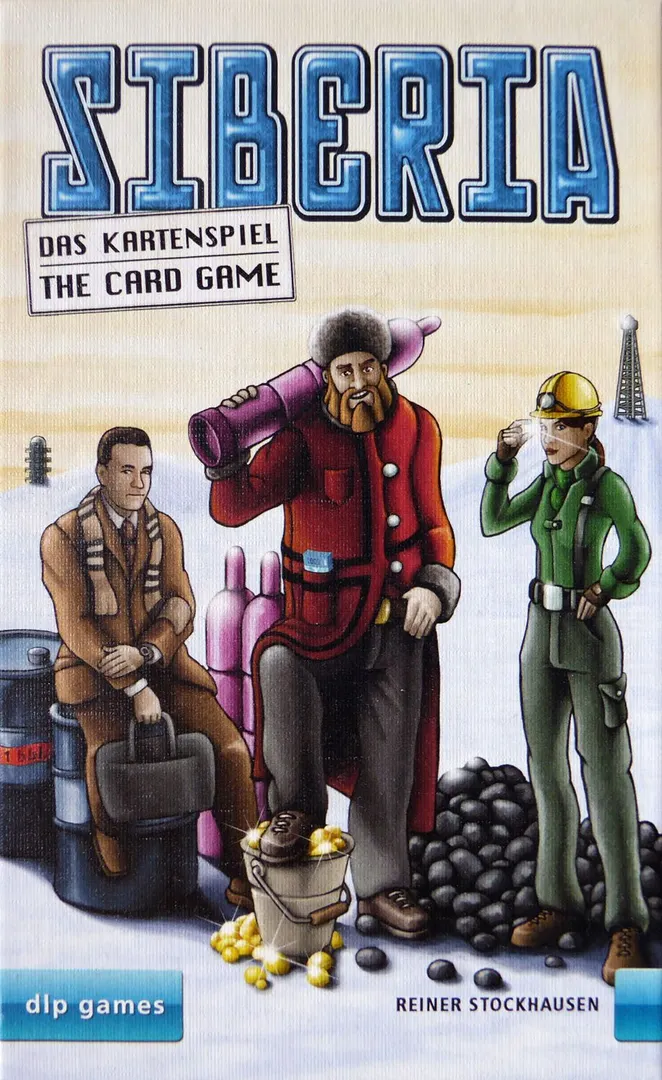
Siberia es un juego de mesa publicado en 2011 para 2–4 jugadores, con partidas de 60 minutos y a partir de 10 años. Fue diseñado por Reiner Stockhausen y sus mecánicas principales son Area Movement, Simultaneous Action Selection y Variable Phase Order.
En inglés
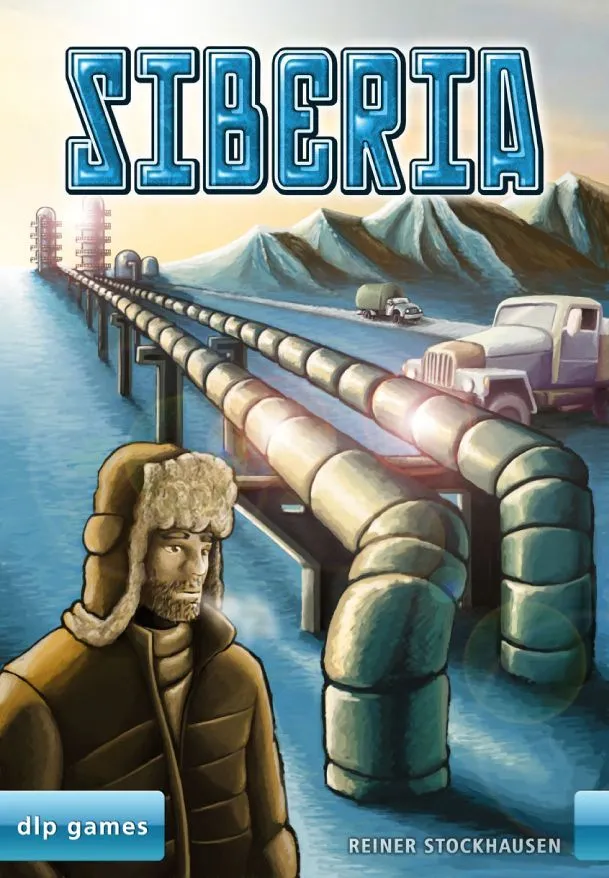
Siberia has a reputation for being a land of vast resources, and players are going to do their best to exploit those resources and convert them into as much loot as possible. To set up the game, place two different resources at random on each area in Siberia, place the remaining resources on their supply spaces, draw four of the 20 investment tiles from the bag and lay them on the game board, give each player his own playing panel and workers/salesmen, then place all the action counters in the bag. Siberia lasts an unspecified number of rounds. Each round consists of two phases: (1) drawing and placing action counters and (2) performing actions. In the first phase, all players draw six action counters from the bag, then place them on their individual playing panels. Most action counters show both a resource (five types possible) and a person (four types), while managers are on counters of their own. Each playing panel has columns for the five types of resources and the five types of workers, with space for two counters in each column. Players can also allocate counters to the "research facility" below their panel. In the second phase, players take actions one at a time until everyone has no actions remaining or passes. A resource or worker action can be taken only if both spaces are filled in the appropriate column; when a player takes an action, he removes all action counters in the column, returns them to the bag, then takes the action. • The "research facility" action must be carried out first, with the player taking the designated resources from the supply and placing one resource in any location that doesn't already have that resource available. • The worker actions allow a player to place a salesman in a stock exchange, place a worker in Vladivostok, move workers up to three spaces, move a manager to any action space, or claim an investment tile; each investment tile corresponds to a particular resource or worker action and is placed on the player panel permanently, allowing the player to take this action more easily in the future since the column is always half-filled. • Each resource action allows a player to remove that resource from all areas where he has a worker, then immediately sell them on one of the stock exchanges where he has a salesman. A player can keep up to ten action counters on his playing panel at the end of a round, allowing him to prepare for and build up actions for future rounds. The game ends at the end of any round in which three of the five resources have no supply remaining or eight areas have had all their resources removed. (Once an area is exhausted, nothing can be placed in it for the remainder of the game.) The player who has the most money wins.
Según el catálogo, Siberia admite de 2 a 4 jugadores. Este intervalo corresponde al número de jugadores indicado por la editorial, así que el juego puede prepararse para cualquier grupo dentro de ese margen. La preparación, algunas reglas y la puntuación pueden variar según el número de jugadores; consulta la configuración exacta en el reglamento de tu edición.
La duración indicada para Siberia es de 60 minutos, la estimación de la editorial para una partida completa. El tiempo real depende del grupo, del número de jugadores y del conocimiento de las reglas: las primeras partidas suelen alargarse y los grupos con experiencia terminan antes. La preparación y la explicación de las reglas no están incluidas.
El catálogo indica Siberia a partir de 10 años. Es la recomendación de la editorial y refleja la lectura necesaria, la complejidad de las reglas y las piezas pequeñas, no solo el tema. Los más pequeños a menudo pueden jugar con ayuda de un adulto: comprueba la edad recomendada en tu edición y la experiencia de tu grupo.
Siberia tiene una puntuación de complejidad de 2,4 sobre 5 según los jugadores de BoardGameGeek, lo que lo convierte en un juego algo ligero. La puntuación refleja cuánto conocimiento de reglas, planificación y toma de decisiones exige una partida típica. Los juegos exigentes requieren una explicación inicial más larga, así que conviene usar una guía de preparación.
Siberia pertenece a estas categorías: Economic e Industry / Manufacturing. Sus mecánicas principales son Area Movement, Simultaneous Action Selection y Variable Phase Order. Las categorías describen el tema y la ambientación de un juego, mientras que las mecánicas describen lo que los jugadores hacen realmente en su turno. Cada mecánica lleva a una página del catálogo con juegos similares.
Los autores acreditados de Siberia son: Reiner Stockhausen. Estos créditos proceden de los datos publicados del juego y nombran a las personas responsables de su diseño, no a ilustradores ni editoriales. Las páginas de autor de MeepleRules reúnen otros títulos de los mismos autores, algo útil cuando un juego te gusta y buscas otros parecidos.
El catálogo clasifica Siberia como juego base. Se juega por sí solo con los componentes de la caja y no requiere ningún otro título. Las expansiones, si existen, añaden contenido o reglas nuevas y aparecen por separado en el catálogo con un enlace a este juego base.