

- Puesto en BGG
- BGG #526
- Puntuación BGG
- 7,2
Biblios
- 2–4 jugadores
- 30 min
- Complejidad 1,7/5
- 2007
2008
Ayuda con las reglas de Slush Fund
Explicaciones claras de turnos, efectos de cartas y situaciones dudosas, con referencias a fuentes oficiales e historial de preguntas guardado.
Para 2 jugadores
¿Qué quieres saber?
Las respuestas salen del reglamento oficial, con la página para comprobarlo.
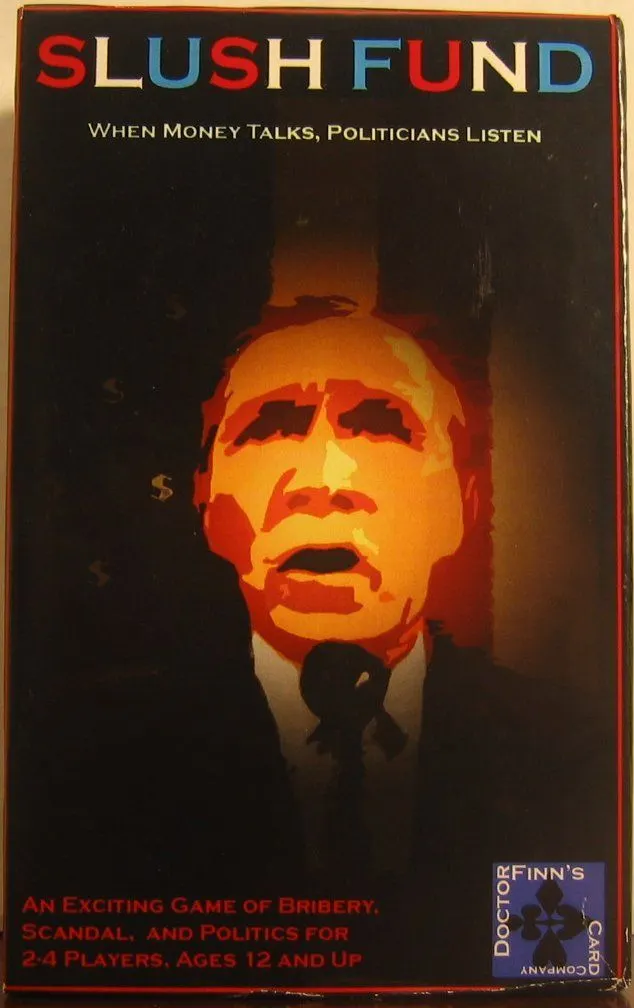
Slush Fund es un juego de mesa publicado en 2008 para 2–4 jugadores y con partidas de 20 minutos. Fue diseñado por Steve Finn y sus mecánicas principales son Hand Management.




En inglés
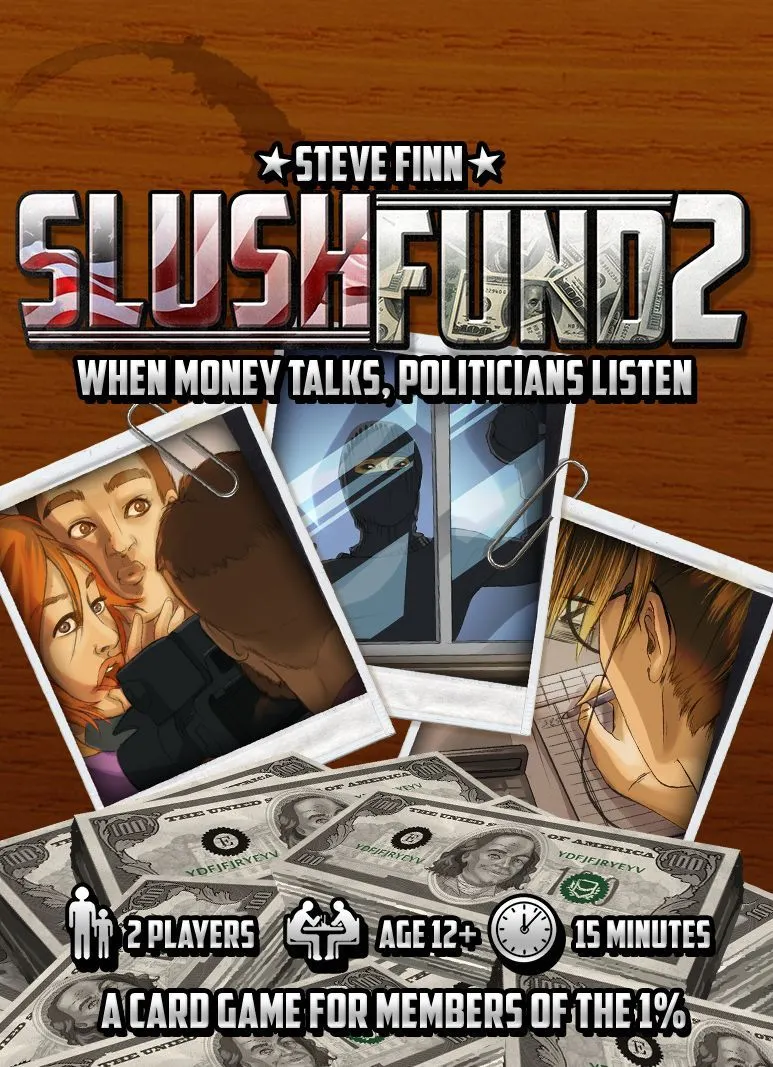
(description from publisher's website) THE GAME CONCEPT It is 21st century America--a place where money talks and politicians listen. In this game, players are wealthy CEOs who bribe politicians to gain political power and influence. Players must be careful, however, because political scandal might bring down one's political friends and all of one's invested money. Players who use their money wisely to bribe the right politicians will be victorious. OUTLINE OF GAME PLAY The object of the game is to score the most Victory Points. You win Victory Points by having the highest total bribe on any of the five Politicians. On your turn, you will receive and play Money Cards and/or Power Cards. You bribe a Politician by placing a Money Card next to, and on your side of, a Politician Card (which are in the center of the table). The bribes grow as more Money Cards are played on the same Politicians. Power Cards are used to perform a variety of actions and are discarded after use (such as stealing other people's bribes). At game's end, all the bribes are revealed and tallied up. Players score Victory Points for each Politician that they have 'won' by having the biggest bribe. The player with the most Victory Points wins the game.
Según el catálogo, Slush Fund admite de 2 a 4 jugadores. Este intervalo corresponde al número de jugadores indicado por la editorial, así que el juego puede prepararse para cualquier grupo dentro de ese margen. La preparación, algunas reglas y la puntuación pueden variar según el número de jugadores; consulta la configuración exacta en el reglamento de tu edición.
La duración indicada para Slush Fund es de 20 minutos, la estimación de la editorial para una partida completa. El tiempo real depende del grupo, del número de jugadores y del conocimiento de las reglas: las primeras partidas suelen alargarse y los grupos con experiencia terminan antes. La preparación y la explicación de las reglas no están incluidas.
Slush Fund tiene una puntuación de complejidad de 1,9 sobre 5 según los jugadores de BoardGameGeek, lo que lo convierte en un juego ligero. La puntuación refleja cuánto conocimiento de reglas, planificación y toma de decisiones exige una partida típica. Los juegos exigentes requieren una explicación inicial más larga, así que conviene usar una guía de preparación.
Slush Fund pertenece a estas categorías: Card Game y Political. Sus mecánicas principales son Hand Management. Las categorías describen el tema y la ambientación de un juego, mientras que las mecánicas describen lo que los jugadores hacen realmente en su turno. Cada mecánica lleva a una página del catálogo con juegos similares.
Los autores acreditados de Slush Fund son: Steve Finn. Estos créditos proceden de los datos publicados del juego y nombran a las personas responsables de su diseño, no a ilustradores ni editoriales. Las páginas de autor de MeepleRules reúnen otros títulos de los mismos autores, algo útil cuando un juego te gusta y buscas otros parecidos.
El catálogo clasifica Slush Fund como juego base. Se juega por sí solo con los componentes de la caja y no requiere ningún otro título. Las expansiones, si existen, añaden contenido o reglas nuevas y aparecen por separado en el catálogo con un enlace a este juego base.