
- Puesto en BGG
- BGG #24.627
- Puntuación BGG
- 5,8
Dragon Ball Z CCG
- 2 jugadores
- 20 min
- Complejidad 1,8/5
- 2000
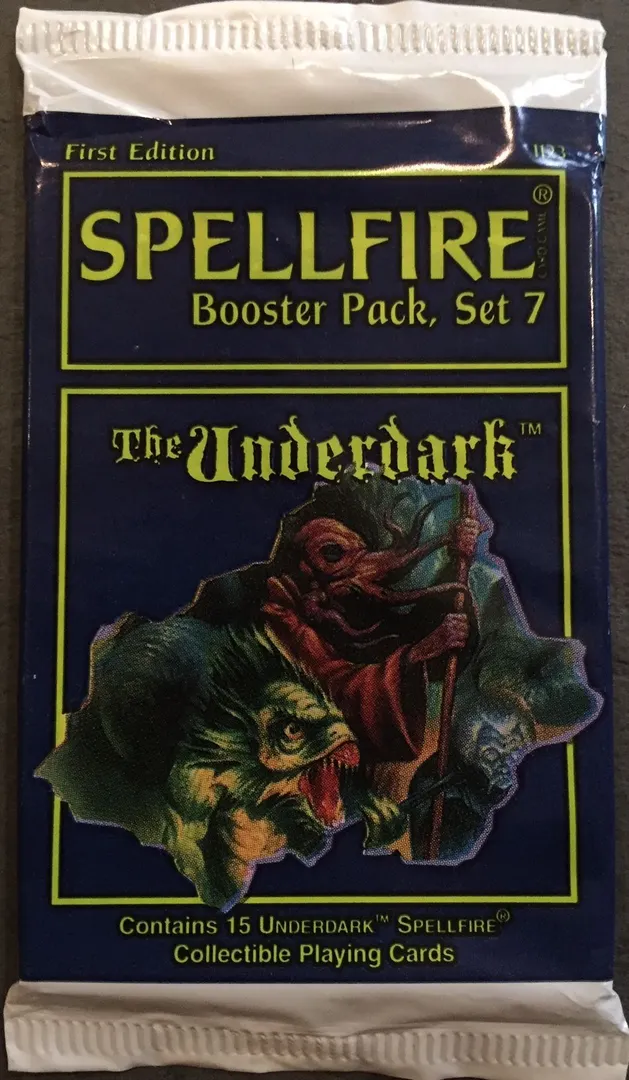
Ayuda con las reglas de Spellfire: Booster Pack, Set 7 – The Underdark
Explicaciones claras de turnos, efectos de cartas y situaciones dudosas, con referencias a fuentes oficiales e historial de preguntas guardado.
¿Qué quieres saber?
Las respuestas salen del reglamento oficial, con la página para comprobarlo.
Spellfire: Booster Pack, Set 7 – The Underdark es una expansión de Spellfire publicada en 1995 para 2–8 jugadores, con partidas de 60 a 90 minutos y a partir de 10 años. Fue diseñado por Timothy B. Brown, Steve Winter, David "Zeb" Cook y James M. Ward y sus mecánicas principales son Set Collection, Trading y Open Drafting.







En inglés
December 1995 - Originally, this was planned as the Spelljammer booster, but got changed when TSR could not buy back the rights to the game (it can still be seen in the first two chase cards of the set). This booster gave us another world (or pseudo-world, depending on how you look at it) to add to the universe of Spellfire. This booster was mainly focused on attacking, and it did a good job of it! This gave us the Underdark world (which is still argued whether it should truly be considered a world or just a characteristic), Quest spells (cleric spells castable only by champions of adjusted level 13+), and some of the funniest chase sets around (which was finally back to be 25 cards). Landmark Cards: Under_____ realms; The Triumverate realms; Drow Justice (#21); Hornung's Guess (#37); Mindkiller (#56); The Unnamed, Avatar of Gruumsh (#64); The Avatar Shar (#72); Ellorelloran (#93); Ring of Gaxx (c#4); The Deep (c#5); The Sword and Helm of Garion (c#21); and Broken Arrow (c#24).
Según el catálogo, Spellfire: Booster Pack, Set 7 – The Underdark admite de 2 a 8 jugadores. Este intervalo corresponde al número de jugadores indicado por la editorial, así que el juego puede prepararse para cualquier grupo dentro de ese margen. La preparación, algunas reglas y la puntuación pueden variar según el número de jugadores; consulta la configuración exacta en el reglamento de tu edición.
La duración indicada para Spellfire: Booster Pack, Set 7 – The Underdark es de 60 a 90 minutos, la estimación de la editorial para una partida completa. El tiempo real depende del grupo, del número de jugadores y del conocimiento de las reglas: las primeras partidas suelen alargarse y los grupos con experiencia terminan antes. La preparación y la explicación de las reglas no están incluidas.
El catálogo indica Spellfire: Booster Pack, Set 7 – The Underdark a partir de 10 años. Es la recomendación de la editorial y refleja la lectura necesaria, la complejidad de las reglas y las piezas pequeñas, no solo el tema. Los más pequeños a menudo pueden jugar con ayuda de un adulto: comprueba la edad recomendada en tu edición y la experiencia de tu grupo.
Spellfire: Booster Pack, Set 7 – The Underdark pertenece a estas categorías: Card Game, Fantasy y Collectible Components. Sus mecánicas principales son Set Collection, Trading y Open Drafting. Las categorías describen el tema y la ambientación de un juego, mientras que las mecánicas describen lo que los jugadores hacen realmente en su turno. Cada mecánica lleva a una página del catálogo con juegos similares.
Los autores acreditados de Spellfire: Booster Pack, Set 7 – The Underdark son: Timothy B. Brown, Steve Winter, David "Zeb" Cook y James M. Ward. Estos créditos proceden de los datos publicados del juego y nombran a las personas responsables de su diseño, no a ilustradores ni editoriales. Las páginas de autor de MeepleRules reúnen otros títulos de los mismos autores, algo útil cuando un juego te gusta y buscas otros parecidos.
El catálogo clasifica Spellfire: Booster Pack, Set 7 – The Underdark como expansión de Spellfire. Las expansiones añaden contenido, reglas o escenarios al juego base y normalmente no se pueden jugar solas, así que necesitas Spellfire para usarla. Comprueba que tu edición de Spellfire sea compatible, porque algunas expansiones se revisaron entre ediciones.