
- Puesto en BGG
- BGG #1846
- Puntuación BGG
- 7,0
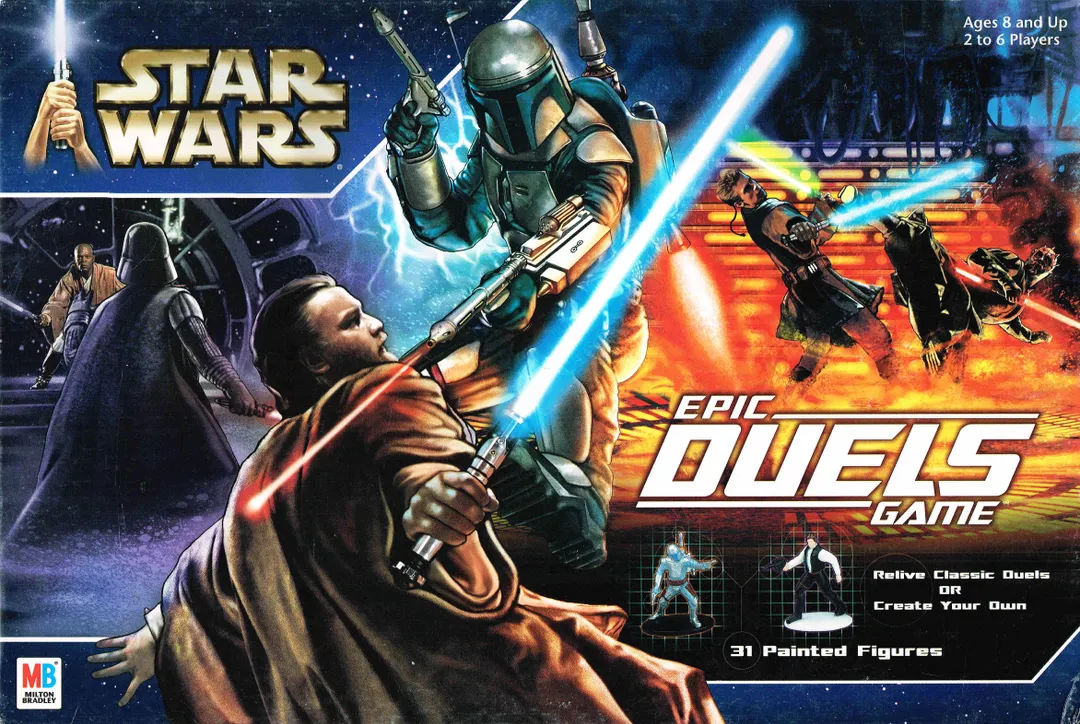
Star Wars: Epic Duels
- 2–6 jugadores
- 30 min
- Complejidad 1,8/5
- 2002
2000
Ayuda con las reglas de Star Wars: The Queen's Gambit
Explicaciones claras de turnos, efectos de cartas y situaciones dudosas, con referencias a fuentes oficiales e historial de preguntas guardado.
Para 2 jugadores
¿Qué quieres saber?
Las respuestas salen del reglamento oficial, con la página para comprobarlo.
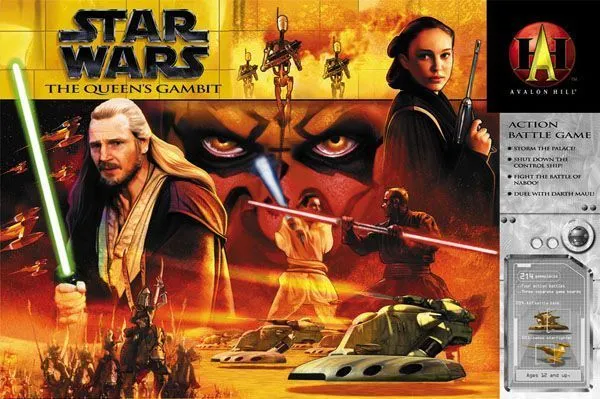
Star Wars: The Queen's Gambit es un juego de mesa publicado en 2000 para 2–4 jugadores, con partidas de 120 minutos y a partir de 12 años. Fue diseñado por Craig Van Ness, Rob Daviau y Alan Roach y sus mecánicas principales son Dice Rolling, Simultaneous Action Selection y Campaign / Battle Card Driven.

En inglés
Based on the four battles at the end of Star Wars Episode One: The Phantom Menace -- the battle on the plain between the Gungan forces and the droid army; the attempt by Naboo forces, led by Queen Amidala, to storm the palace and capture the Trade Federation viceroys; the fight between Darth Maul and the two Jedi Knights; and the space battle in which Anakin's starfighter destroyed the Droid Control Ship. The forces are represented by 155 plastic miniatures on three separate boards, including a three-level palace. The action is driven by two decks of cards for each side. Each turn, each side simultaneously chooses four action cards from a hand of ten, and places them in order. The actions are then carried out one at a time, alternating sides. Combat is resolved using special attack and defense dice.
Según el catálogo, Star Wars: The Queen's Gambit admite de 2 a 4 jugadores. Este intervalo corresponde al número de jugadores indicado por la editorial, así que el juego puede prepararse para cualquier grupo dentro de ese margen. La preparación, algunas reglas y la puntuación pueden variar según el número de jugadores; consulta la configuración exacta en el reglamento de tu edición.
La duración indicada para Star Wars: The Queen's Gambit es de 120 minutos, la estimación de la editorial para una partida completa. El tiempo real depende del grupo, del número de jugadores y del conocimiento de las reglas: las primeras partidas suelen alargarse y los grupos con experiencia terminan antes. La preparación y la explicación de las reglas no están incluidas.
El catálogo indica Star Wars: The Queen's Gambit a partir de 12 años. Es la recomendación de la editorial y refleja la lectura necesaria, la complejidad de las reglas y las piezas pequeñas, no solo el tema. Los más pequeños a menudo pueden jugar con ayuda de un adulto: comprueba la edad recomendada en tu edición y la experiencia de tu grupo.
Star Wars: The Queen's Gambit tiene una puntuación de complejidad de 2,5 sobre 5 según los jugadores de BoardGameGeek, lo que lo convierte en un juego algo ligero. La puntuación refleja cuánto conocimiento de reglas, planificación y toma de decisiones exige una partida típica. Los juegos exigentes requieren una explicación inicial más larga, así que conviene usar una guía de preparación.
Star Wars: The Queen's Gambit pertenece a estas categorías: Fighting, Wargame y Movies / TV / Radio theme. Sus mecánicas principales son Dice Rolling, Simultaneous Action Selection y Campaign / Battle Card Driven. Las categorías describen el tema y la ambientación de un juego, mientras que las mecánicas describen lo que los jugadores hacen realmente en su turno. Cada mecánica lleva a una página del catálogo con juegos similares.
Los autores acreditados de Star Wars: The Queen's Gambit son: Craig Van Ness, Rob Daviau y Alan Roach. Estos créditos proceden de los datos publicados del juego y nombran a las personas responsables de su diseño, no a ilustradores ni editoriales. Las páginas de autor de MeepleRules reúnen otros títulos de los mismos autores, algo útil cuando un juego te gusta y buscas otros parecidos.
El catálogo clasifica Star Wars: The Queen's Gambit como juego base. Se juega por sí solo con los componentes de la caja y no requiere ningún otro título. Las expansiones, si existen, añaden contenido o reglas nuevas y aparecen por separado en el catálogo con un enlace a este juego base.