
- Puesto en BGG
- BGG #14.065
- Puntuación BGG
- 6,4
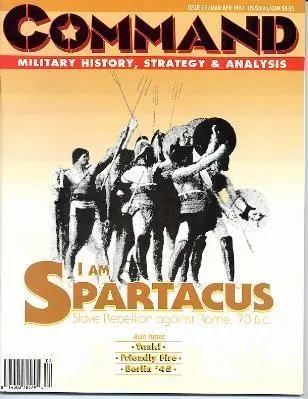
I Am Spartacus!
- 2 jugadores
- 180 min
- Complejidad 2,3/5
- 1992
Expansión de Command at Sea: 4th Edition – War at Sea 1926-1955
1995
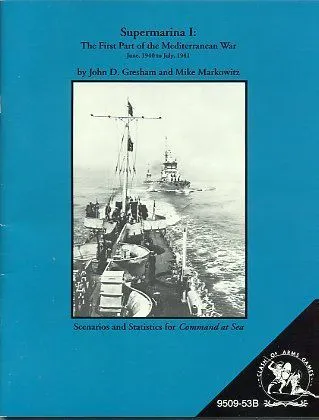
Ayuda con las reglas de Supermarina I: The First Part of the Mediterranean War – Scenarios and Statistics for Command at Sea
Explicaciones claras de turnos, efectos de cartas y situaciones dudosas, con referencias a fuentes oficiales e historial de preguntas guardado.
¿Qué quieres saber?
Las respuestas salen del reglamento oficial, con la página para comprobarlo.
Supermarina I: The First Part of the Mediterranean War – Scenarios and Statistics for Command at Sea es una expansión de Command at Sea: 4th Edition – War at Sea 1926-1955 publicada en 1995 para 1–12 jugadores y con partidas de 45 minutos. Fue diseñado por Mike Markowitz y John D. Gresham y sus mecánicas principales son Dice Rolling, Hexagon Grid y Simulation.




En inglés
The First Part of the Mediterranean War - June, 1940 to July, 1941. Contains Scenarios: First Blood, Bagnolini vs. Calypso Action Off Calabria (Punta Stilo) Cape Spada Ajax and Convoy MB6 Rainbow's End (Brit SS vs. Italian SS) The Taranto Raid Otranto Straits The Fight off Cape Teulada The Inshore Squadron at Bardia Operation Excess The Vega Incident Attack on Illustrious Bombardment of Genoa Convoy to Tripoli Disaster in the Gulf of Bomba Suda Bay The Sinking of Bonaventure Kerkennah Bank The Conte Rosso Convoy Black Thursday: The Battle for Crete Night Action in the Kasos Straits The Lupo Convoy The Sagittario Convoy Clash of Arms Stock #9509-53B
Según el catálogo, Supermarina I: The First Part of the Mediterranean War – Scenarios and Statistics for Command at Sea admite de 1 a 12 jugadores. Este intervalo corresponde al número de jugadores indicado por la editorial, así que el juego puede prepararse para cualquier grupo dentro de ese margen. La preparación, algunas reglas y la puntuación pueden variar según el número de jugadores; consulta la configuración exacta en el reglamento de tu edición.
La duración indicada para Supermarina I: The First Part of the Mediterranean War – Scenarios and Statistics for Command at Sea es de 45 minutos, la estimación de la editorial para una partida completa. El tiempo real depende del grupo, del número de jugadores y del conocimiento de las reglas: las primeras partidas suelen alargarse y los grupos con experiencia terminan antes. La preparación y la explicación de las reglas no están incluidas.
Supermarina I: The First Part of the Mediterranean War – Scenarios and Statistics for Command at Sea tiene una puntuación de complejidad de 3,8 sobre 5 según los jugadores de BoardGameGeek, lo que lo convierte en un juego exigente. La puntuación refleja cuánto conocimiento de reglas, planificación y toma de decisiones exige una partida típica. Los juegos exigentes requieren una explicación inicial más larga, así que conviene usar una guía de preparación.
Supermarina I: The First Part of the Mediterranean War – Scenarios and Statistics for Command at Sea pertenece a estas categorías: Wargame, Nautical y World War II. Sus mecánicas principales son Dice Rolling, Hexagon Grid y Simulation. Las categorías describen el tema y la ambientación de un juego, mientras que las mecánicas describen lo que los jugadores hacen realmente en su turno. Cada mecánica lleva a una página del catálogo con juegos similares.
Los autores acreditados de Supermarina I: The First Part of the Mediterranean War – Scenarios and Statistics for Command at Sea son: Mike Markowitz y John D. Gresham. Estos créditos proceden de los datos publicados del juego y nombran a las personas responsables de su diseño, no a ilustradores ni editoriales. Las páginas de autor de MeepleRules reúnen otros títulos de los mismos autores, algo útil cuando un juego te gusta y buscas otros parecidos.
El catálogo clasifica Supermarina I: The First Part of the Mediterranean War – Scenarios and Statistics for Command at Sea como expansión de Command at Sea: 4th Edition – War at Sea 1926-1955. Las expansiones añaden contenido, reglas o escenarios al juego base y normalmente no se pueden jugar solas, así que necesitas Command at Sea: 4th Edition – War at Sea 1926-1955 para usarla. Comprueba que tu edición de Command at Sea: 4th Edition – War at Sea 1926-1955 sea compatible, porque algunas expansiones se revisaron entre ediciones.