

- Puesto en BGG
- BGG #4078
- Puntuación BGG
- 7,1
Flames of War: The World War II Miniatures Game
- 2 jugadores
- 120 min
- Complejidad 3,3/5
- 2002
Ayuda con las reglas de The Battle for Kharkov: October 1941
Explicaciones claras de turnos, efectos de cartas y situaciones dudosas, con referencias a fuentes oficiales e historial de preguntas guardado.
¿Qué quieres saber?
Las respuestas salen del reglamento oficial, con la página para comprobarlo.
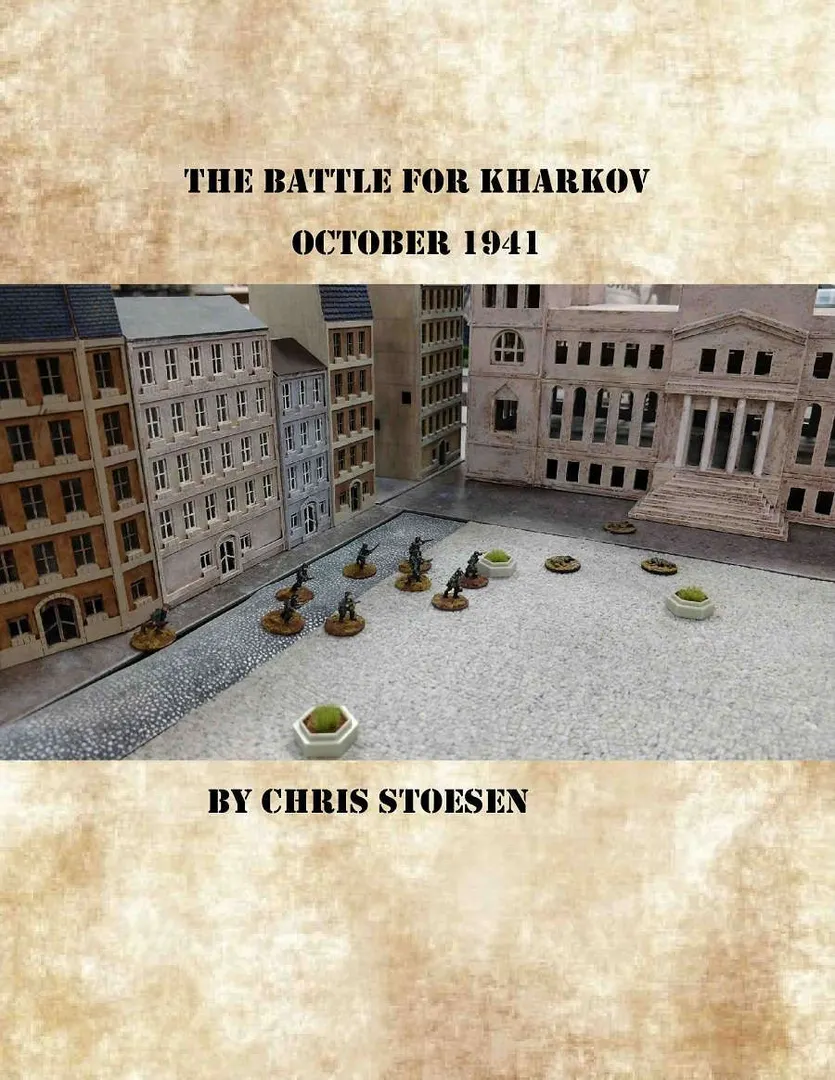
The Battle for Kharkov: October 1941 es una expansión de Chain of Command publicada en 2017 para 2 jugadores, con partidas de 120 a 180 minutos y a partir de 14 años. Fue diseñado por Chris Stoesen y sus mecánicas principales son Simulation y Scenario / Mission / Campaign Game.







En inglés
The Campaign for Kharkov contains two pint sized campaigns designed for the TooFatLardies Chain of Command rules. They are easily converted to any skirmish ruleset such as Bolt Action. One covers the advance of the German 57th Infantry Division and the other the German 101st Light Division. The attack came in October of 1941. This city would be the site of three major battles for the city. The interesting aspect of the October 1941 battle is in the nature of the troops involved. The Soviets had superiority in armor. The Germans advanced with only a single STUG battalion in support of the 57th ID. The Soviets fielded the T34 as well as several improvised armored vehicles such as the KhTZ-16. While not a success on the battlefield, it demonstrated the Soviet inventiveness under the extreme pressure of the blitzkrieg. There are twelve total scenarios in the campaign. Full force lists are available for both German Divisions and the Soviet troops present. Maps are based on aerial reconnaissance photographs taken by German troops in September 1941. —description from the publisher
Según el catálogo, The Battle for Kharkov: October 1941 admite 2 jugadores. Es el número de jugadores indicado por la editorial, así que el juego está diseñado exactamente para esa cantidad de participantes. Las variantes para otros tamaños de grupo, si existen, se describen en el reglamento de tu edición; consúltalo antes de preparar otra configuración.
La duración indicada para The Battle for Kharkov: October 1941 es de 120 a 180 minutos, la estimación de la editorial para una partida completa. El tiempo real depende del grupo, del número de jugadores y del conocimiento de las reglas: las primeras partidas suelen alargarse y los grupos con experiencia terminan antes. La preparación y la explicación de las reglas no están incluidas.
El catálogo indica The Battle for Kharkov: October 1941 a partir de 14 años. Es la recomendación de la editorial y refleja la lectura necesaria, la complejidad de las reglas y las piezas pequeñas, no solo el tema. Los más pequeños a menudo pueden jugar con ayuda de un adulto: comprueba la edad recomendada en tu edición y la experiencia de tu grupo.
The Battle for Kharkov: October 1941 pertenece a estas categorías: Wargame, Miniatures y World War II. Sus mecánicas principales son Simulation y Scenario / Mission / Campaign Game. Las categorías describen el tema y la ambientación de un juego, mientras que las mecánicas describen lo que los jugadores hacen realmente en su turno. Cada mecánica lleva a una página del catálogo con juegos similares.
Los autores acreditados de The Battle for Kharkov: October 1941 son: Chris Stoesen. Estos créditos proceden de los datos publicados del juego y nombran a las personas responsables de su diseño, no a ilustradores ni editoriales. Las páginas de autor de MeepleRules reúnen otros títulos de los mismos autores, algo útil cuando un juego te gusta y buscas otros parecidos.
El catálogo clasifica The Battle for Kharkov: October 1941 como expansión de Chain of Command. Las expansiones añaden contenido, reglas o escenarios al juego base y normalmente no se pueden jugar solas, así que necesitas Chain of Command para usarla. Comprueba que tu edición de Chain of Command sea compatible, porque algunas expansiones se revisaron entre ediciones.